Delhi air quality likely to turn ‘Very Poor’ today as winds weaken, farm fires rise
The Indian Express reports that Delhi’s air is expected to slip into the ‘Very Poor’ category today, with weaker winds and a rise in farm fires limiting how quickly pollution can clear.
In this piece
Delhi’s air quality is likely to deteriorate to ‘Very Poor’ today, The Indian Express reports, as winds weaken and farm fires increase. The outlook points to…
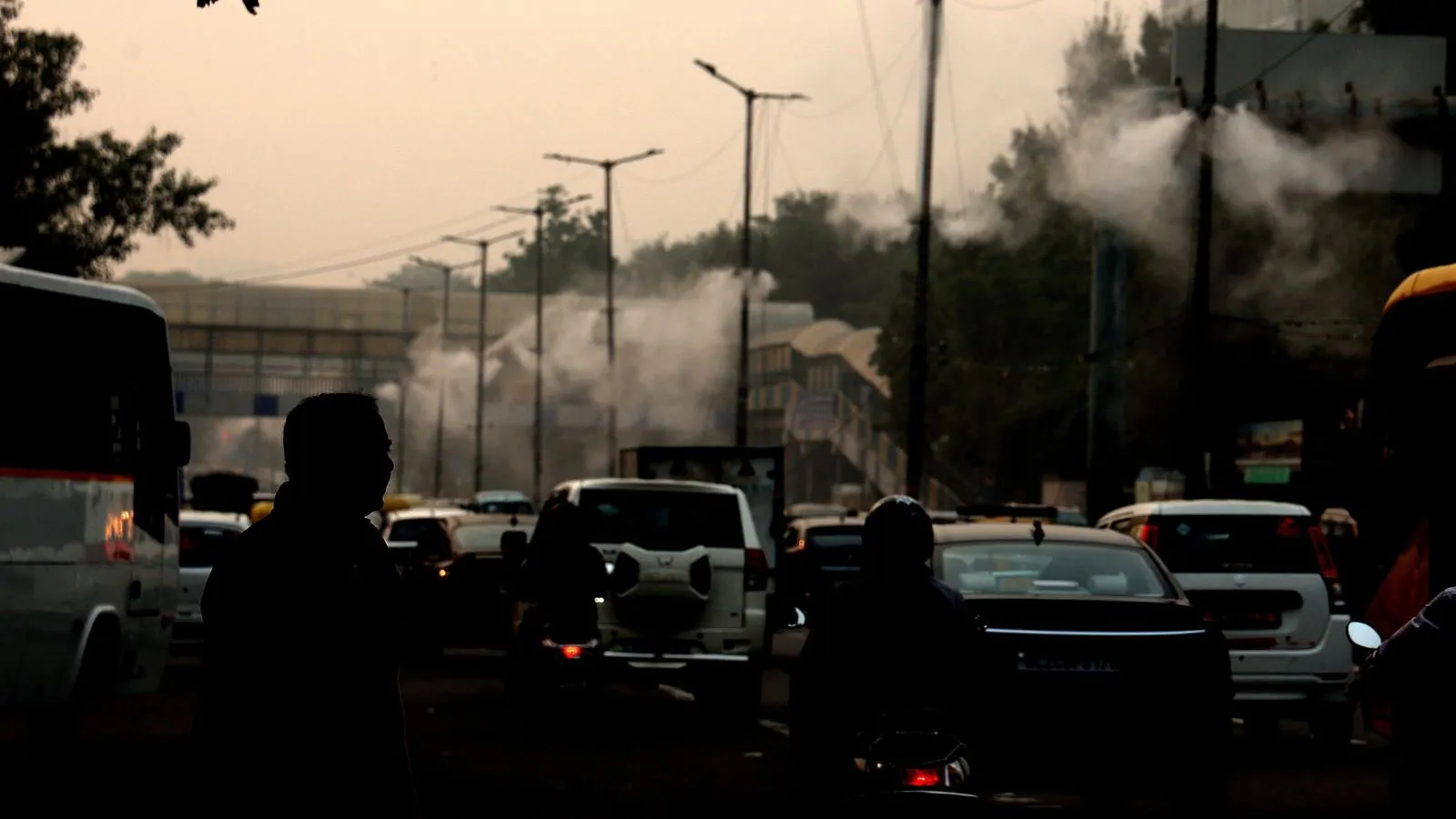
Delhi’s air quality is likely to turn “Very Poor” today as winds weaken and farm fires rise, The Indian Express reported. The forecast describes a same-day worsening driven by slower air movement and more smoke from agricultural burning. Together, those conditions leave pollutants with less room to disperse over the capital.
The report links the expected shift to two factors that often coincide in the weeks after the monsoon: lighter winds and an increase in farm fires. Weaker winds reduce the atmosphere’s ability to flush out dust, vehicle exhaust, and other emissions already present in the city. Smoke from crop-residue burning in the wider northern plains can add to that load when regional winds carry it toward the National Capital Region.
“Very Poor” is a formal band on India’s air-quality index, above “Poor” and below “Severe.” In that range, pollution is treated as a health concern for the general public, not only for people who already have heart or lung disease. The Indian Express used that official category to describe the day’s likely reading, rather than an informal description of haze.
The headline account does not state a precise index value, a wind speed, or a count of farm fires. It also does not quote officials or spell out any fresh restrictions. What it does establish is the direction of the forecast: a likely move into “Very Poor” air, with weakening winds and rising farm fires named as the reasons.
Delhi’s winter pollution problem is long-running. Cold, stable air often traps emissions near the ground, while traffic, construction dust, industry, household fuels, and seasonal crop burning all contribute in varying degrees. Meteorologists and pollution-control agencies watch wind speed closely because even a modest change in ventilation can decide whether the city’s air clears or stagnates.
Farm fires remain a sensitive part of that seasonal pattern. Farmers in parts of northern India burn paddy stubble to clear fields quickly between crops, and the resulting smoke can travel far from the fields where it starts. A reported rise in those fires matters for Delhi when local winds are too weak to disperse what arrives, which is the combination The Indian Express highlighted for today.
The practical stakes are immediate for people who live and work outdoors. Schools, commuters, and hospitals in the capital routinely adjust routines when air quality drops into the worse official bands, even when a single day’s forecast does not yet list new measures. Children, older adults, and people with respiratory illness are generally the groups advised to cut exposure first.
Because the published account is a short forecast headline, it leaves open how long “Very Poor” conditions might last and whether they could worsen further. A return of stronger winds would typically help disperse pollutants; continued calm and additional smoke would work the other way. Neither outcome is quantified in the report.
What happens next depends on the day’s weather and on how farm-fire activity evolves, the two drivers The Indian Express cited. Residents and authorities will be watching updated air-quality bulletins to see whether the capital stays in the “Very Poor” band or moves again as winds and regional smoke change.
Primary source: The Indian Express. Newzly rewrites and structures source reporting for clarity; verify critical details at the original.