Chhattisgarh CM Credits Modi Vision for Lifting 50 Crore People Out of Poverty
Chhattisgarh Chief Minister Vishnu Deo Sai said Prime Minister Narendra Modi's inclusive development vision has driven historic poverty alleviation, citing international findings that millions have exited deprivation.
In this piece
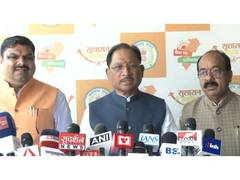
Chhattisgarh Chief Minister Vishnu Deo Sai credited Prime Minister Narendra Modi's 'Sabka Saath, Sabka Vikas' governance framework for lifting 50 crore people…
Chhattisgarh Chief Minister Vishnu Deo Sai has credited Prime Minister Narendra Modi's governance vision for the upliftment of approximately 50 crore people from poverty across India. Addressing the broader socio-economic trajectory of the nation, Sai affirmed that the Union government's flagship mantra of "Sabka Saath, Sabka Vikas" is yielding verifiable results on the ground. He maintained that targeted developmental interventions over the past decade have fundamentally transformed the lives of marginalized and vulnerable communities.
The Chief Minister emphasized that inclusive governance has remained central to the central administration's approach to poverty reduction. By focusing on equitable resource allocation and welfare access, federal programs have sought to bridge long-standing regional and social disparities. Sai highlighted that the sustained outreach has empowered citizens in rural hamlets and tribal belts who were previously left out of the formal development process.
Sai's remarks referenced findings from international assessments, including analyses by the World Bank, which have documented historic reductions in Indian poverty over a twelve-year span. These global studies point to substantial declines in extreme poverty rates alongside significant improvements in living standards across lower-income households. The Chief Minister attributed this large-scale transformation to systematic policy implementation and unwavering political commitment from the central leadership.
Central to this milestone, according to Sai, is the Prime Minister's expanded doctrine of "Sabka Saath, Sabka Vikas, Sabka Vishwas, Sabka Prayas," meaning collective effort and shared trust alongside universal progress. Officials pointed out that this governance model prioritizes reaching the last mile of society before declaring public initiatives complete. By establishing measurable service delivery benchmarks, the strategy seeks to ensure that national prosperity is not confined to urban centers.
The structural decrease in poverty has been driven by comprehensive social protection measures, including direct benefit transfers, rural sanitation projects, and universal food security allocations. Access to subsidized grains, clean cooking fuel, and tap water connections has substantially reduced recurring household expenditures for low-income families. Furthermore, the expansion of formal banking and digitized financial infrastructure has minimized bureaucratic leakage in welfare distribution.
For Chhattisgarh, a state with significant tribal populations and geographically remote forest corridors, these national welfare achievements carry direct local resonance. The state administration has been synchronizing regional policy frameworks with federal initiatives to expedite poverty alleviation in historically distressed districts like Bastar. State leaders emphasize that localized implementation of centrally funded housing, healthcare, and farm assistance schemes remains critical to sustaining this progress.
The Chief Minister highlighted that social welfare programs are operating alongside targeted economic and industrial initiatives designed to stimulate grassroots commerce. Measures such as structured agricultural procurement, expanded rural road networks, and institutional credit support are aimed at building lasting self-reliance for farming families. By fortifying primary sector earnings, the government seeks to prevent vulnerable households from slipping back into severe economic distress.
While government authorities celebrate these developmental milestones, policy researchers and economists emphasize that sustaining such progress requires enduring structural reforms. Experts frequently observe that informal labor vulnerability, food price volatility, and climate-related disruptions pose continuous risks to newly elevated income groups. Continued policy emphasis on formal job creation, skill enhancement, and quality secondary healthcare will be pivotal to maintaining long-term upward mobility.
Looking ahead, Chief Minister Sai reaffirmed that Chhattisgarh will maintain its focus on the double-engine development model to advance inclusive growth across the state. The administration plans to accelerate infrastructure execution and deepen social security coverage across interior blocks to solidify these social gains. As national programs continue to evolve, state officials aim to ensure that the vision of inclusive progress delivers lasting benefits to every community.
Primary source: Google News Chhattisgarh. Newzly rewrites and structures source reporting for clarity; verify critical details at the original.