world·Andaman and Nicobar Islands
Climbing Palm’s Genetic Code Unlocks Evolutionary Secrets of Andaman Archipelago
A genetic analysis of the climbing palm Korthalsia laciniosa reveals how the Ten Degree Channel and ancient ice ages shaped distinct plant lineages across India’s Andaman and Nicobar archipelago.
In this piece
Researchers analyzing the rattan palm Korthalsia laciniosa have uncovered deep genetic divides shaped by the Ten Degree Channel across the Andaman and Nicobar…
A genetic investigation into a climbing palm native to the Andaman and Nicobar Islands has unveiled critical clues about the archipelago's evolutionary past, demonstrating how ancient climate shifts and marine boundaries shaped regional biodiversity. Researchers studying the rattan species Korthalsia laciniosa discovered deep genetic divergence across the island chain, mapping out how the species survived past ice ages and dispersed across isolated tropical habitats.
Published in the Journal of Biogeography, the study was conducted by scientists including Sarath Paremmal, Suma Arun Dev, and V. B. Sreekumar, who analyzed the genetic structure of climbing palm populations spanning the Bay of Bengal archipelago. Their findings provide empirical evidence of how geographic separation influences speciation and genetic variation in tropical island ecosystems.
Central to the study's findings is the Ten Degree Channel, a roughly 150-kilometer-wide oceanic passage separating the Andaman Islands from the Nicobar group. Genetic sequencing revealed that this marine channel serves as a formidable evolutionary barrier, restricting gene flow and isolating palm lineages on either side of the waterway.
The genetic data underscores the dual biogeographical origins of the archipelago, where northern and southern island clusters align with distinct continental flora. While palm populations in the Andaman group exhibit closer affinities to the Indo-Burma biodiversity hotspot, those inhabiting the Nicobar Islands reflect evolutionary ties to Sundaland in Southeast Asia.
Historical demographic modeling indicated that the southern Andaman Islands likely served as a vital glacial refuge for Korthalsia laciniosa during the Last Glacial Maximum. When cooler and drier conditions prevailed during the ice age, the palms survived in these buffered microclimates before expanding northward across the Andaman chain as global temperatures rose and sea levels shifted.
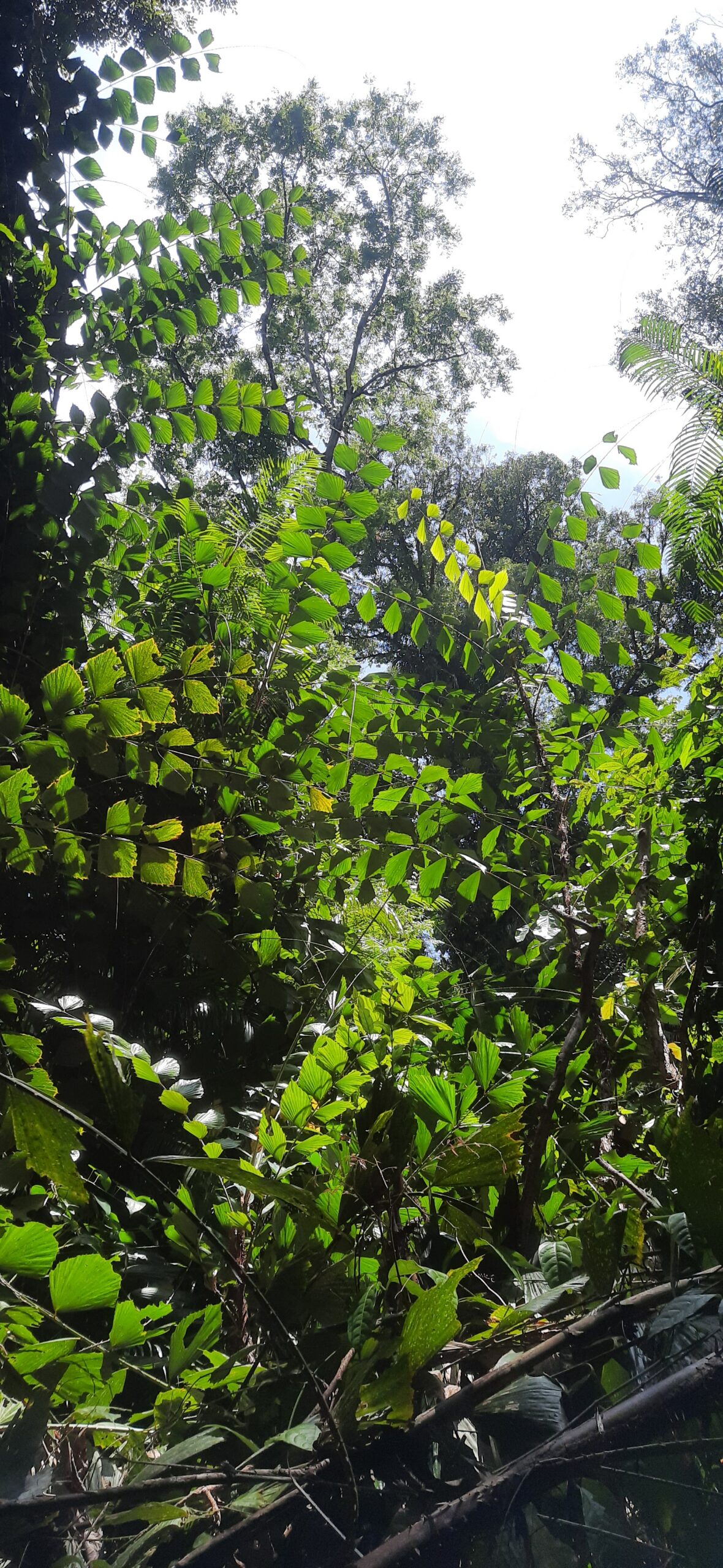
Unlike typical freestanding trees, Korthalsia laciniosa functions as a climbing palm or rattan, utilizing hooks and spiny structures to anchor itself into the forest canopy. The plant also holds notable socioeconomic value as a non-timber forest resource, traditionally harvested by local communities to craft cane furniture, woven baskets, and durable ropes.
The researchers pointed out that isolated genetic clusters, particularly those in fragmented locations such as Little Andaman and parts of the Nicobar chain, carry distinct genetic diversity that cannot be easily replenished if lost. As island ecosystems face increasing pressure from human development, infrastructure expansion, and habitat fragmentation, understanding these population dynamics becomes vital.
The findings challenge uniform conservation frameworks that treat the archipelago as a single contiguous ecological zone. The authors emphasized that conservation planners should adopt island-specific management strategies to safeguard unique genetic lineages rather than relying on generalized protected-area policies.
Scientists advocate for broader phylogeographic assessments across other endemic flora and fauna in the Andaman and Nicobar Islands to determine whether similar genetic divides exist in other taxonomic groups. Preserving the unique evolutionary heritage of these fragile islands will depend on integrating genetic insights into long-term forestry policies and regional conservation planning.
Primary source: Google News Andaman and Nicobar Islands. Newzly rewrites and structures source reporting for clarity; verify critical details at the original.