world·Chandigarh·Chandigarh District
Colony Voters Across 12 Wards Take Centre Stage in Chandigarh Civic Poll Battle
With 12 colony-dominated wards and 300,000 residents holding the balance of power, the battle for the Chandigarh Municipal Corporation hinges on working-class voter turnout and a contested freehold property rights scheme.
In this piece
A decisive contest for the Chandigarh Municipal Corporation is underway across 12 wards dominated by rehabilitation colonies housing roughly 300,000 residents.…
A high-stakes political contest has taken shape across Chandigarh as major political parties concentrate their campaign machinery on 12 municipal wards dominated by rehabilitation and resettlement colonies. These key wards, representing an estimated 300,000 residents, have emerged as the central battleground for control of the Chandigarh Municipal Corporation. Civic strategists widely view the demographic belt as the deciding factor in securing the municipal house.
In the 35-member civic corporation, any party seeking an outright majority must secure at least 18 seats, making the 12 colony wards mathematically indispensable. Areas such as Bapu Dham Colony in Sector 26, Dadumajra, Mauli Jagran, Dhanas, Indira Colony, and Ram Darbar hold dense clusters of working-class households. Because these areas represent more than a third of the total seats, their collective vote can easily make or break mayoral ambitions.
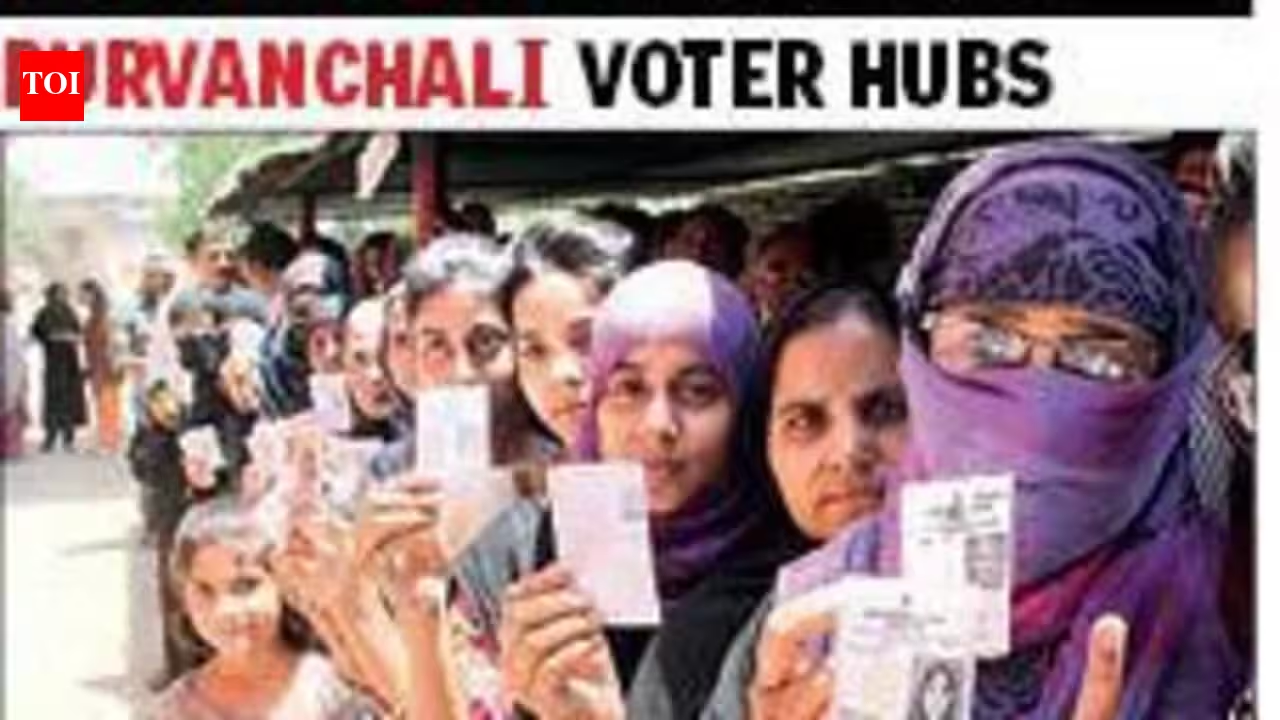
Unlike several upper-income residential sectors that historically record subdued civic participation, Chandigarh's rehabilitation colonies routinely demonstrate intense electoral engagement. Voter turnout in these working-class neighbourhoods frequently ranges between 75% and 80%, granting their ballots an outsized influence on final seat counts. A sizable Purvanchali community forms a vital demographic component within these colonies, prompting tailored campaign outreach across party divides.
The electoral contest intensified following the Chandigarh Administration's formal notification of the Chandigarh Rehabilitation Colonies Freehold Rights Rules. The policy framework extends permanent freehold ownership rights to eligible original allottees, co-allottees, and legal heirs across approximately 49,000 residential units managed by the Chandigarh Housing Board and the Estate Office. The measure directly impacts thousands of families who have occupied resettlement units under leasehold arrangements for generations.
Under the newly established rules, eligible occupants who have resided in their allotted units for at least seven years can obtain full freehold status upon paying a conversion fee pegged at 5% of the applicable collector rate. The administrative decision fulfilled a long-pending demand that resident welfare groups and local representatives had championed for decades. For many families, legal title to their land represents long-sought residential security.
The ruling Bharatiya Janata Party has aggressively highlighted the freehold decision on the campaign trail, framing it as the realization of a signature governance promise. Party leaders argue that conferring clear ownership titles will dismantle bureaucratic hurdles and provide equitable rights to the city's economically weaker sections. Campaign organizers have used public meetings to portray the administration's policy as tangible evidence of developmental delivery.
Opposition parties, including the Congress and the Aam Aadmi Party, have criticized the policy rollout, questioning its eleventh-hour timing ahead of polling schedules and challenging its restrictive eligibility criteria. Critics emphasize that the framework strictly excludes properties purchased through General Power of Attorney, leaving out numerous subsequent buyers and secondary occupants in settlements like Bapu Dham. Opposition spokespersons argue that without incorporating secondary purchasers, a substantial portion of actual residents will remain without formal ownership.
Beyond property documentation, residents across the 12 wards continue to press candidates on persistent municipal deficits and public health challenges. Overburdened drainage systems, irregular drinking water supplies, road maintenance, and recurring foul odours from the Dadumajra garbage processing site remain urgent grievances. Community elders and civic groups have demanded binding commitments that municipal funds will be directed equitably toward colony infrastructure.
With campaigning entering its crucial final stretch, rival candidates are conducting extensive door-to-door canvassing and street-corner rallies across the resettlement belt. Political analysts observe that whichever formation manages to consolidate support in these 12 colony wards while navigating the contentious freehold debate will command the decisive mandate in the municipal house.
Primary source: Google News Chandigarh. Newzly rewrites and structures source reporting for clarity; verify critical details at the original.