Delhi Air Quality Remains in 'Poor' Category With Average AQI of 242
Delhi's air quality lingered in the poor category with an average AQI of 242, as calm atmospheric conditions and local emissions continued to inhibit pollutant dispersion across the national capital.
In this piece
Delhi's overall air quality settled in the poor category on an average Air Quality Index reading of 242. Persistent surface emissions and unfavorable…
Delhi's overall air quality remained lodged in the poor category as the city registered an average Air Quality Index reading of 242, according to reporting by The Hindu. The measurement underscores continuing atmospheric stress across the national capital territory. Atmospheric monitoring systems confirmed that the capital's air shed continues to retain elevated levels of suspended pollutants.
Under the established national classification system, an Air Quality Index reading between 201 and 300 falls squarely within the poor band. This classification signifies that ambient concentrations of fine particulate matter and gaseous pollutants are substantially higher than acceptable baseline levels. A score of 242 reflects a sustained presence of airborne contaminants across residential and commercial sectors alike.
The recorded index level leaves the capital noticeably removed from safer air quality brackets, which include satisfactory conditions between 51 and 100 and moderate air between 101 and 200. At the same time, the reading remains below the very poor category, which encompasses values between 301 and 400. Even without breaching higher alert categories, prolonged stays in the mid-200 range keep urban exposure levels uncomfortably elevated.
Public health guidance indicates that sustained exposure to poor air quality can cause notable breathing discomfort to most people. Individuals living with pre-existing respiratory conditions such as asthma or chronic bronchitis, as well as heart patients and senior citizens, are particularly susceptible to adverse symptoms. Prolonged physical exertion outdoors during such conditions can increase pollutant intake and trigger throat irritation or shortness of breath.
Urban air pollution across the Delhi region is closely linked to a combination of persistent emissions and unfavorable meteorological dynamics. Calm atmospheric conditions and diminished wind speeds prevent the natural ventilation of the lower troposphere, trapping airborne pollutants close to the surface. When combined with modest thermal mixing, these local atmospheric traits inhibit the dispersion of daily urban discharges.
Routine city activities contribute substantially to the volume of suspended pollutants in the regional atmosphere. High vehicular traffic volumes, roadside dust kicked up by transport corridors, construction operations, and municipal waste management practices all contribute regular particulate output. Without strong breezes to carry these particles away, they accumulate steadily throughout the day.
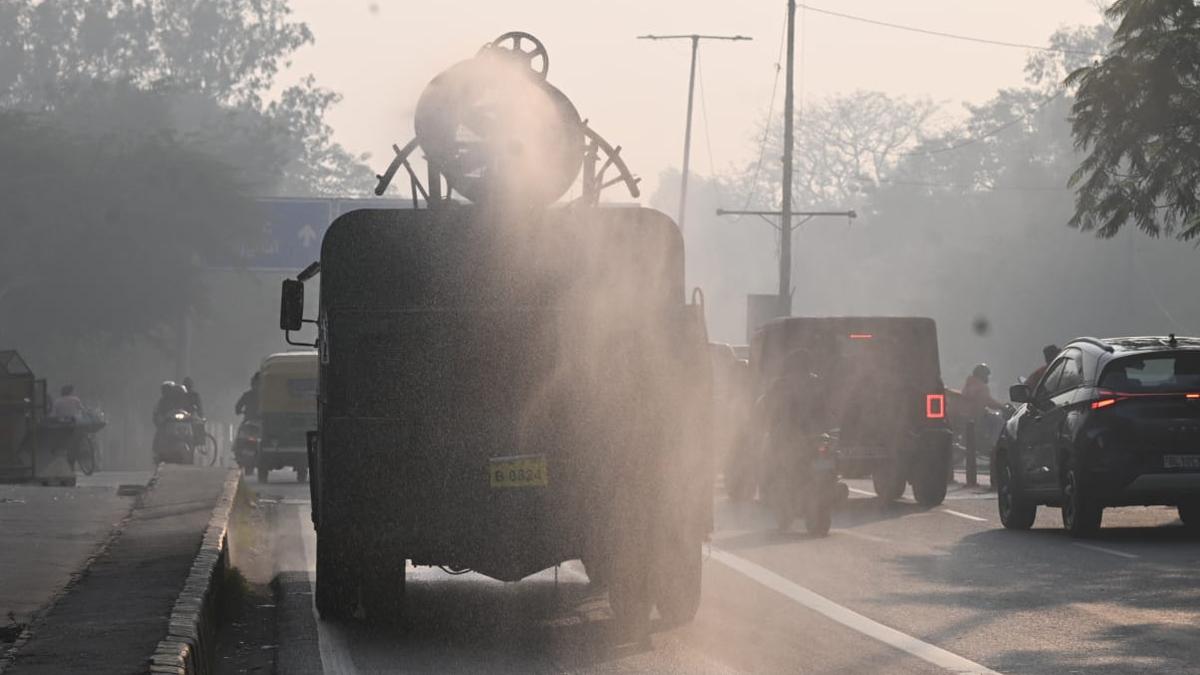
Municipal agencies and environmental regulators continually track these daily index figures to assess the necessity of containment actions. Mitigation protocols in the region typically focus on dust suppression techniques, including automated road sweeping and mist spraying along major arterial thoroughfares. Regulators also maintain scrutiny on industrial operations and open waste disposal to prevent unnecessary spikes in regional emissions.
Maintaining air quality above harmful levels represents an ongoing civic challenge that directly shapes daily life across the metropolis. Consecutive days of compromised air can lead to cumulative physiological stress, reduced daytime visibility, and broader public concern regarding environmental welfare. Civil society groups and environmental researchers frequently point to these recurring figures as evidence of the need for sustained, round-the-clock air shed management.
Environmental authorities and meteorological monitoring agencies will continue to observe atmospheric trends over the coming days. The trajectory of the capital's air quality will largely hinge on whether regional wind velocities increase enough to disperse the lingering haze. Until more favorable atmospheric movements take hold, Delhi's air quality is expected to remain vulnerable to local emissions and calm surface conditions.
Primary source: Google News Delhi. Newzly rewrites and structures source reporting for clarity; verify critical details at the original.