Delhi Records Coldest Morning of the Season as Air Quality Remains in 'Poor' Category
Delhi recorded its lowest minimum temperature of the season at 10 degrees Celsius on Wednesday morning, as dropping mercury and calm winds kept the capital's air quality in the poor category.
In this piece
Delhi recorded its coldest morning of the season on Wednesday as the minimum temperature dropped to 10 degrees Celsius at Safdarjung. Meanwhile, the city's…
Delhi logged its coldest morning of the winter season so far on Wednesday as the minimum temperature slipped to 10 degrees Celsius. The reading, recorded at the Safdarjung observatory that serves as the base weather station for the national capital, settled approximately 1.3 degrees below the seasonal normal.
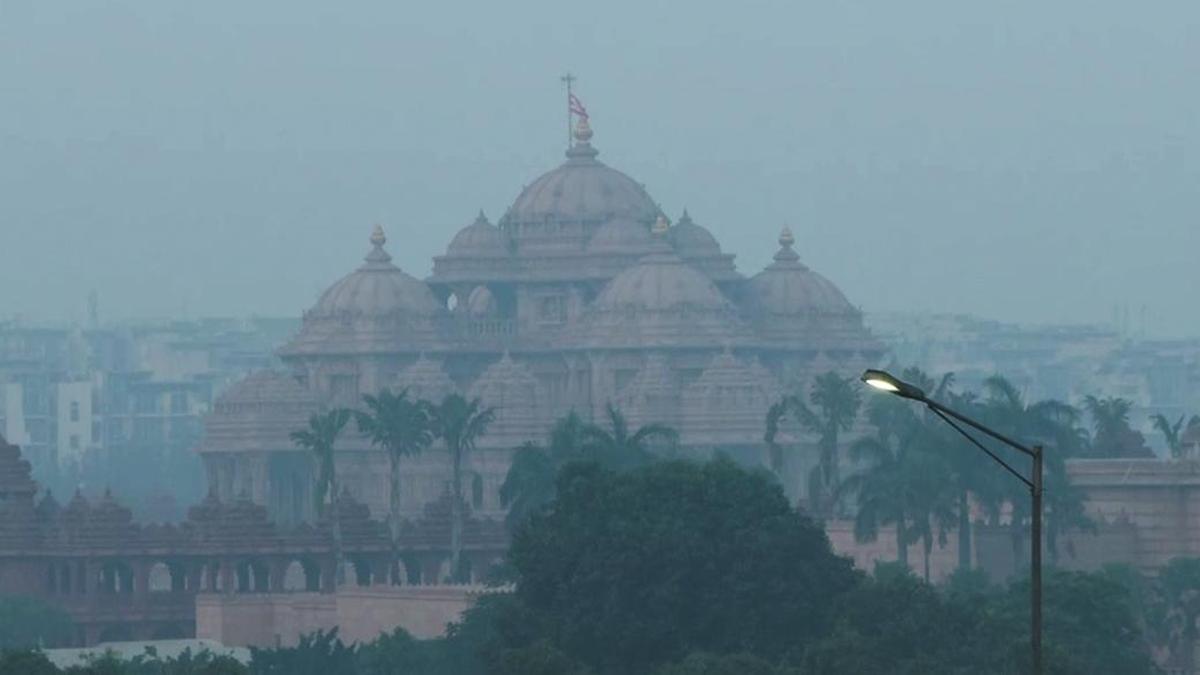
Alongside the sharp dip in morning temperatures, the city continued to battle compromised atmospheric conditions. Delhi recorded an overall Air Quality Index of 224, placing the capital firmly in the poor category. A visible layer of morning smog hung over several neighborhoods, muting early visibility across major arterial corridors.
While the citywide average remained in the poor band, individual air monitoring stations across the National Capital Region reflected localized spikes. Several stations in the monitoring network recorded pollution concentrations that crossed into the very poor threshold during the early hours. These elevated readings underscored the persistent concentration of particulate matter near ground level during calmer morning intervals.
The combination of dropping temperatures and sluggish surface winds typically hampers the dispersion of pollutants across the Indo-Gangetic plains during late November. As ambient air cools, it becomes denser and traps vehicular emissions, dust, and industrial discharges close to the surface. Meteorologists often identify this seasonal meteorological transition as a primary factor behind the recurring winter pollution episodes across northern India.
The slide to 10 degrees Celsius marks a distinct shift toward deeper winter conditions after a relatively mild start to the month. Morning commuters, pedestrians, and school-bound children encountered brisk winds and a pronounced chill for the first time this season. The transition has prompted residents across the metropolis to unpack heavier winter garments and adjust daily outdoor routines.
Sustained exposure to poor and very poor air combined with dropping mercury levels poses documented health challenges for vulnerable populations. Health experts frequently caution that such conditions exacerbate respiratory ailments, including asthma, bronchitis, and chronic obstructive pulmonary disease. Children, senior citizens, and individuals with preexisting cardiovascular concerns face heightened vulnerability when toxic particulate matter lingers in cold morning air.
Civic authorities and pollution control agencies in the capital remain on elevated alert as winter weather patterns consolidate. Existing dust-suppression measures, mechanized sweeping, and restrictions under regional clean air protocols are monitored to mitigate further deterioration. However, seasonal atmospheric factors continue to exert a dominant influence on how swiftly ambient pollutants accumulate or disperse on a day-to-day basis.
Meteorological forecasts indicate that minimum temperatures across Delhi and surrounding districts are likely to hover in a similar range over the coming days. With daytime warmth gradually moderating and night-time cooling intensifying, atmospheric stability is expected to keep dispersion potential subdued. Authorities and weather agencies will continue monitoring wind speeds and local emissions to track whether air quality edges toward more hazardous categories as winter deepens.
Primary source: Google News Delhi. Newzly rewrites and structures source reporting for clarity; verify critical details at the original.