Delhi’s air quality falls to ‘very poor’ as AQI rises to 311
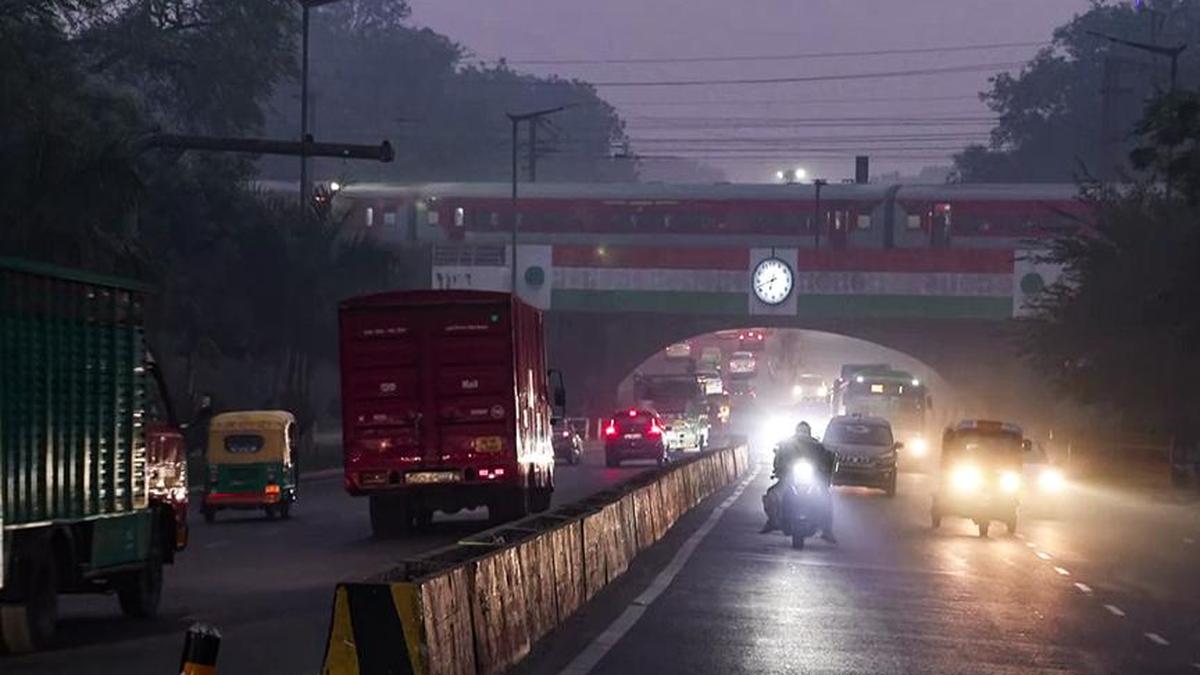
Delhi’s air quality has deteriorated to the “very poor” category, with the Air Quality Index at 311, The Hindu reported. The reading places the capital in a band associated with greater health concern.
In this piece
Delhi’s air has worsened to “very poor,” with the Air Quality Index at 311, according to The Hindu. That level sits in India’s official very poor band. The…
Delhi’s air quality has deteriorated to the “very poor” category after the Air Quality Index rose to 311, The Hindu reported. The figure marks a clear worsening for the national capital. It is the only measurement included in the report as circulated.
On India’s National Air Quality Index, values from 301 to 400 are classified as “very poor.” A reading of 311 sits in the lower part of that band, above the “poor” range that ends at 300 and short of the “severe” threshold that begins at 401. The Hindu’s account, as summarized in the news alert, did not break the citywide figure into station-level readings.
The index converts concentrations of several pollutants into a single number the public can follow. In Indian cities it is widely used by residents, schools, and local agencies as a daily snapshot of outdoor air. A move into “very poor” is treated as a signal that breathing outdoor air may pose greater risk, especially for people with asthma, heart disease, or other conditions that pollution can aggravate.
Delhi has long recorded its most difficult air in the colder months, when lighter winds and temperature inversions can hold emissions near the ground. The report did not specify which pollutants drove the latest rise, and it did not attribute the change to any single source. Without that detail, the 311 reading is a status update rather than an explanation of why the air worsened.
Public guidance tied to the “very poor” band generally urges people to limit prolonged or heavy outdoor exertion. Children, older adults, and those with respiratory or cardiac illness are usually described as more vulnerable. The Hindu item did not quote health officials or set out a fresh advisory linked to this particular reading.
Winter pollution episodes in the capital are often discussed alongside vehicle exhaust, construction dust, industrial emissions, household fuels, and smoke from surrounding regions. Those factors are part of the recurring context of Delhi’s pollution season. This dispatch did not present evidence assigning shares of responsibility among them.
In earlier bad-air spells, authorities have used graded emergency steps that can restrict some construction, intensify road cleaning, or limit the most polluting vehicles. Whether any such measure was ordered as the index reached 311 was not stated. A category label alone does not establish that a new restriction is in force.
A citywide index can change within hours as weather and emissions shift, and one number can hide cleaner or dirtier pockets of the city. The available summary did not include an hourly trend, a comparison with the previous day, or a forecast. Those gaps matter because residents need to know whether the air is still worsening or beginning to ease.
What happens next depends on updated monitoring and on any statement from the Delhi government or the Commission for Air Quality Management. The Hindu’s report establishes that the capital’s air had moved into “very poor” territory at an AQI of 311. Later bulletins would be needed to show whether the index holds, climbs toward “severe,” or falls back into “poor.”
Primary source: Google News Delhi. Newzly rewrites and structures source reporting for clarity; verify critical details at the original.