Delhi smog crisis tied to weak governance and airshed limits, report says
An ETGovernment report frames Delhi’s recurring smog as a failure of governance and public awareness of airshed boundaries, arguing that city-only responses cannot match how pollution actually moves.
In this piece
ETGovernment describes Delhi’s smog crisis as a breakdown in governance and in awareness of airshed limits. The account says pollution crosses administrative…
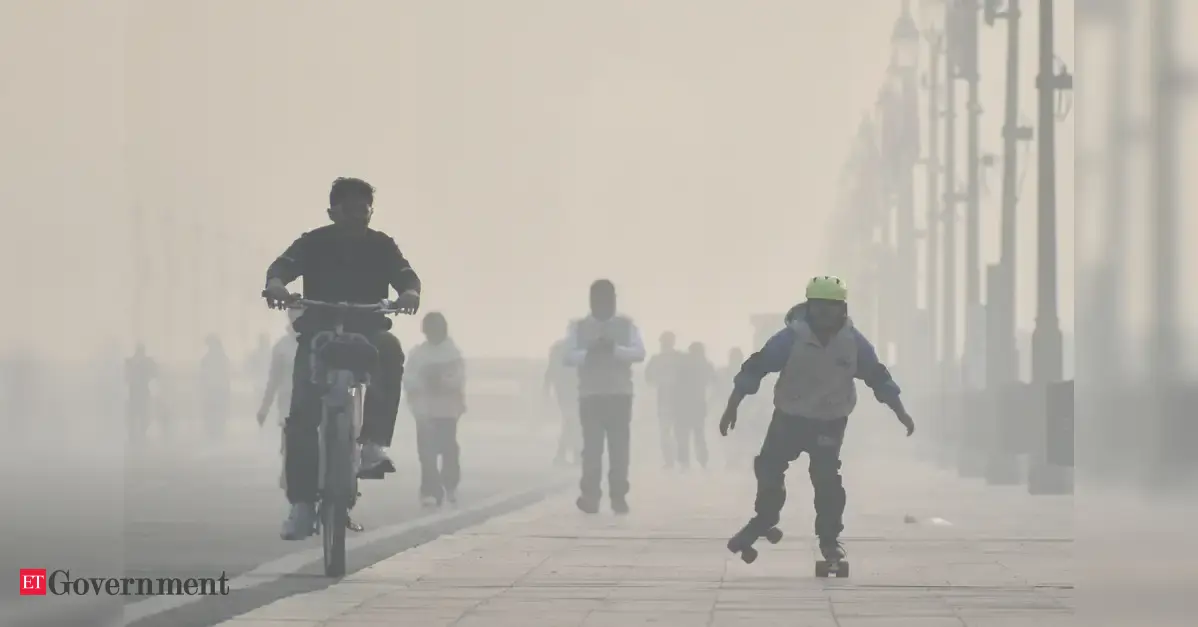
Delhi’s smog crisis reflects a failure of governance and of awareness about the limits of an airshed, according to a report published by ETGovernment and circulated through Google News under the Delhi desk.
The headline framing treats the capital’s recurring haze as more than a seasonal inconvenience. It presents the episode as evidence that authorities and the public still treat dirty air as a problem that can be managed inside one city’s boundaries.
An airshed is the geographic area over which emissions mix and travel under prevailing weather. Pollution generated in one jurisdiction can settle, or be carried, into another. The ETGovernment account argues that this physical reality is still poorly reflected in how the crisis is governed and explained.
Delhi has long been associated with winter smog, when calm winds and cooler conditions can trap pollutants near the ground. The report, as summarized in the available headline, does not introduce new measurements or name specific enforcement actions. It instead locates the problem in institutions and in public understanding of those shared limits.
Governance failure, in this telling, means responses that remain fragmented even when the air itself is not. Rules, shutdowns, and advisories issued for the capital can leave sources outside the city largely untouched. Without coordination across the wider airshed, the same conditions can rebuild the haze after a short-lived improvement.
Awareness is presented as the second gap. Residents and decision-makers may focus on the skyline they can see, while the contributing area extends well beyond municipal lines. The report’s title suggests that this mismatch between visible smog and the true catchment of emissions helps the crisis persist.
The distinction matters for public health and daily life in the capital. When air quality deteriorates, schools, outdoor work, and transport are often the first to feel the strain. If the underlying sources sit partly outside the city, local restrictions alone offer only partial relief, a point implied by the airshed argument rather than documented with fresh figures in the material available here.
The source material does not quote officials, cite pollution readings, or set out a timetable for new measures. Those details are absent from the headline record used for this account, so any claim about current index levels or named policy orders would go beyond what the report summary establishes.
What the account does establish is a diagnosis: Delhi’s smog is being managed as a local event inside a regional air system. That diagnosis points toward shared responsibility among governments that share the airshed, and toward clearer public explanation of why city-only steps fall short.
Whether that diagnosis changes practice remains open. The ETGovernment piece, as circulated, stops at identifying the failure of governance and of airshed awareness. Follow-through would depend on coordination beyond Delhi and on whether that wider frame becomes part of routine decision-making when the next smog spell arrives.
Until such coordination is visible, the report’s warning stands as a standing critique rather than a resolved plan. Delhi’s residents can expect the same seasonal pressure so long as emissions and weather continue to interact across boundaries that administrative maps do not contain.
Primary source: Google News Delhi. Newzly rewrites and structures source reporting for clarity; verify critical details at the original.