ThePrint column weighs IAS temper in Andhra and empty chairs in Haryana
A ThePrint piece framed as an IAS diary pairs questions of official temper in Andhra Pradesh with reports of empty chairs in Haryana, without further detail in the available wire summary.
In this piece
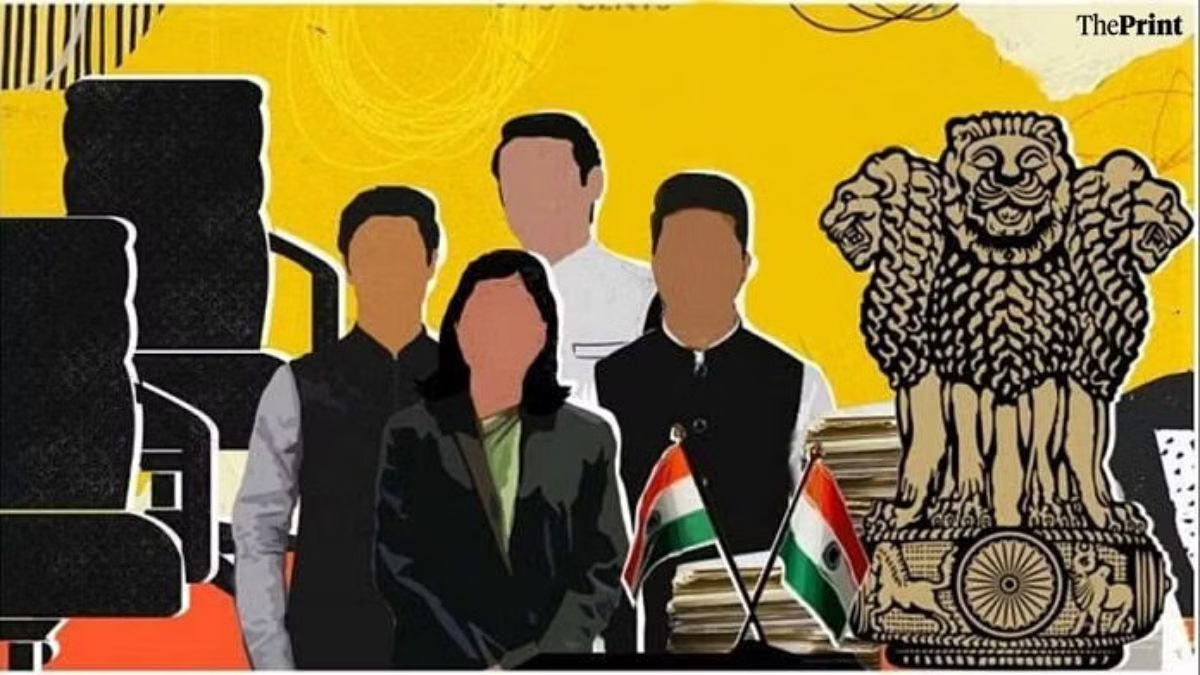
ThePrint has published a column under the heading “IAS diaries,” linking a question of temper among officials in Andhra Pradesh with empty chairs in Haryana.…
A column published by ThePrint and circulated on a Haryana news feed asks two linked questions about India’s senior civil service: temper in Andhra Pradesh, and empty chairs in Haryana. The item is titled “IAS diaries: In Andhra, a question of temper; in Haryana, empty chairs.”
The material available with that headline does not name individual officers, quote any official, or describe a particular meeting, complaint, or inquiry. What is clear is the frame ThePrint chose: an “IAS diary” that treats conduct in one state and attendance or vacancy in another as subjects worth public notice.
The IAS, the Indian Administrative Service, is the all-India cadre that staffs many of the country’s district and secretariat posts. Officers move between field assignments and state or central headquarters, and their day-to-day authority often sits at the point where policy meets the public.
A “question of temper,” as the Andhra half of the headline puts it, points to how officials speak and behave in office, not to a verified incident that can be reconstructed from this summary alone. Public debate in India has long treated courtesy, restraint, and the tone of administrative encounters as part of how the service is judged, alongside formal rules.
Andhra Pradesh is named as the setting for that question. The summary does not say whether the reference is to a single episode, a pattern, or a commentary on workplace culture inside the state administration. Readers should not infer a finding that the column’s available text does not supply.
The Haryana half of the headline — “empty chairs” — is similarly suggestive and similarly short on specifics here. In ordinary administrative language, an empty chair can mean an officer absent from a scheduled meeting, a post left unfilled, or a symbolic complaint that decision-makers were not in the room. The feed item does not say which of those meanings ThePrint intends.
Haryana’s mention in both the headline and the distributing feed places the second scene in that state. No district, department, or date is given in the summary, so the column’s geographic claim stops at the state level.
Taken together, the two images — temper and absence — speak to expectations that senior officers be both composed and present. Those expectations matter because IAS postings shape files that affect land, welfare, policing coordination, and local development, even when a particular column does not document a case.
Columns in this diary style often work by juxtaposition rather than by a single investigation. Here, Andhra and Haryana are set side by side. That structure invites comparison, but comparison is not the same as evidence that the two situations are formally connected. Nothing in the available summary establishes a shared inquiry, transfer, or government response.
What happens next depends on whether ThePrint’s full column, or any official reply, adds names, dates, or outcomes. Until then, the public record from this item is the headline’s claim: a question of temper in Andhra, and empty chairs in Haryana, offered as entries in an IAS diary.
Primary source: Google News Haryana. Newzly rewrites and structures source reporting for clarity; verify critical details at the original.