Dev Uthani Ekadashi Marks Lord Vishnu’s Awakening and Return of Auspicious Ceremonies
Dev Uthani Ekadashi marks Lord Vishnu’s awakening after 118 days of yogic sleep, according to Divya Bhaskar’s religious coverage, and the resumption of auspicious ceremonies, including weddings.
In this piece
Divya Bhaskar’s Dharm Darshan coverage describes Dev Uthani Ekadashi as Lord Vishnu’s awakening after 118 days of yogic sleep and the start of auspicious…
Dev Uthani Ekadashi marks Lord Vishnu’s awakening after 118 days of yogic sleep and the resumption of auspicious ceremonies, according to a headline published by Divya Bhaskar’s Dharm Darshan section. The religious observance is presented as a turning point for families preparing to hold weddings and other ceremonial occasions.
The Gujarati headline refers to the deity as Shri Hari and describes his awakening as taking place “today.” However, the supplied material contains no publication timestamp or article text, so that relative reference cannot be converted reliably into a calendar date for readers planning an observance.
The account frames the awakening in terms of yoganidra, or yogic sleep, a religious description rather than a claim about a physical event. Its reference to a period of 118 days belongs to that devotional framing and should be understood as part of the observance described by the source.
For households considering a wedding, the central announcement is the return of a period associated with auspicious ceremonies. The headline explicitly links Dev Uthani Ekadashi with the beginning of such occasions, but it does not establish that every subsequent date or time is suitable for a particular ceremony.
The coverage also promises information about wedding muhurats, meaning auspicious timings for marriage ceremonies. No individual dates, hours or calendar calculations appear in the material supplied, leaving no basis for reproducing a wedding schedule or identifying a preferred time for couples and their families.
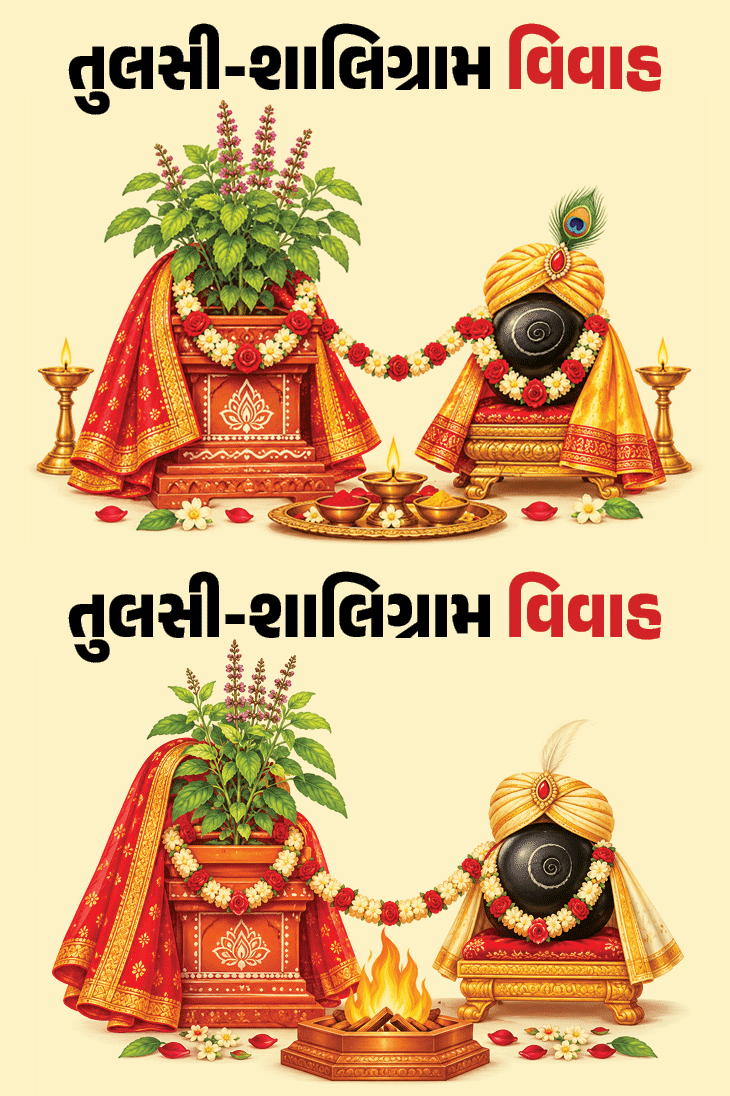
Tulsi Vivah is the other principal subject highlighted alongside the awakening and wedding season. Although the headline promises a complete ritual procedure, the available extract does not describe the ceremony’s sequence, required offerings or prayers, and those practical instructions cannot be established from the headline alone.
That distinction matters for readers seeking guidance rather than a general account of the occasion: the announcement identifies the observance and its ceremonial significance, but not the details needed to perform a ritual. Treating the headline as a complete calendar or worship guide would go beyond what the supplied source supports.
The source therefore points toward the resumption of auspicious occasions while leaving the practical arrangements unresolved in the available material. Readers seeking a specific wedding muhurat or a step-by-step Tulsi Vivah procedure will need the full source report or separately verified guidance before relying on a date, time or ritual sequence.
Primary source: Divya Bhaskar Dharm Darshan. Newzly rewrites and structures source reporting for clarity; verify critical details at the original.