DNA’s Built-In Sunscreen May Explain How Early Life Survived Solar Radiation
Researchers have identified an innate protective mechanism within DNA that converts severe ultraviolet damage into repairable lesions, offering an explanation for how early life survived on a sun-scorched, ozone-free Earth.
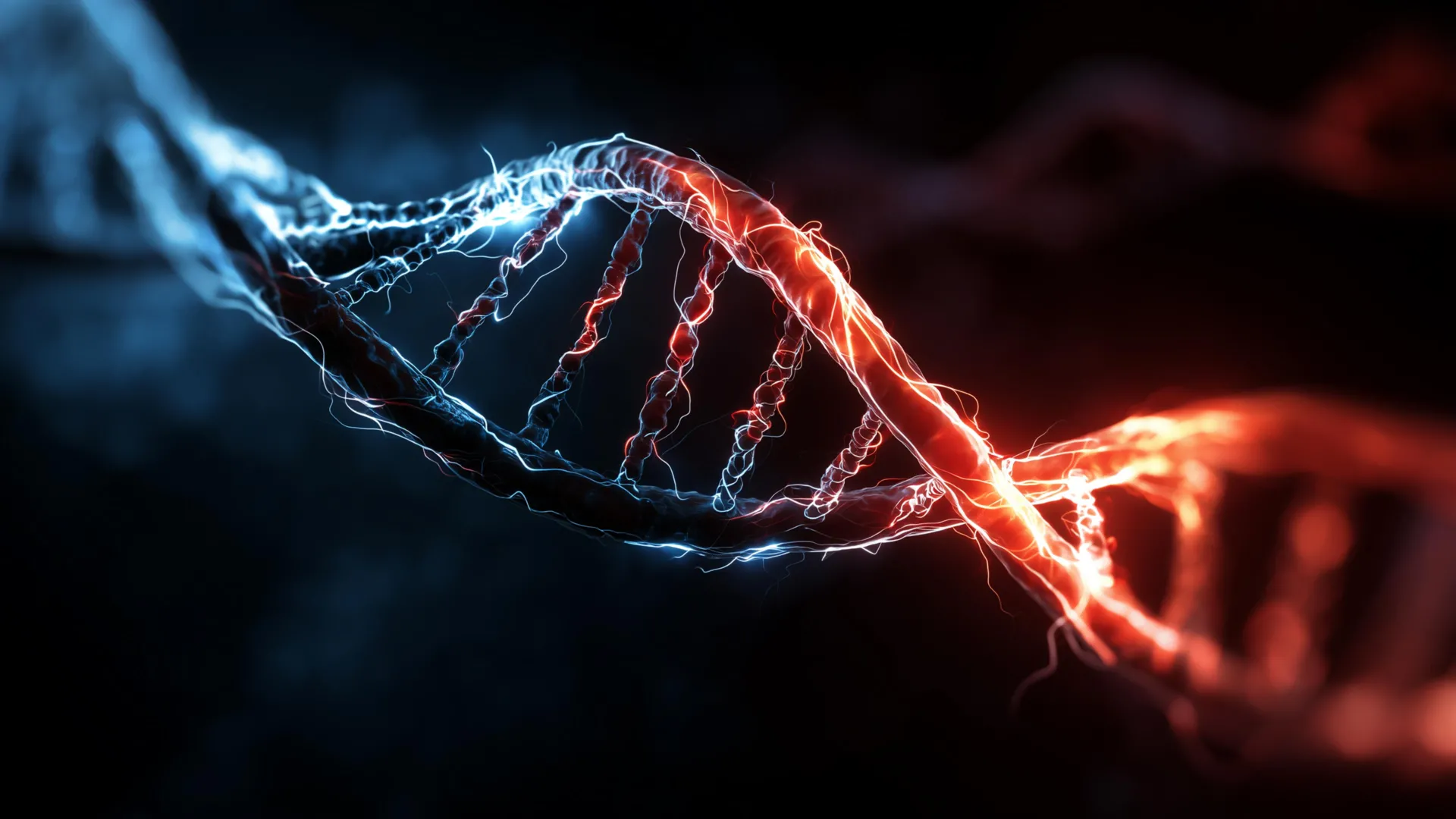
In this piece
A key component of DNA appears capable of transforming destructive ultraviolet radiation damage into manageable lesions that are easier to repair, according to…
Scientists have identified an intrinsic protective property within DNA that may explain how early life survived Earth's punishing ultraviolet radiation billions of years ago. According to research highlighted by ScienceDaily, a foundational component of genetic material appears capable of converting severe, potentially fatal radiation damage into an altered form that is far easier for biological systems to repair. The discovery addresses a longstanding evolutionary question about how primitive organisms endured the harsh environmental conditions of the early planet.
During Earth's earliest geological eras, the planet lacked the protective stratospheric ozone layer that currently filters out high-energy solar rays. As a result, the planetary surface and shallow primordial waters were continually bombarded by unshielded ultraviolet flux. Under standard circumstances, such intense radiation breaks chemical bonds within nucleic acids, creating catastrophic disruptions that typically prevent functional replication.
This intense radiation environment has long presented a fundamental paradox for evolutionary biologists and geochemists. If nascent genetic molecules were constantly exposed to destructive solar forces, the mutational pressure should theoretically have destroyed emerging cells before robust replication mechanisms could develop. How the fragile building blocks of life managed to persist and diversify under such extreme exposure remained an unresolved puzzle.
The newly reported findings suggest that nucleic acid architecture possessed an innate, sunscreen-like capability that operated at the molecular scale. Rather than resisting radiation through an external physical barrier, the DNA component acts dynamically when exposed to high-energy ultraviolet photons. This molecular interaction dissipates or redirects harmful energy, fundamentally changing how the genetic structure absorbs radiation-induced shocks.
Crucially, this process transforms what would otherwise be severe, irreparable structural breaks into milder and more manageable lesions. Primitive cellular machinery or early repair enzymes could subsequently recognize and fix these lesser defects with greater efficiency. By preventing catastrophic genomic collapse, the mechanism gave early life-forms the survival buffer needed to maintain genetic stability across successive generations.
The implications for evolutionary science and the origin of life are substantial. The discovery demonstrates that genetic precursors were not merely passive victims of extreme environmental conditions, but possessed inherent biochemical resilience. This built-in adaptability suggests that the emergence of complex life may have been aided by the structural chemistry of the molecules themselves, rather than requiring perfectly sheltered prebiotic niches.
Beyond terrestrial history, the research carries significant meaning for astrobiology and the search for extraterrestrial life. Many rocky exoplanets identified by astronomers orbit active dwarf stars that emit vast amounts of ultraviolet radiation, creating environments long suspected of being hostile to life. If genetic materials naturally contain mechanisms to mitigate radiation damage, the potential habitability of planets orbiting flare-prone stars could be far broader than previously estimated.
While the discovery provides a compelling explanation for early survival, scientific uncertainty remains regarding how these protective attributes operated across different prebiotic settings. Researchers acknowledge that replicating the exact chemical soup and atmospheric pressures of the early Archean Earth involves significant experimental challenges. Further laboratory testing will be required to determine how this molecular mechanism interacted with ancient mineral surfaces and varying water depths.
Looking ahead, scientists plan to conduct detailed spectroscopic and chemical analyses to map the precise pathway through which DNA components mitigate radiation trauma. These ongoing experiments aim to reconstruct how early cellular ancestors evolved sophisticated repair enzymes to complement this intrinsic sunscreen effect. As research deepens, the findings promise to clarify not only Earth's distant biological past, but the universal conditions that allow life to take hold across the cosmos.
Primary source: ScienceDaily. Newzly rewrites and structures source reporting for clarity; verify critical details at the original.