world·Maharashtra·Beed District
Drought in Maharashtra’s Beed Sparks Distress Migration
Severe drought across Maharashtra’s Beed district has triggered distress migration among rural workers, who report that promised state job guarantees have failed to deliver relief despite a ₹6,728-crore government package.
In this piece
Severe drought in Maharashtra’s Beed district is forcing women farmers and rural labourers into distress migration as local crops fail. Despite a ₹6,728-crore…
A deepening agrarian crisis across Maharashtra’s drought-hit Beed district is driving rural families into distress migration as withered fields and dried water sources wipe out farm livelihoods. Despite the state government’s announcement of a ₹6,728-crore relief package aimed at employment generation, villagers report that practical assistance has yet to materialize on the ground.
In community after community across the Marathwada region, farmers are confronting widespread crop failures following severe rainfall deficits. Fields that once yielded staple harvests of cotton and sugarcane now stand parched, leaving agricultural workers without daily wages or domestic food reserves.
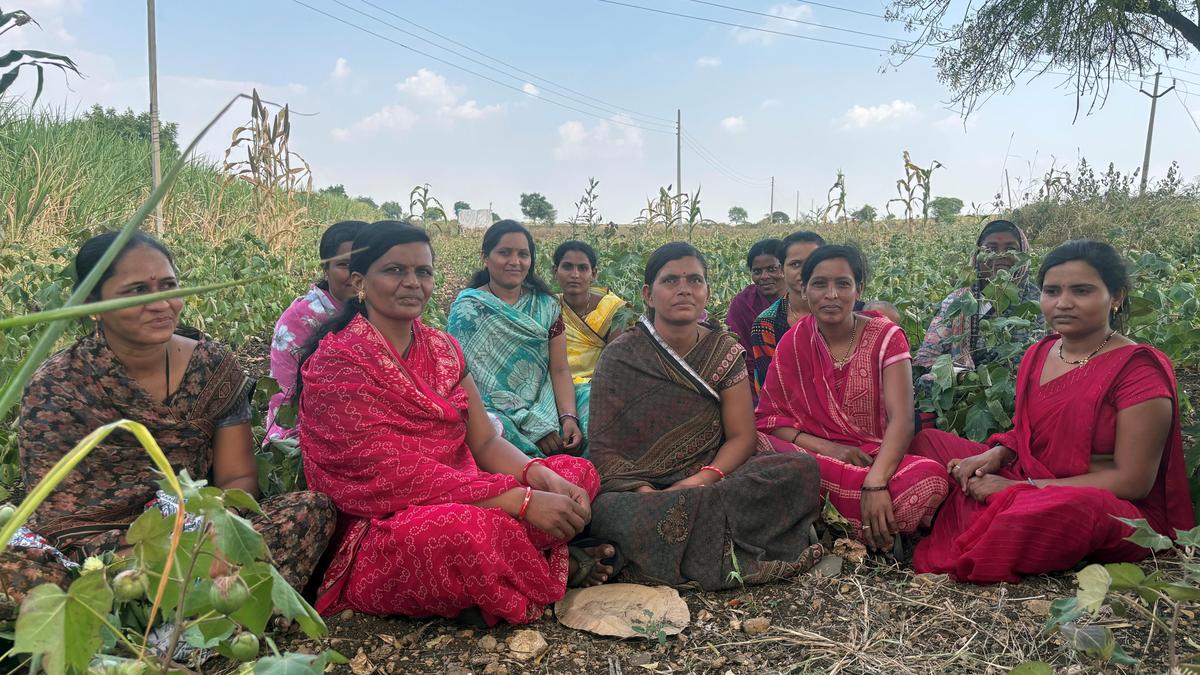
Women farmers and landless laborers bear an outsized share of the burden as local economic options disappear. Many have made repeated appeals to local authorities for immediate employment under statutory job guarantee schemes, seeking an alternative to packing up their households and abandoning their villages.
According to ground accounts from affected settlements, government-backed employment guarantee programs have largely stalled, failing to deliver the steady work promised by law. While administrative frameworks exist to provide manual public works during agrarian distress, residents say bureaucratic delays and administrative inertia have left rural worksites unopened.
The widening gap between policy announcements and local reality comes even as the Maharashtra government pledged ₹6,728 crore to fund rural job creation. The massive package was framed around 375 categories of civil and conservation works, designed specifically to buffer vulnerable rural populations against monsoon failures and water scarcity.
With relief measures stalling, entire households are being forced into distress migration, locking their homes to seek manual labor in distant sugar mills or urban construction sites. This seasonal displacement disrupts family stability, pulls children out of local schools, and leaves older relatives behind in parched villages with dwindling access to water and medical care.
The crisis highlights the persistent vulnerability of the Marathwada belt, where recurrent droughts continually destabilize agrarian household budgets. When regular harvests fail and public employment guarantees fall through, families face mounting debts to informal moneylenders, compounding generational poverty across rural communities.
Policy observers and agrarian advocates note that statutory job guarantees are intended to serve as a vital shock absorber against extreme weather and climate distress. When implementation lags during peak drought periods, the safety net collapses precisely when landless laborers and marginalized smallholders require it most.
As dry conditions persist, village collectives and farm workers continue to pressure administrative authorities to sanction public works immediately and expedite relief disbursements. Whether the state administration can translate its multi-crore budgetary commitment into accessible village-level employment will determine whether thousands more rural families are forced to migrate in search of survival.
Primary source: The Hindu. Newzly rewrites and structures source reporting for clarity; verify critical details at the original.