Effort to Reintroduce Brazil’s Extinct-in-Wild Spix’s Macaw Mired in Turmoil
More than three decades after vanishing from the wild, Brazil's iconic Spix’s macaw faces an uncertain future as an ambitious international reintroduction effort unravels into institutional conflict, disputes, and operational setbacks.
In this piece
The Spix’s macaw, the vibrant blue parrot that inspired the animated film 'Rio,' disappeared from South American skies more than thirty years ago. While an…
An ambitious international initiative to resurrect the Spix’s macaw and return the celebrated blue bird to its native Brazilian wilderness has descended into sharp controversy and organizational paralysis. Decades after the species disappeared from South American skies, conservationists had hoped captive breeding would secure a historic ecological comeback. Instead, a flagship reintroduction program has been derailed by escalating disagreements and operational turmoil.
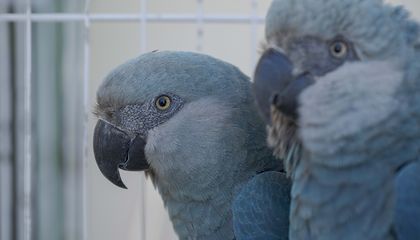
The vivid blue parrot gained worldwide cultural recognition as the inspiration behind the hit 2011 animated movie "Rio," which highlighted the perils of wildlife trafficking and the bird's razor-thin survival margins. In reality, the species suffered a devastating decline throughout the late twentieth century, driven by relentless poaching for the illicit pet trade and sweeping degradation across Brazil's arid Caatinga scrubland. The last known individual vanished from the wild more than thirty years ago, leaving the parrot completely dependent on captive facilities.
To reverse that loss, international aviculturists, conservation groups, and government authorities coordinated a complex, multi-year project to rebuild the population from a minuscule captive gene pool. Millions of dollars were invested into state-of-the-art breeding centers, release enclosures, and extensive ecological restoration efforts in northeastern Brazil. Early milestones offered rare optimism that modern veterinary science and managed care could successfully reverse extinction in the wild.
However, the multi-party collaboration began to fracture as competing visions over governance, animal welfare, and breeding priorities triggered deep friction among key stakeholders. Independent observers and wildlife authorities increasingly raised concerns over the transparency of the operation, the allocation of captive birds, and compliance with national environmental regulations. What began as a unified scientific campaign quickly became ensnared in bureaucratic standoffs and contested oversight.
Compounding the administrative fallout were critical biological and biosecurity vulnerabilities that threaten the birds themselves. Captive flocks with highly restricted genetic diversity remain acutely susceptible to infectious avian illnesses, including debilitating feather and beak disorders that can jeopardize entire colonies. Critics warned that releasing vulnerable birds without rigorous disease surveillance and stable long-term protocols risked triggering catastrophic setbacks in the wild.
The deepening crisis underscores the profound difficulties inherent in de-extinction and species reintroduction projects worldwide. While technological advancements in aviculture have made captive reproduction possible, returning an animal to a landscape where it has long been absent requires flawless cooperation, sustained funding, and uncompromising institutional trust. When human alliances break down, the fate of an entire species can be imperiled before wild self-sufficiency is ever attained.
Beyond the fate of the macaw itself, the controversy casts a shadow over broader conservation strategies across South America. The Caatinga biome, an ecologically fragile and underprotected region, depends on charismatic flagship species like the Spix's macaw to draw global attention, scientific resources, and anti-poaching enforcement. A high-profile breakdown in project governance risks undermining public trust and discouraging international donors from backing similar biodiversity recovery frameworks.
Rebuilding the reintroduction program will require resolving bitter institutional impasses, re-establishing transparent scientific oversight, and stabilizing captive population management. Conservationists continue to emphasize that the species cannot afford years of protracted bureaucratic conflict while surviving numbers remain critically low. Whether the Spix’s macaw can ever permanently reclaim its ancestral skies now depends as much on diplomatic reconciliation among human stewards as on the resilience of the birds themselves.
Primary source: Smithsonian Magazine. Newzly rewrites and structures source reporting for clarity; verify critical details at the original.