Will COP31 in Antalya Conclude With a Global Climate Deal?
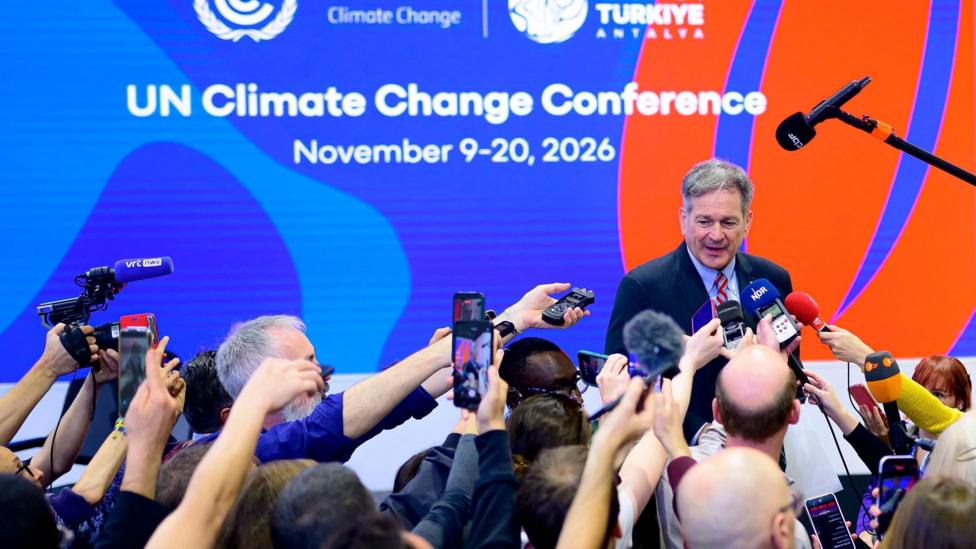
As the COP31 UN climate summit unfolds in Antalya, Turkey, BBC Climate editor Justin Rowlatt examines whether international delegates can overcome deep divisions to forge a new consensus agreement.
In this piece
Delegates at the COP31 UN climate summit in Antalya, Turkey, face intense diplomatic pressure as negotiations enter a critical phase. Reporting from the venue,…
Negotiators and international delegations gathered in Antalya, Turkey, for the COP31 United Nations climate conference face mounting scrutiny over whether the high-stakes summit will conclude with a comprehensive global agreement. Reporting from the conference grounds in Antalya, BBC Climate editor Justin Rowlatt highlighted the central question hanging over the international talks: whether participating nations can successfully bridge lingering diplomatic divisions to deliver a unified accord.
The annual United Nations climate summits serve as the primary multilateral mechanism for coordinating international policy on emissions, adaptation, and environmental protection. Convening the session in Antalya places the Turkish host city at the center of global environmental diplomacy, drawing together government officials, policy experts, and international observers seeking common ground under the UN Framework Convention on Climate Change.
Reaching a consensus at any United Nations climate conference requires navigating complex, multifaceted geopolitical interests across nearly two hundred participating nations. Because UN climate decisions traditionally rely on universal consensus rather than majority voting, even a single delegation or bloc of countries can stall negotiations over contentious phrasing, implementation timelines, or financial commitments.
Historically, the final stages of COP summits are defined by prolonged closed-door sessions where ministerial delegations attempt to draft compromise text acceptable to all parties. Disagreements frequently emerge over the balance between national economic priorities and collective climate targets, creating tense bargaining dynamics that often push official proceedings well past their scheduled deadlines.
A recurring point of friction in global climate diplomacy revolves around the differing responsibilities and economic capacities of developed and developing nations. Wealthier nations often prioritize ambitious emissions-reduction targets and stringent monitoring frameworks, while developing nations consistently emphasize equitable financing, technological support, and resilience assistance to manage mounting environmental pressures.
The outcome of COP31 carries significant weight for international policy, as agreements forged under UN auspices establish benchmarks that guide domestic legislation and international investment trends. A decisive pact reinforces confidence in multilateral diplomacy and accelerates green transition strategies, whereas a watered-down outcome risks undermining momentum toward coordinated ecological governance.
As Rowlatt reported from the venue, whether the gathering in Antalya can overcome these entrenched negotiating divisions remains an open and unresolved question. Observers watching the proceedings note that final declarations often hinge on last-minute concessions negotiated during marathon overnight sessions, where legal language is debated down to individual clauses and qualifying words.
Outside the negotiating halls, civil society organizations, scientific bodies, and economic leaders continue to urge delegates to move beyond procedural gridlock and produce actionable commitments. The credibility of the COP process relies heavily on its ability to translate high-level diplomatic dialogue into concrete mechanisms that hold signatory nations accountable over the coming decades.
With formal talks advancing toward their scheduled finish in Antalya, attention remains fixed on whether the conference leadership and UN officials can steer the diverse assembly toward a meaningful consensus. Until ministerial teams review and approve the final draft texts, the prospect of a breakthrough agreement remains uncertain, leaving the ultimate success of COP31 hanging in the balance.
Primary source: BBC Science. Newzly rewrites and structures source reporting for clarity; verify critical details at the original.