Seven Dead and Over 100 Injured in Egypt Train Collision Near Giza
At least seven people were killed and over 100 injured outside Giza after two passenger trains travelling in the same direction collided, derailing multiple carriages and prompting an urgent rescue operation.
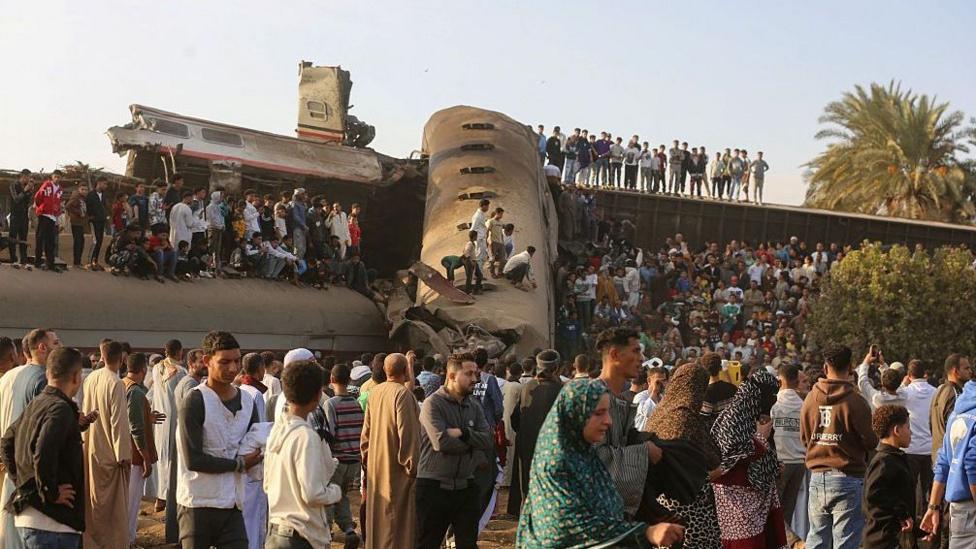
At least seven people have been killed and more than 100 others injured after two trains collided outside the city of Giza in Egypt. The collision occurred when both trains, which were travelling in the same direction along the route, crashed into one another, according to initial reporting from BBC World.
The force of the impact caused several carriages to derail, leaving damaged railcars strewn along the tracks and trapping commuters inside the wreckage. Emergency medical personnel and local rescue crews were quickly mobilized to the crash site to assist passengers and provide urgent medical attention to scores of injured individuals.
With more than 100 people reported hurt, regional healthcare facilities were placed on alert to manage the sudden influx of patients. Search and recovery operations continued around the derailed carriages to ensure all affected passengers were accounted for amid the wreckage.
The incident unfolded just outside Giza, a major metropolitan center located on the west bank of the Nile adjacent to Cairo. As a vital geographic and economic crossroads, the rail lines operating through and around Giza carry heavy volumes of daily commuter and regional passenger traffic, linking the capital metropolitan area with southern governorates.
Early accounts confirming that both trains were moving in the same direction have drawn immediate attention to railway signaling systems and operational dispatch protocols. Industry observers note that same-direction collisions typically point to potential failures in track block signaling, automated safety controls, or critical communication breakdowns between drivers and central transit controllers.
Egypt's extensive railway system, among the oldest in the Middle East and North Africa, has faced persistent scrutiny over passenger safety following a series of fatal accidents over recent decades. Legacy signaling mechanisms, maintenance backlogs, and heavy passenger density have historically complicated efforts to ensure uniform operational safety across the national network.
In response to past rail disasters, national authorities have launched major modernization drives aimed at renovating permanent way infrastructure, purchasing updated rolling stock, and installing electronic signaling systems. Nevertheless, carrying out comprehensive upgrades across thousands of kilometers of heavily utilized track remains a protracted process with variable progress across regional corridors.
Collisions along primary transit routes carry profound social and economic resonance in Egypt, where millions of citizens depend on passenger trains as an affordable everyday mode of transportation. Severe incidents routinely prompt heightened public scrutiny regarding infrastructure governance, maintenance accountability, and passenger welfare across state-run transportation operations.
In the immediate hours following the Giza collision, detailed official findings remain limited, and authorities have not yet issued comprehensive statements detailing the specific mechanical or human factors involved. Independent verification of the final casualty figures and technical assessments of the rolling stock involved remain ongoing as emergency response activities wind down.
Rail services along the affected route are expected to encounter significant disruptions while heavy clearance equipment works to remove derailed carriages and technicians evaluate track integrity. Official investigative bodies are anticipated to analyze operational logs, signal status recordings, and communication records to establish accountability and identify measures to prevent future rail disasters.
Primary source: BBC World. Newzly rewrites and structures source reporting for clarity; verify critical details at the original.