EPA: Initial Tests Show No Toxic Lead Contamination After Iowa Explosives Detonation
Initial EPA tests found no elevated lead levels in drinking water or air following the controlled detonation of five tons of unstable explosives at the Iowa Army Ammunition Plant.
In this piece
Preliminary laboratory tests from the EPA indicate no toxic lead contamination in local drinking water or air after the controlled explosion of volatile…
Initial laboratory tests conducted after the controlled detonation of five tons of volatile explosives at the Iowa Army Ammunition Plant showed no signs of toxic lead contamination, federal environmental officials announced. The U.S. Environmental Protection Agency confirmed that preliminary data from post-blast sampling revealed no elevated lead concentrations in local drinking water supplies or surrounding community air monitors.
The blast was carried out by the U.S. Army after military safety specialists determined that roughly 68 drums containing aging lead azide had destabilized and posed an imminent risk of spontaneous detonation. Lead azide, a shock-sensitive compound historically used in military detonators and primers, had crystallized over decades of storage inside bunkers at the Middletown facility, making physical transport too dangerous.
To resolve the safety crisis, the EPA issued an emergency permit under the Resource Conservation and Recovery Act authorizing the controlled in-place demolition of the degraded stockpile. Federal officials coordinated with state emergency managers and defense personnel to plan the blast under strict weather parameters designed to minimize environmental dispersion.
Ahead of the controlled explosion, local authorities instituted safety cordons and evacuation advisories for residents living within a designated perimeter around the Des Moines County installation. Communities across southeastern Iowa and neighboring western Illinois were advised to remain indoors, close windows, and set home ventilation systems to recirculate air during and immediately following the blast.
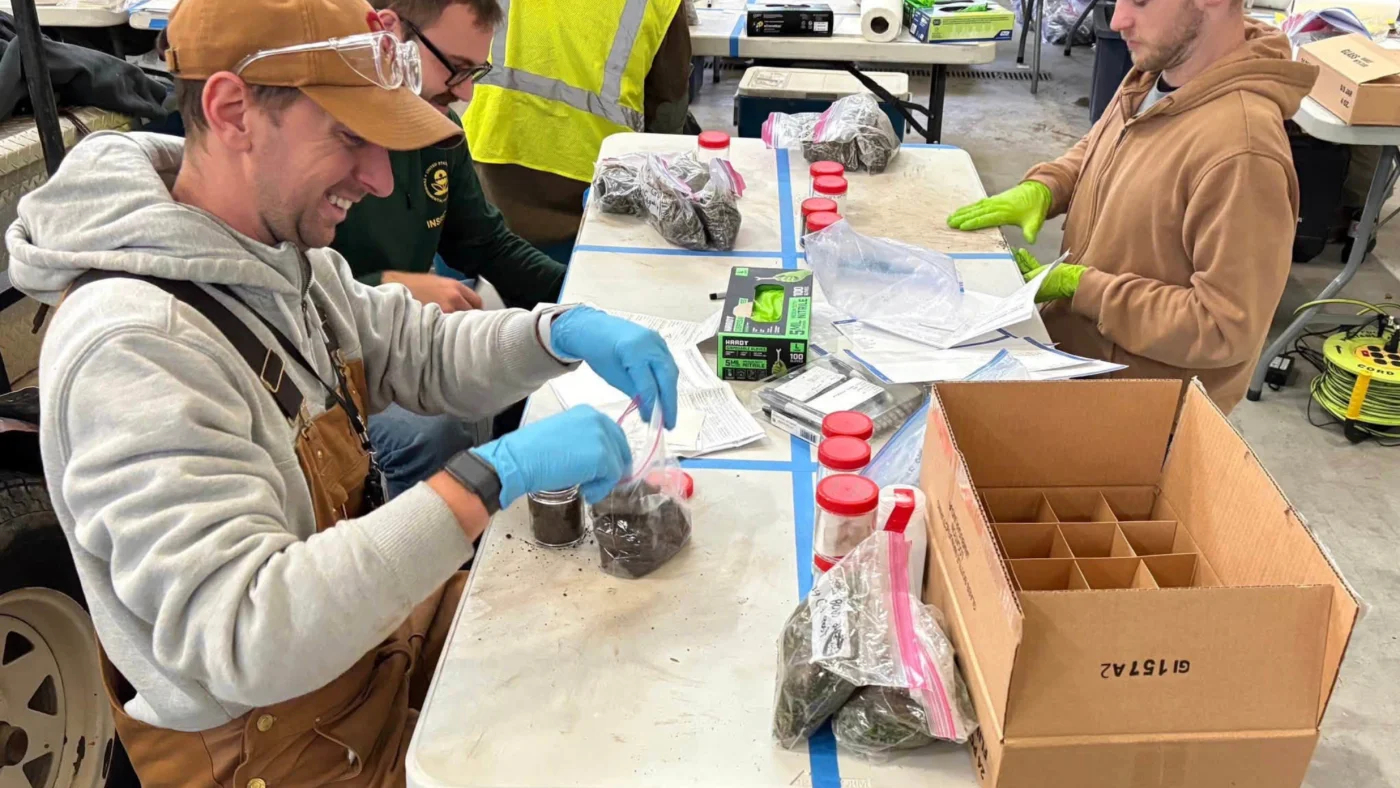
In response to widespread public concern regarding heavy metal exposure, the EPA mobilized hundreds of agency personnel and environmental contractors across the region. The teams established an extensive monitoring network spanning multiple counties to track air quality in real time and collect baseline and post-blast samples of ambient air, soil, surface dust, and public water systems.
Early post-detonation screening showed that continuous air monitoring stations recorded no spikes or detectable plumes of airborne lead reaching populated areas. Follow-up laboratory analyses of municipal drinking water sources and local intake facilities similarly demonstrated that lead levels remained well within safe federal thresholds.
The clean initial findings provided immediate relief to nearby residents who had voiced intense apprehension about toxic fallout and long-term soil deposition from such a massive chemical detonation. Because lead is a potent neurotoxin that accumulates in the body and poses severe developmental risks to children, community advocates and local officials had closely scrutinized the decision to detonate rather than neutralize the material chemically.
Army and regulatory officials had evaluated alternative disposal methods, including commercial chemical neutralization technologies, before determining that moving the unstable drums would endanger explosive ordnance disposal personnel. Federal authorities ultimately concluded that an engineered, controlled explosion inside an enclosed trench configuration was the only viable path to neutralize the immediate hazard.
Federal officials emphasized that while the first round of laboratory data is encouraging, the testing process remains in its preliminary stages. Laboratory technicians are continuing to process thousands of additional environmental samples collected throughout the multi-state monitoring zone to establish definitive conclusions.
The EPA stated that validated test results for soil, surface water, and settled dust will be published as they complete independent quality-assurance reviews in the coming weeks. Agency leaders reaffirmed their commitment to maintaining ongoing coordination with local health departments and keeping surrounding communities informed throughout the aftermath of the operation.
Primary source: Google News Iowa. Newzly rewrites and structures source reporting for clarity; verify critical details at the original.