European Urban Birds Flee Sooner From Women Than Men, Study Finds
A study of 37 bird species across five European countries found that women triggered earlier escape responses than men. Researchers have not established which cues explain the difference.
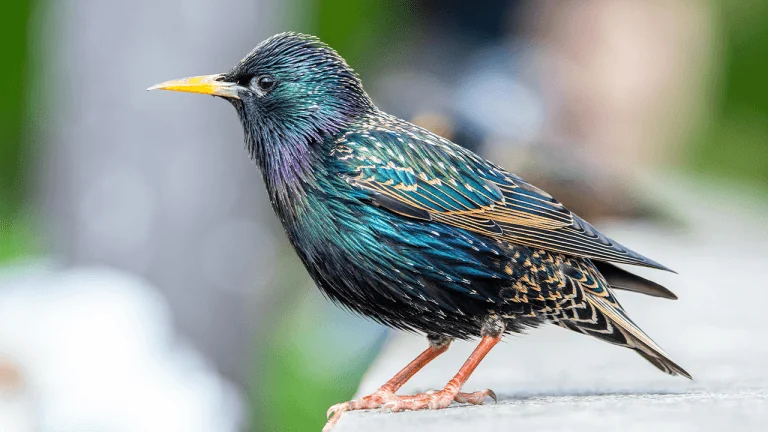
Urban birds in five European countries fled sooner when approached by women than by men, according to research published in People and Nature. Men could get about one meter closer on average before birds moved away, but the researchers have not established what caused the difference.
The pattern appeared in Czechia, France, Germany, Poland and Spain, with 37 species represented in the analysis. Familiar city birds, including great tits, house sparrows and blackbirds, were among those studied in parks and other urban green spaces.
Researchers measured flight initiation distance, the gap between an approaching person and a bird when it escapes. This provides a way to assess responses to potential threats, rather than a direct measure of whether an animal likes or dislikes particular people. A longer distance indicates an earlier escape response.
Fieldwork took place between April and July 2023 across seven cities. Four women and four men, all experienced ornithologists, participated, with one woman and one man collecting observations in each city. The observers were paired for similar height and wore similarly colored clothing to reduce obvious differences in appearance.
Each observer walked directly toward a bird at a normal, steady speed while looking at it. The researchers recorded 2,701 observations overall, then restricted the main analysis to species with at least 10 records. That left 2,581 observations covering the 37 species used in the study.
The analysis accounted for factors including starting distance, flock size, the bird’s sex, surrounding land use and vegetation, as well as evolutionary relationships among species. The association with observer sex remained statistically significant after those adjustments. That strengthens the reported pattern, but does not identify its underlying mechanism.
The British Ecological Society said possible explanations include differences in gait, body shape or scent cues. Those remain hypotheses, not demonstrated causes. The researchers cautioned that the findings are preliminary and require further work to establish how consistently the pattern holds beyond the observations collected.
The results also have implications for the way wildlife studies are designed. UCLA, whose behavioral ecologist Daniel Blumstein co-authored the paper, said research using only male or only female experimenters could produce biased results if animals respond differently to them. An observer’s presence may therefore be part of the behavior being measured, rather than a neutral backdrop.
For urban ecology, the unresolved question is which features of approaching people birds actually detect and use when deciding to escape. The findings do not establish that women pose a greater danger, nor do they demonstrate that every individual bird responds in the same way. They describe an average difference under the study’s conditions.
The researchers propose follow-up experiments that separate movement patterns, scent and physical traits instead of treating observer sex as a single explanation. Testing those cues independently could help distinguish the signal birds respond to from other differences between observers. Until then, the escape-distance gap remains an observation with an uncertain cause.
Primary source: Bitcoin.com News. Newzly rewrites and structures source reporting for clarity; verify critical details at the original.