FAA Nationwide Ground Stop Caused by Copper Wire Replacement, Transportation Chief Says
A nationwide FAA ground stop on Friday was triggered by routine maintenance replacing copper wire with fiber optics at a remote facility, Transportation Secretary Sean Duffy said.
In this piece
Transportation Secretary Sean Duffy confirmed that Friday's nationwide FAA ground stop was caused by routine maintenance to replace copper wire with fiber…
A nationwide ground stop ordered by the Federal Aviation Administration on Friday was triggered by routine work to replace aging copper wire with fiber optic cabling at a remote facility, Transportation Secretary Sean Duffy announced. Speaking at a press conference, Duffy disclosed the direct cause behind the abrupt disruption that grounded commercial and general aviation flights across the United States. The briefing marked the federal government's first formal explanation for the widespread halt to air traffic.
According to Duffy, the disruption unfolded during scheduled maintenance as technicians worked to swap out legacy copper communications wire for high-speed fiber optic infrastructure. The transportation secretary stressed that the activity was routine maintenance rather than an unanticipated failure tied to a broader, complex modernization initiative. Officials sought to make clear that standard infrastructure upkeep, rather than an active digital transformation program, was underway when the problem occurred.
Despite the routine nature of the hardware replacement, the work at the remote FAA installation swiftly disrupted essential systems supporting federal aviation oversight. When communications or operational channels between facilities and air traffic centers are compromised, safety protocols require the agency to restrict or freeze flight departures. The resulting decision brought commercial aircraft to a standstill at airport gates nationwide while engineers worked to resolve the issue.
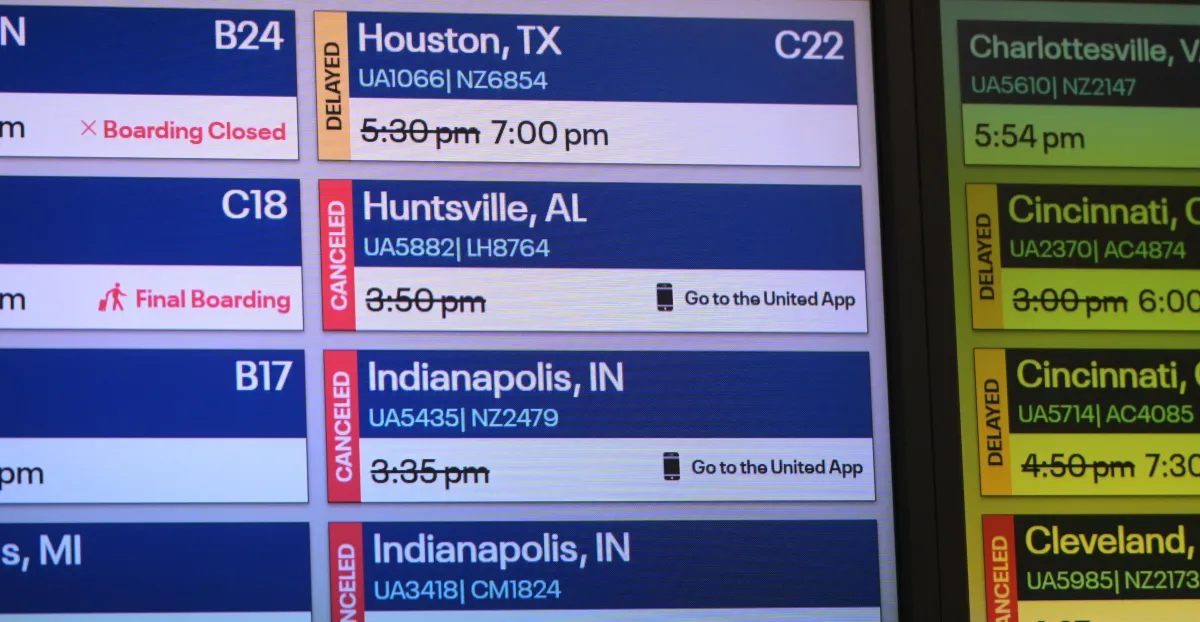
Ground stop orders of this magnitude are among the most disruptive actions the FAA can take, typically reserved for severe technical outages, severe weather phenomena, or critical security incidents. Friday's order cascaded through airline networks, stranding thousands of travelers, delaying scheduled departures, and forcing air carriers to rearrange flight crews and aircraft. Because airline scheduling is tightly choreographed, an interruption lasting even a short time generates rolling delays that persist for hours.
The disclosure highlights the persistent challenges surrounding legacy telecommunications infrastructure within the national aviation system. For decades, remote installations and radar facilities have depended on physical copper wiring to relay navigational and operational data. Replacing these legacy lines with durable fiber optics is necessary to bolster long-term bandwidth and reliability, but transitional cutovers carry heightened operational risks when systems operate around the clock.
During the briefing, Duffy did not provide extensive technical specifics regarding why backup systems and secondary communications links failed to absorb the localized interruption. The transportation department has not yet published an engineering timeline identifying the exact sequence of events that linked a localized line disconnection at an outlying site to a nationwide halt. Observers have noted that robust redundancy protocols are typically designed to isolate remote failures before they can propagate nationally.
The event is expected to attract sharp scrutiny from federal lawmakers, regulatory overseers, and airline industry executives seeking clarity on maintenance oversight. Congressional transportation committees routinely investigate nationwide ground stops, with lawmakers likely to question whether standard risk assessments were conducted prior to cutting over physical wiring. Airline representatives are also expected to press the department for assurances that future scheduled maintenance will not destabilize critical air transit operations.
As the FAA and transportation officials conclude their review of Friday's incident, attention will turn toward strengthening fail-safe mechanisms across all remote facilities. Federal authorities will need to evaluate whether existing operational redundancies require restructuring during physical cable transitions. The outcome of the agency's post-incident assessment will determine what operational changes are implemented to ensure routine physical maintenance does not again paralyze the national airspace.
Primary source: The Verge. Newzly rewrites and structures source reporting for clarity; verify critical details at the original.