FAA Probes Amazon Drone Crash Into Fiber Cable and Garage in Michigan
Federal aviation regulators have launched an investigation after an Amazon Prime Air delivery drone struck an overhead utility cable and crashed onto a residential garage in suburban Detroit, raising fresh scrutiny over commercial drone safety.
In this piece
The Federal Aviation Administration is investigating an Amazon delivery drone crash in Huntington Woods, Michigan, where an aircraft severed a fiber cable and…
Federal aviation regulators have launched an inquiry into an Amazon Prime Air delivery incident after one of the company's autonomous drones struck an overhead utility cable and crashed onto a residential garage in Michigan. The mishap occurred in Huntington Woods, a northern suburb of Detroit in Oakland County, drawing fresh scrutiny to the retail giant's expanding aerial delivery ambitions.
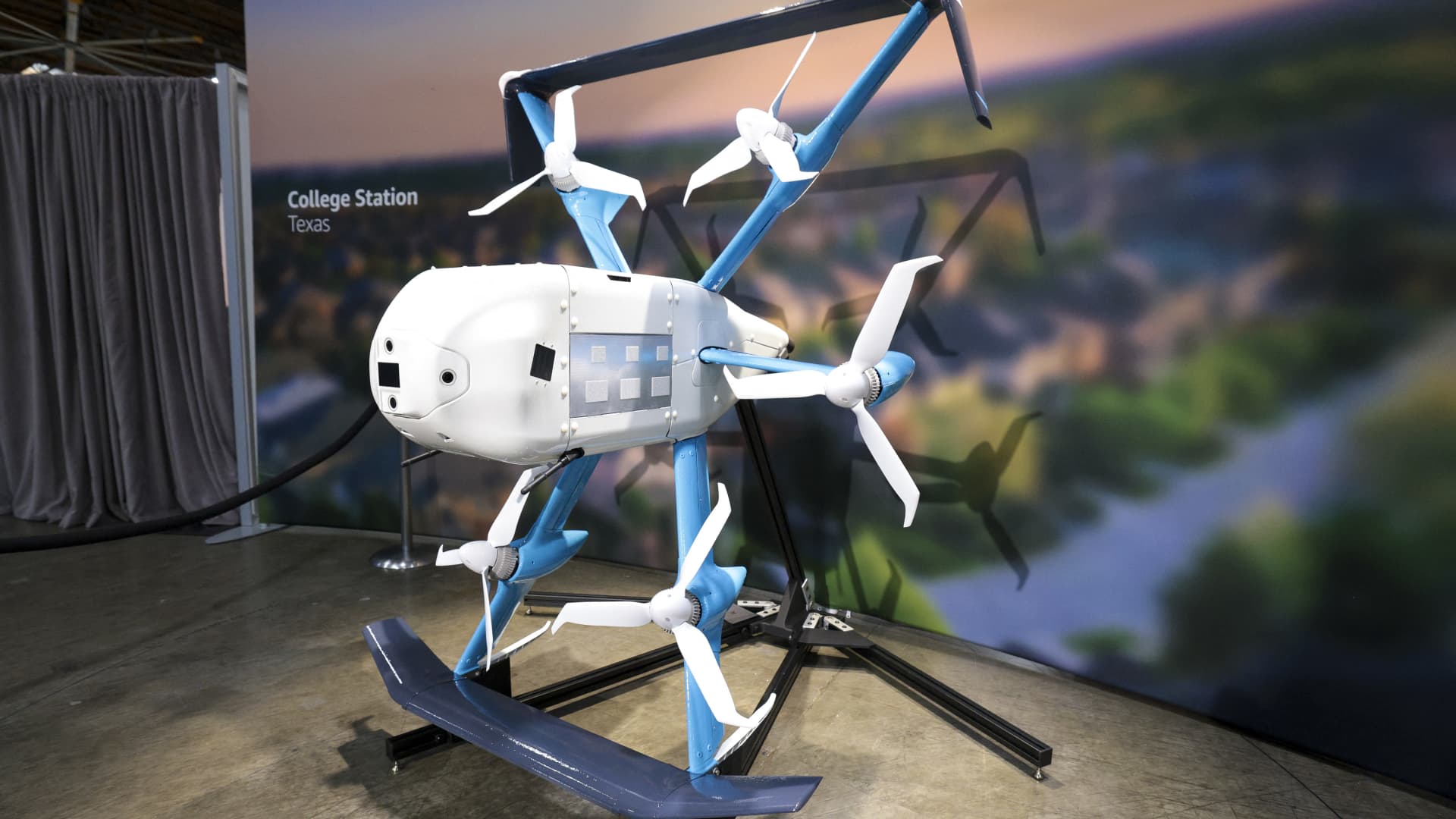
According to preliminary reports, the aircraft, identified as an Amazon MK30 delivery drone, had just completed a drop-off of a customer package containing shampoo. As the drone attempted its climbout following the drop, it struck an overhead fiber-optic internet line, sheared off a propeller, and became entangled in nearby power lines before falling onto the roof of a resident's garage.
No injuries were reported on the ground or in the neighborhood during the crash. Local utility personnel from DTE Energy were dispatched to the scene and briefly de-energized the affected service line to allow emergency responders and recovery crews to safely retrieve the downed aircraft. Property damage was limited to minor shingle damage on the garage roof.
The Federal Aviation Administration confirmed that it has opened an investigation into the circumstances surrounding the flight and subsequent impact. Officials from the National Transportation Safety Board said the agency is aware of the incident and gathering preliminary data, though it has not formally launched an independent probe at this stage.
Amazon stated that it is actively reviewing the flight data and examining what caused the drone to misjudge the overhead obstacles during its ascent. Company spokesperson Jack Stelzner emphasized that safety remains Amazon's highest priority, noting that the company investigates every delivery flight that does not unfold strictly according to plan to strengthen system safeguards.
The incident puts renewed focus on Amazon's latest-generation MK30 drone, which was engineered to operate more quietly and safely in dense suburban environments than earlier iterations. Equipped with sophisticated onboard sensors and computer vision algorithms, the aircraft is specifically designed to detect and avoid unforeseen obstacles such as power lines, trees, pets, and people during low-altitude maneuvers.
The Michigan crash is not the first time Amazon's aerial fleet has encountered unexpected physical hazards during suburban trials. Federal safety officials previously examined mishaps involving Prime Air aircraft, including an incident in Waco, Texas, where a drone severed a residential internet line, as well as separate collisions with a construction crane near Phoenix, Arizona.
For the wider commercial drone industry, the incident illustrates the lingering technical challenges of navigating the so-called last 50 feet of flight in suburban neighborhoods. While delivery companies have secured expanded FAA permissions to fly beyond the visual line of sight of remote operators, community acceptance depends heavily on proving that automated aircraft can safely navigate cluttered residential airspace.
As federal investigators examine the telemetry logs and sensor recordings from the Huntington Woods flight, the findings could influence how regulators evaluate obstacle-detection requirements for commercial drone fleets. Amazon continues to press forward with its plans to scale drone deliveries across multiple metropolitan markets, but ongoing regulatory reviews may dictate how rapidly those autonomous operations are allowed to expand.
Primary source: Google News Michigan. Newzly rewrites and structures source reporting for clarity; verify critical details at the original.