US Blacklists Singapore Firm Megaspeed Over Alleged Nvidia Chip Diversion to China
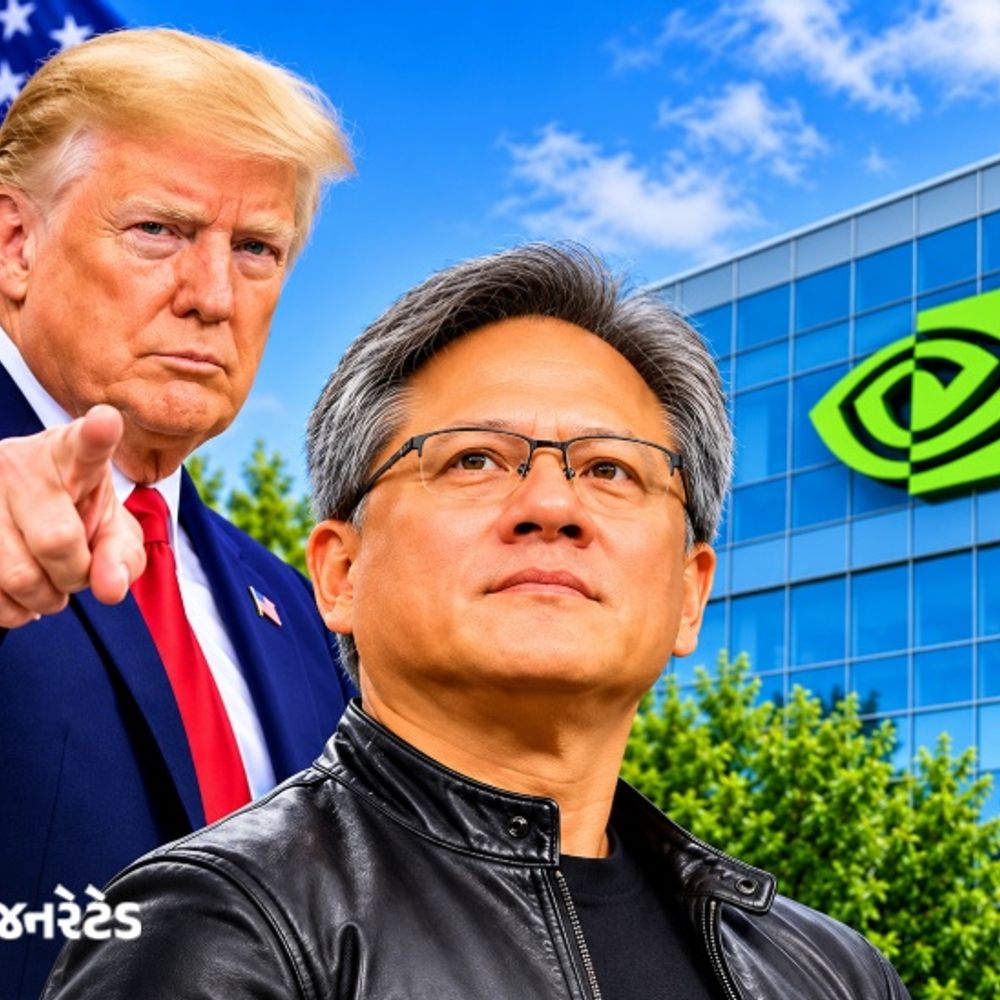
The Trump administration has blacklisted Singapore-based AI firm Megaspeed over alleged diversions of Nvidia chips to China, maintaining federal scrutiny even as Nvidia CEO Jensen Huang returned to his post.
In this piece
The U.S. Commerce Department has placed Singapore-based Megaspeed and its regional affiliates on the Entity List for allegedly funneling restricted Nvidia AI…
The United States Commerce Department has placed Singapore-based artificial intelligence infrastructure firm Megaspeed, along with its subsidiaries in Thailand and Malaysia, onto the federal trade blacklist. The punitive action, executed under the Trump administration, bars American enterprises from selling advanced microchips, proprietary software, and specialized computing hardware to the firm without explicit federal licenses. Under the newly imposed Entity List rules, any subsequent export license applications for the firm face a presumption of denial.
Federal regulators took decisive action following a prolonged multi-agency investigation into allegations that Megaspeed functioned as an illicit transshipment hub to divert restricted Nvidia artificial intelligence processors to buyers in China. U.S. export enforcement officials determined that the Singaporean cloud provider was used to circumvent federal restrictions implemented to keep advanced American semiconductor technology out of Beijing's military and state research institutions. The blacklisting marks one of the most direct enforcement crackdowns on third-party intermediaries operating across Southeast Asia.
Scrutiny surrounding the enterprise intensified considerably over the ownership structure and political ties of Megaspeed's controlling shareholder. U.S. intelligence officials identified Chinese businesswoman Alice Huang, who holds a majority equity stake in Megaspeed, as an intelligence operative working on behalf of Beijing. Chinese government spokespersons have strongly denied the espionage claims, dismissing the allegations as politically motivated fabrications.
The controversy swiftly expanded into a major corporate crisis for Nvidia after disclosures revealed a personal relationship between Alice Huang and Nvidia Chief Executive Officer Jensen Huang. The resulting uproar and heightened scrutiny from national security regulators prompted Jensen Huang to briefly resign from his leadership position at the semiconductor giant. The sudden leadership vacuum triggered significant volatility across global equity markets and raised urgent questions about corporate governance at the world's premier AI chipmaker.
Jensen Huang was subsequently reinstated to his executive role at Nvidia following direct engagement with federal officials and key assurances regarding the company's internal compliance standards. President Donald Trump publicly endorsed Huang's reinstatement, emphasizing the imperative of keeping visionary leadership at America's top chip manufacturer while enforcing strict national security controls. Trump noted that robust export enforcement can coexist with supporting premier domestic technology innovators on the global stage.
Despite Huang's return to the company, federal authorities have underscored that investigations into semiconductor diversion and distribution intermediaries remain fully active. Regulators are examining how high-performance processors were routed through third-party cloud data centers in Southeast Asia before reaching end users in mainland China. The Commerce Department has signaled that ongoing scrutiny will extend to shipping manifests, reseller agreements, and logistics networks connected to the blacklisted entities.
The American trade penalties have generated immediate legal and regulatory ramifications across Southeast Asia, where Megaspeed maintained substantial cloud data infrastructure. Singapore Prime Minister Lawrence Wong announced that domestic authorities have initiated an independent investigation into the firm to ascertain whether any local laws or financial regulations were breached. Singaporean officials pledged full cooperation with international oversight bodies while ensuring that local corporate registry standards remain strictly enforced.
The crackdown underscores Washington's widening effort to prevent strategic adversaries from accessing high-tier computing power through offshore proxies and secondary leasing arrangements. Industry experts note that as export controls on direct shipments to China tighten, illicit networks increasingly exploit neutral tech hubs across the Pacific rim to acquire restricted silicon. This latest action establishes a firm precedent that intermediary service providers will face severe economic penalties if they facilitate diversion schemes.
Looking ahead, international technology analysts expect semiconductor manufacturers to introduce far more stringent end-user monitoring and verification protocols across their global distribution pipelines. As parallel inquiries by both United States and Singaporean investigators continue to develop, tech firms operating in Asia will face mounting pressure to demonstrate absolute compliance with Western trade restrictions. The case signals that the global chip war is entering a complex enforcement era defined by aggressive oversight of overseas cloud networks and supply chain intermediaries.
Primary source: Divya Bhaskar International. Newzly rewrites and structures source reporting for clarity; verify critical details at the original.