Fact Check: Video From Madhya Pradesh Falsely Linked to Ghaziabad Mosque Attack
A viral video claiming that RSS members attacked a mosque in Ghaziabad, Uttar Pradesh, is false, with fact-checkers confirming the footage originated from an older 2022 procession in Madhya Pradesh.
In this piece
A viral video falsely claimed to show RSS members attacking a mosque in Ghaziabad, Uttar Pradesh. Fact-checkers confirmed the footage is actually from an April…
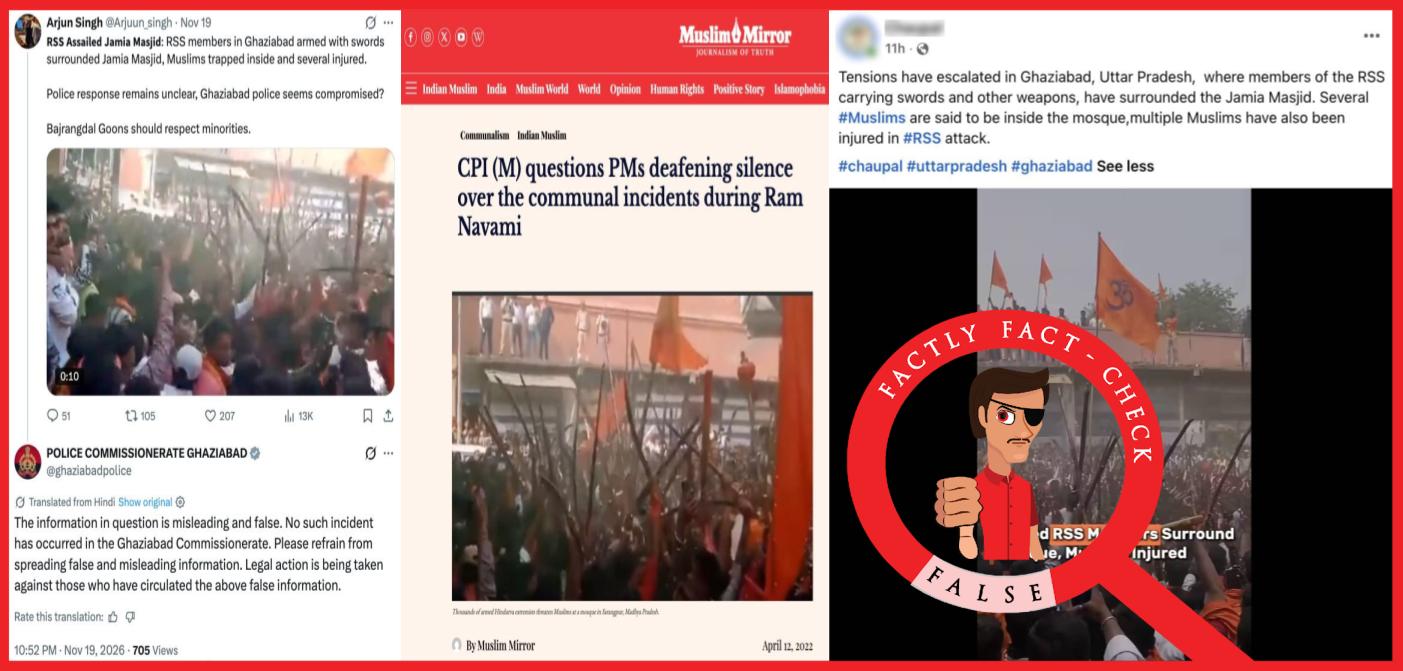
A viral video circulating across social media platforms claiming to show members of the Rashtriya Swayamsevak Sangh attacking a mosque in Ghaziabad, Uttar Pradesh, is entirely false, according to an investigation by fact-checking outlet Factly. Digital verification confirmed that the widely shared clip actually originated in Madhya Pradesh and depicts an older, unrelated demonstration rather than a recent assault in northern India.
The viral posts falsely claimed that right-wing activists armed with weapons had surrounded a local mosque in Ghaziabad, allegedly trapping worshippers and leaving several individuals injured. Accompanying video clips depicted individuals brandishing swords and raising slogans outside a religious structure, prompting widespread alarm and reactive commentary across multiple digital channels.
Investigative analysis traced the visual material back to April 2022 in the town of Sarangpur, located within Madhya Pradesh. The footage was documented during a Ram Navami procession outside the local Shahi Jama Masjid, where participants were recorded carrying ceremonial swords and playing loud music, contrary to claims that the event represented an active siege or current breach of security.
Police authorities in Ghaziabad swiftly intervened to debunk the narrative and prevent the escalation of communal anxiety within the city. Officials confirmed that no such attack or mob gathering had occurred within the district's jurisdiction, publicly warning digital users that spreading unsubstantiated rumors could disrupt law and order.
The episode illustrates a persistent and recurring pattern in digital misinformation, where archival recordings of tense regional events are stripped of their temporal and geographic context. Disinformation trackers note that bad actors routinely repurpose dramatic imagery from past religious festivals or localized disputes, presenting them as urgent, breaking developments to maximize emotional resonance and engagement.
Misleading narratives involving places of worship are especially hazardous in densely populated and communally sensitive urban environments. By attaching sensationalized claims of imminent danger to authentic but mislocated footage, such posts frequently bypass the critical skepticism of casual internet users, generating panic before corrections can adequately circulate.
Social media platforms continue to face intense scrutiny over the velocity at which unverified video content can propagate across algorithmic feeds and private messaging groups. While fact-checking organizations and independent monitors work to flag deceptive claims, the lag between a post going viral and its subsequent debunking remains a critical vulnerability in online information ecosystems.
To counter the threat of manipulated narratives, law enforcement agencies across India have increasingly deployed specialized social media monitoring cells to identify inflammatory rumors in real time. Officials frequently remind internet users that publishing or amplifying unsubstantiated claims intended to incite communal disharmony carries strict penal consequences under cybercrime and public safety statutes.
Moving forward, fact-checkers and civic organizations emphasize that combating visual misinformation requires sustained digital literacy and proactive institutional communication. Observers note that while official rebuttals from local police help neutralize immediate tensions, collaborative efforts between platforms, verification networks, and community leaders remain essential to curtailing the recycled spread of provocative archival footage.
Primary source: Google News Madhya Pradesh. Newzly rewrites and structures source reporting for clarity; verify critical details at the original.