world·Karnataka·Chennai District
Farmers of Tamil Nadu and Karnataka Should Not Be Divided, Urges TMC Chief G.K. Vasan
Tamil Maanila Congress leader G.K. Vasan urged Karnataka to respect Supreme Court water-sharing mandates, stressing that farmers in Tamil Nadu and Karnataka must not be divided over the contentious Cauvery dispute.
In this piece
Tamil Maanila Congress president G.K. Vasan has called for solidarity between farmers in Tamil Nadu and Karnataka amid ongoing disputes over Cauvery water and…
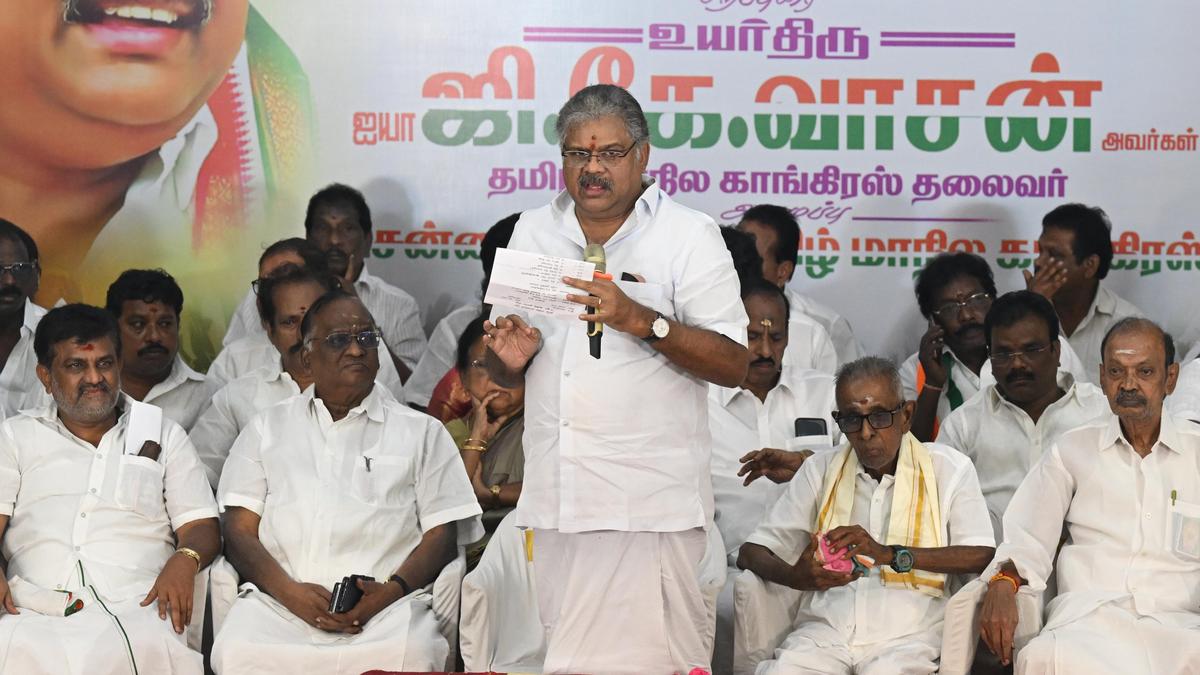
Tamil Maanila Congress (Moopanar) president G.K. Vasan has called for solidarity between the agrarian communities of Tamil Nadu and Karnataka, asserting that farmers across the neighboring states must not be divided over recurring river water disputes. Speaking at an event marking his party's 13th founding day in Chennai, the former Union Minister appealed to political leaders and state administrations to view the river water debate primarily through the lens of rural livelihoods rather than political rivalry.
Addressing Karnataka's persistent push for the Mekedatu balancing reservoir project, Vasan pointed out that withholding Tamil Nadu's legitimate share of Cauvery water strikes directly at the survival of delta cultivators. He urged the Karnataka government to look beyond regional friction and treat the farming brotherhood of both states with equal compassion, emphasizing that water allocations must strictly align with rulings issued by the Supreme Court of India.
The Cauvery basin remains the agricultural lifeline for millions of paddy growers in central Tamil Nadu, whose cultivation cycles depend heavily on timely releases from upper riparian reservoirs. Vasan underscored that compliance with the Supreme Court's directives and institutional mechanisms established under the Cauvery Water Management Authority is non-negotiable. He stated that lawful water sharing should never be treated as a discretionary concession between states.
The proposed Mekedatu multi-purpose balancing reservoir project, planned near Kanakapura in Karnataka, has long served as a major flashpoint between the two southern neighbors. While authorities in Bengaluru contend that the reservoir is essential to fulfill drinking water needs for Bengaluru and generate hydroelectric power, Tamil Nadu has firmly opposed the plan, arguing it would curb seasonal flows into the lower basin and leave downstream fields desiccated during distress years.
For farmers across Tamil Nadu's fertile Cauvery delta—spanning districts such as Thanjavur, Tiruvarur, and Mayiladuthurai—unpredictable water supply consistently threatens the Kuruvai and Samba cropping seasons. Delayed or inadequate releases often force farmers to pump groundwater at considerable expense or risk widespread crop failure, compounding mounting debt and rural distress across the delta belt.
Vasan warned against the rhetoric often deployed by political factions on both sides of the border, cautioning that escalating parochial tensions ultimately harms the people who till the soil. He observed that seasonal water shortages tend to trigger emotive protests, leaving ordinary cultivators vulnerable to populist posturing rather than durable hydrological solutions.
The TMC(M) leader reiterated that both state governments must respect federal dispute-resolution frameworks instead of pursuing unilateral measures that undermine inter-state equilibrium. By honoring judicial verdicts and seasonal release schedules, both administrations can safeguard the mutual interests of their agrarian economies without jeopardizing long-standing cultural and economic links between the two populations.
Vasan's remarks arrive at a time of heightened regional dialogue on river disputes in southern India, where water scarcity frequently tests cooperative federalism. His party, which maintains an active presence in Tamil Nadu politics, has routinely advocated for delta farmers' rights while cautioning against unrest that could strain broader inter-state relations across southern India.
As the Cauvery Water Management Authority continues to monitor reservoir levels and enforce monthly release quotas, attention remains focused on how the two state administrations navigate distress periods. For delta cultivators awaiting sustained flows for their standing crops, adherence to institutional mandates and judicial rulings remains the only viable path to ensure stability and peaceful coexistence across the river basin.
Primary source: Google News Karnataka. Newzly rewrites and structures source reporting for clarity; verify critical details at the original.