Tamil Nadu Lawmakers Urged to Reject New Delimitation Legislation
A public representation published in The Wire calls on Tamil Nadu Members of Parliament to reject new Union delimitation bills, arguing that preserving the constitutional freeze on seat allocation is essential to safeguard federal equity.
In this piece
A civil society representation addressed to Tamil Nadu lawmakers urges an outright rejection of the Union government's latest delimitation proposals. The…
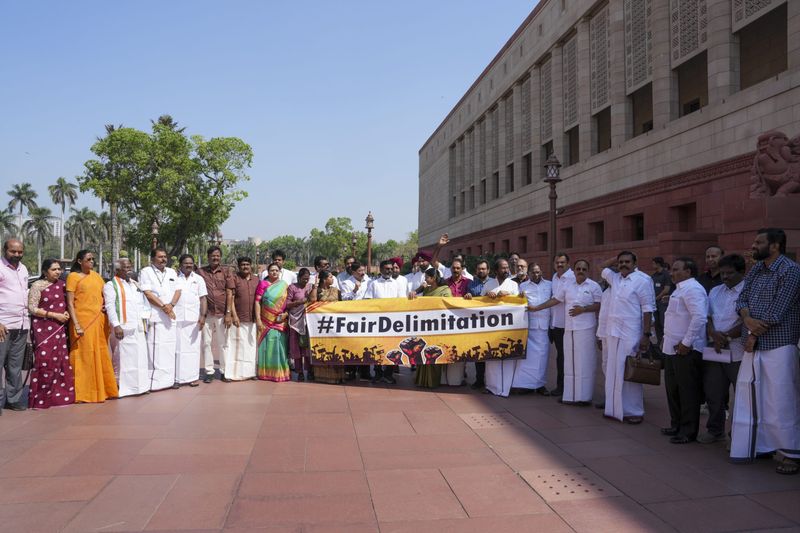
A civil society representation addressed to Members of Parliament from Tamil Nadu has urged lawmakers to reject the Union government's latest parliamentary delimitation proposals. The public appeal, authored by researchers Radhika Ganesh and R. Vanchinathan and published by The Wire, calls on elected representatives to oppose the newly introduced Constitution 132nd Amendment Bill and the Delimitation Second Bill. The authors argue that maintaining the long-standing freeze on seat allocations remains the only viable safeguard for federal equity.
The submission arrives immediately after the Union Cabinet approved a revised legislative framework on November 27, 2026, ahead of an upcoming special session of Parliament. That move followed the collapse of an earlier initiative, the Constitution 131st Amendment Bill, which failed to secure passage in the Lok Sabha in April 2026. The new measure seeks to expand the total size of the Lok Sabha by 50 percent while ostensibly preserving state-level proportional seat shares based on the 1971 Census until 2051.
Despite official assurances that an across-the-board expansion protects regional parity, the representation contends that no delimitation exercise under existing parameters can deliver a genuinely fair outcome. The authors warn that altering the existing constituency framework risks upsetting the delicate constitutional balance between the Union and the states. They argue that opening the door to redistricting mechanisms undermines hard-won federal safeguards, regardless of short-term mathematical accommodations.
Central to the debate is the long-standing grievance that southern states could face political marginalization because of their successful implementation of population control policies over several decades. While northern states have experienced rapid demographic growth, states like Tamil Nadu stabilized fertility rates, creating sharp disparities in population-to-seat ratios. The authors argue that any process premised on eventual reapportionment threatens to penalize states for achieving national social and developmental goals.
The appeal draws upon findings from state-level panels and expert commissions in Tamil Nadu that have studied Union-State relations and legislative autonomy. These bodies have consistently maintained that parliamentary representation must not be treated purely as an arithmetic calculation divorced from federal rights. According to the document, redrawing constituency maps or expanding chamber strength without addressing structural asymmetries will weaken the collective bargaining power of regional electorates.
The authors also raise critical questions about linking parliamentary seat expansion to the implementation of constitutional reservations for women. While proponents frame the seat increase as a pragmatic solution to accommodate women's quotas without displacing incumbent seats, the representation views this pairing with skepticism. It cautions that advancing major institutional restructuring under the banner of electoral reform could obscure deeper democratic deficits.
The representation lands amid shifting political dynamics and intense legislative scrutiny among Tamil Nadu's parliamentary delegation. Regional parties, including the ruling Dravida Munnetra Kazhagam, have actively negotiated the terms of federal seat preservation, navigating complex trade-offs between local autonomy and national legislation. The authors appeal directly to these lawmakers across party lines, urging them to prioritize long-term constitutional protections over expedient political compromises.
The controversy highlights fundamental questions about the nature of Indian federalism and the representation of diverse linguistic states in New Delhi. If the legislative freeze that has governed Lok Sabha apportionments since the 1970s is effectively replaced or restructured, it could reset the terms of regional political influence for decades. The representation underscores that public trust in democratic institutions depends on preventing any structural erosion of state representation.
As Parliament convenes to consider the newly drafted constitutional amendment and delimitation bills, lawmakers from Tamil Nadu and other southern states face critical decisions on their voting strategies. Observers anticipate rigorous debate over the legal enforceability of seat freezes extending to 2051 and the broader implications for inter-state equity. The representation concludes with a firm plea for representatives to stand united against the proposals and insist on preserving the existing constitutional status quo.
Primary source: Google News Tamil Nadu. Newzly rewrites and structures source reporting for clarity; verify critical details at the original.