Father Moves Supreme Court to Bring Back Son Recruited into Russian Army
The Supreme Court of India has asked the Centre to explore humanitarian avenues to repatriate a Tamil Nadu student recruited into the Russian army, after the government noted its legal limitations following his foreign citizenship.
In this piece
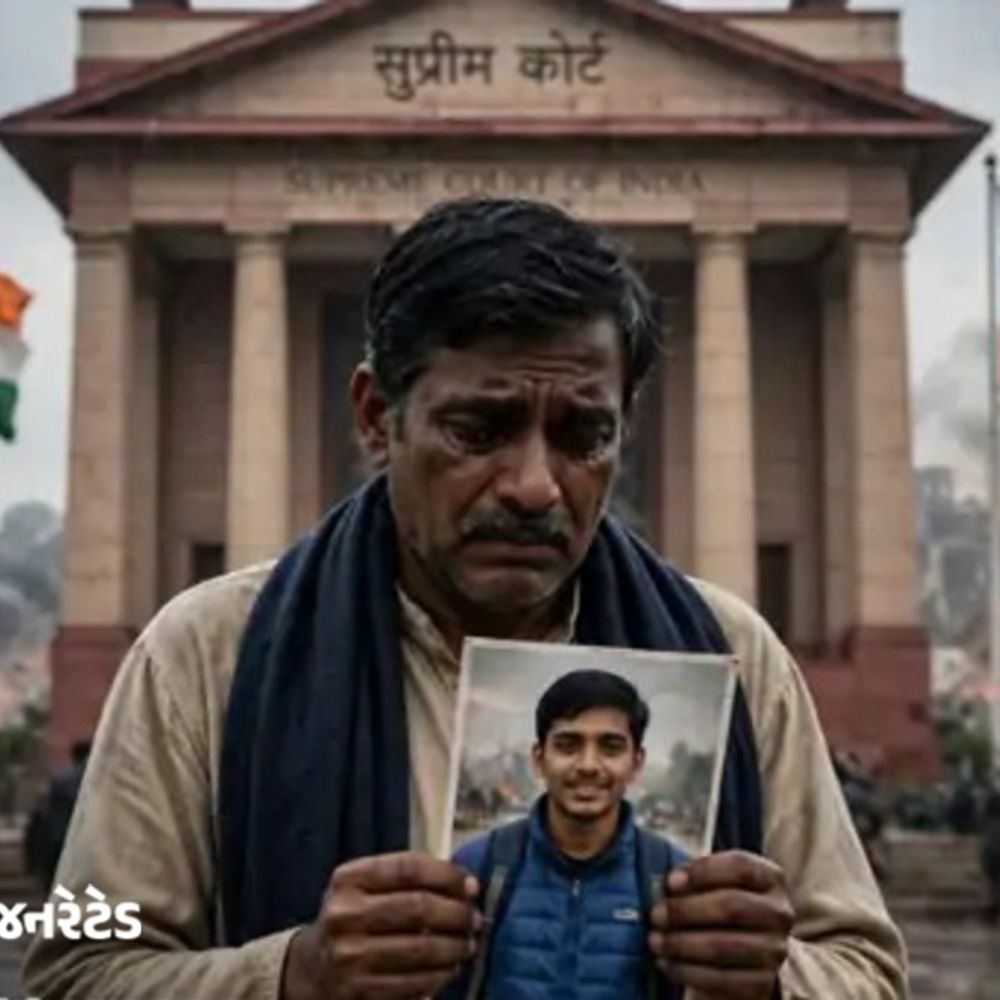
A father from Tamil Nadu has approached the Supreme Court to rescue his son, who travelled to Moscow on a student visa and ended up in the Russian military. The…
The Supreme Court of India has agreed to hear a plea filed by a father seeking the repatriation of his son, an Indian student who allegedly became enlisted in the Russian military after travelling to Moscow. During the preliminary hearing, the central government informed the bench that its administrative options are significantly constrained because the individual reportedly surrendered his Indian citizenship and passport to take up Russian nationality.
A bench led by Chief Justice of India Surya Kant, along with Justices Joymalya Bagchi and V. Mohana, issued notice to the Union government, the Ministry of External Affairs, and the Ministry of Home Affairs. Despite legal technicalities concerning the youth's current nationality, the top court urged the government to examine the matter purely on humanitarian grounds.
The petition was submitted by P. Sethuraj, a resident of Tamil Nadu, who stated that his son, Abinesh, had travelled to Moscow on a student visa in April with the help of an agent contacted via social media. The family lost regular communication with the young man shortly after his arrival in Russia, raising acute distress at home.
Concerns deepened when the young man's elder brother accessed his electronic mail and discovered military documents, including a Russian army identification badge and military tag. The family alleged in their plea that Abinesh was coerced or misled by unscrupulous agents into signing military service contracts without fully comprehending the severe consequences or terms of engagement.
Appearing on behalf of the Centre, Solicitor General Tushar Mehta informed the bench that diplomatic and consular interventions face extraordinary hurdles under international and domestic law. Mehta explained that diplomatic reports from the Indian Embassy in Moscow indicate that Abinesh had voluntarily renounced his Indian citizenship to obtain a Russian passport, legally placing him under Russian jurisdiction.
India's constitutional framework does not permit dual citizenship, meaning any national who acquires foreign citizenship automatically forfeits their Indian nationality. Under standard bilateral conventions, consular officials have established channels to protect and assist only their own citizens, leaving Indian diplomats with nominal formal jurisdiction over recognized Russian military personnel.
The case highlights a broader, troubling trend that has surfaced amid the ongoing armed conflict between Russia and Ukraine. Dozens of Indian youths have reportedly been lured to Russia by deceptive employment networks and travel syndicates promising lucrative civilian jobs or educational opportunities, only to find themselves dispatched to active combat zones or military auxiliary roles.
The Ministry of External Affairs has previously taken up multiple cases with Moscow, successfully securing the discharge and return of several Indian nationals trapped in combat support duties. However, cases involving voluntary or formal citizenship changes present unprecedented diplomatic and consular hurdles that complicate routine repatriation negotiations.
Acknowledging the distressing circumstances surrounding the family, the Supreme Court asked the Union government to maintain communication with authorities in Moscow and explore every viable humanitarian avenue. The matter has been scheduled for further hearing as authorities prepare a detailed status report on the youth's whereabouts and safety.
Primary source: Divya Bhaskar International. Newzly rewrites and structures source reporting for clarity; verify critical details at the original.