Five Home Remedies and Crucial Safety Steps for Restoring Bathroom Fixture Shine
A newly published household maintenance advisory outlines accessible domestic methods to eliminate stubborn limescale from bathroom taps and showers, while emphasizing essential safety precautions to prevent fixture damage.
In this piece
A domestic care guide details five accessible household remedies to dissolve hard water stains and restore shine to bathroom taps and showers. The advisory…
A comprehensive household maintenance advisory published by Divya Bhaskar outlines five practical domestic solutions and ten vital precautions to eliminate stubborn mineral stains from bathroom fixtures. The guidance targets common domestic challenges, focusing on limescale deposits, soap scum, and dull finishes that accumulate on taps and showerheads over time.
Mineral buildup is a frequent issue in residential plumbing, primarily driven by dissolved calcium and magnesium present in domestic tap water. When standing water evaporates on metallic surfaces, it leaves behind a chalky white residue that standard water rinses and gentle dusting cannot easily remove.
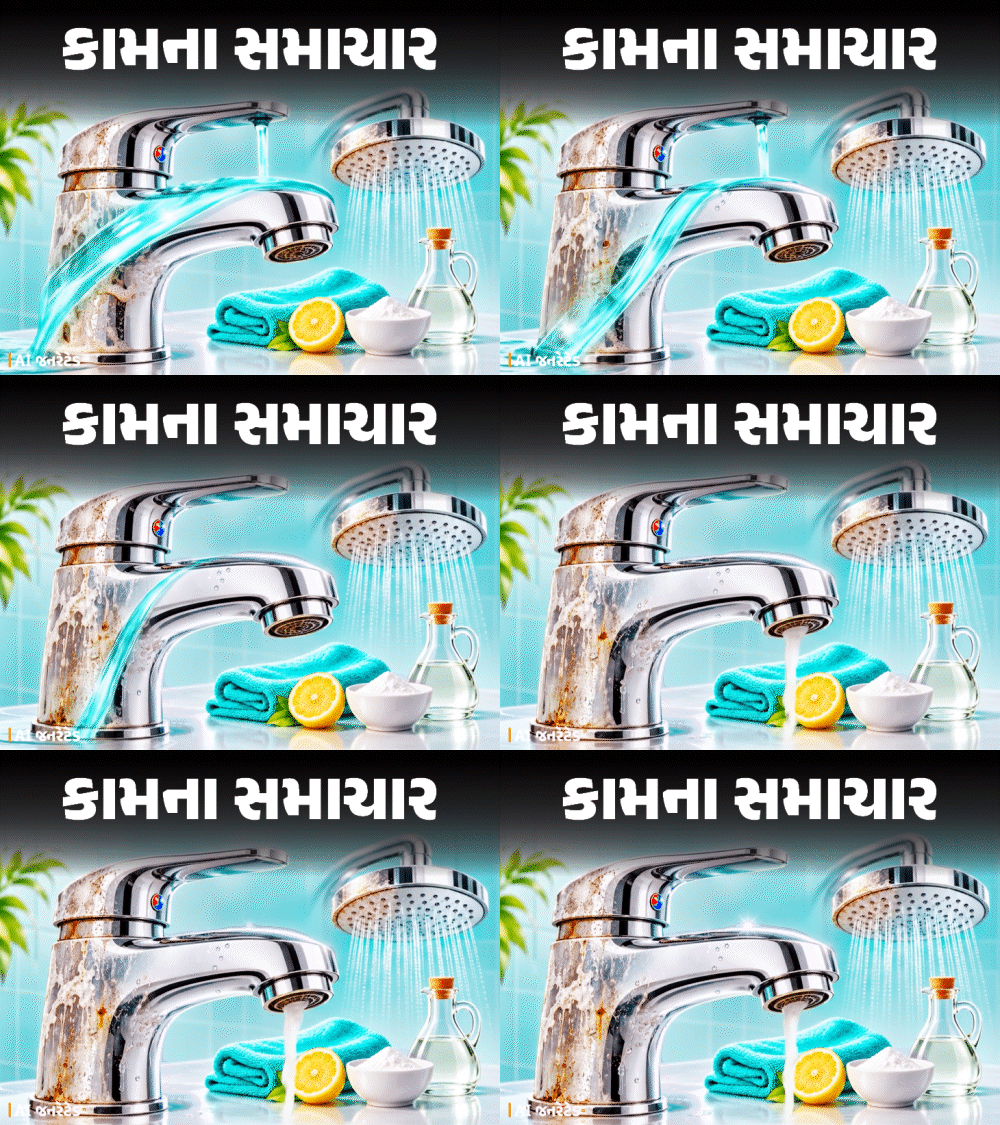
Among the primary recommendations highlighted in the advisory is the application of white vinegar to break down persistent calcification. For faucets, the guide suggests wrapping vinegar-soaked cloths around stained areas, while showerheads can be submerged in a plastic bag filled with vinegar to dislodge mineral crusts that obstruct water flow.
Fresh lemon juice paired with baking soda is also recommended as a gentle yet potent polishing agent for tarnished metal fittings. The citric acid in lemon juice helps dissolve grease and grime, while the mild abrasive texture of baking soda lifts surface discoloration without gouging chrome plating.
For routine cleaning, the report recommends washing fixtures with warm water and a few drops of mild liquid dish detergent using a soft microfiber cloth. To achieve a lasting shine, the advisory stresses that fixtures must never be left to air dry, as evaporating water droplets immediately create fresh mineral spots.
Alongside cleaning methods, the report emphasizes ten critical safety precautions to prevent permanent physical or chemical damage to bathroom hardware. Foremost among these warnings is avoiding wire scrubbers, steel wool, or abrasive scouring pads, which can scratch protective metallic coatings and expose base metals to corrosion.
Homeowners are also strongly cautioned against using harsh chemical acids or unbuffered industrial bleaches, which can strip chrome plating and cause irreversible discoloration. Maintaining proper room ventilation by opening windows or running exhaust fans is essential to ensure airborne fumes do not concentrate in enclosed bathrooms.
Personal safety measures include wearing protective rubber gloves during cleaning sessions to shield skin from acidic solutions and prolonged moisture exposure. The advisory also recommends spot-testing any cleaning paste on a small, concealed area of the fixture before full application to verify surface compatibility.
Thorough rinsing with clean water is necessary after applying any cleaning mixture, as lingering acidic residue can gradually degrade rubber washers and watertight seals. Establishing consistent weekly upkeep prevents thick scaling, eliminating the need for aggressive cleaning treatments in the future.
Home maintenance specialists note that preventative habits, such as wiping down taps and shower fixtures with a dry squeegee or towel after daily use, substantially curb mineral accumulation. As domestic consumers increasingly favor cost-effective home remedies, accessible pantry ingredients offer a dependable method to keep bathroom fixtures functional and bright.
Primary source: Divya Bhaskar Lifestyle. Newzly rewrites and structures source reporting for clarity; verify critical details at the original.