Former Kargil Hill Council Leader Questions Whether Ladakh Should Be Hub of Agitation or Development
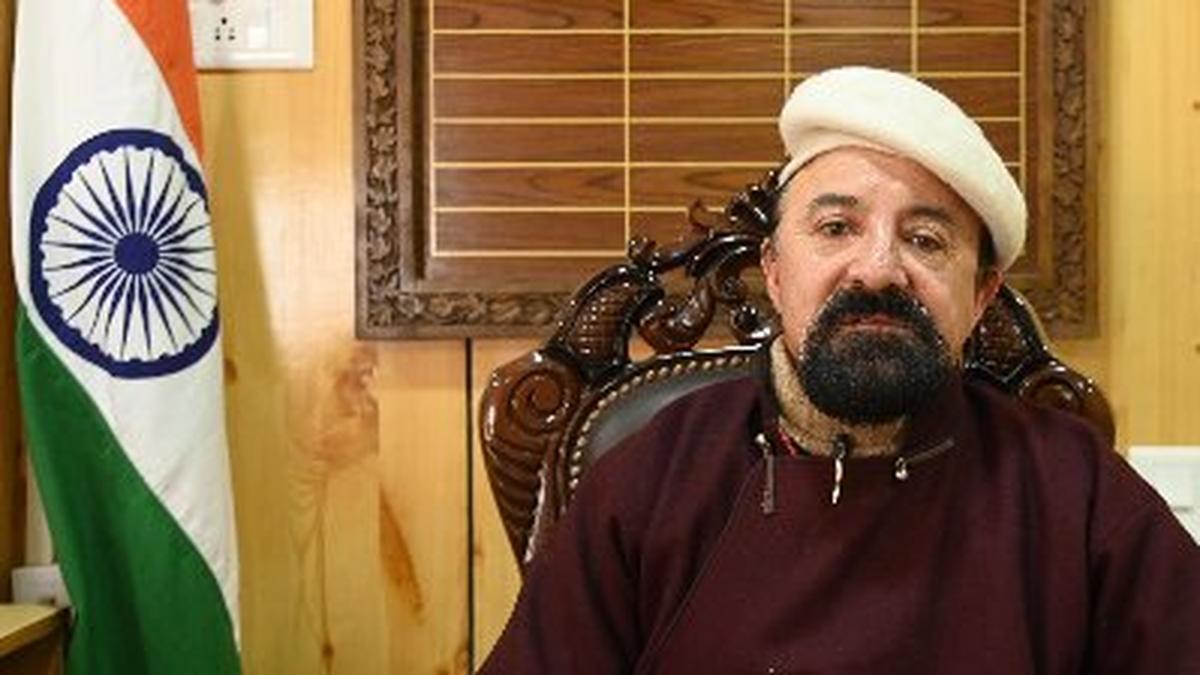
Former Kargil hill council leader Dr. Mohammad Jaffer Akhoon has called on Ladakh residents to weigh perpetual agitation against sustained regional development, as protests over statehood and local elections continue.
In this piece
Former LAHDC-Kargil Chief Executive Councillor Dr. Mohammad Jaffer Akhoon asked whether Ladakh should become a hub of agitation or development amid ongoing…
Dr. Mohammad Jaffer Akhoon, the former Chief Executive Councillor of the Ladakh Autonomous Hill Development Council in Kargil, has urged residents and local leaders to decide whether the region should become a center of ongoing agitation or a hub of development. His remarks arrived as demonstrations and sit-in protests led by local socio-political organizations entered consecutive days across the Union Territory.
Speaking amid heightened political discourse in the high-altitude region, Dr. Akhoon questioned the trajectory of repeated protests organized by regional representative groups. He contended that while public grievances require attention, an environment dominated by perpetual agitation risks slowing down essential governance, administrative delivery, and developmental initiatives.
The controversy unfolds against a backdrop of prolonged mobilizations spearheaded jointly by the Leh Apex Body and the Kargil Democratic Alliance. For several years, these coalitions have campaigned for significant constitutional safeguards following the reorganization of Jammu and Kashmir in 2019, which turned Ladakh into a Union Territory without a legislative assembly.
Key demands raised by regional bodies include full statehood for Ladakh, inclusion under the Sixth Schedule of the Indian Constitution to safeguard indigenous land and cultural rights, and dedicated legislative representation. Activists and local leaders have consistently argued that statutory protections are imperative to protect the region's ecologically sensitive cold-desert terrain and fragile demographic balance.
Frictions intensified further over the scheduling of local elections, including polls for hill development councils, municipalities, and panchayats. Civil society groups and protest organizers have expressed strong opposition to holding elections during harsh winter months, pointing out that extreme cold and seasonal out-migration make effective civic participation exceptionally difficult.
In contrast, advocates of advancing administrative processes emphasize that delaying elections and engaging in frequent confrontations paralyzes municipal planning and local self-governance. Proponents of institutional continuity argue that local councils and panchayats serve as the primary conduits for public spending, infrastructure funding, and decentralized decision-making in the border territory.
Direct engagements between Ladakh's leadership and the central government have faced repeated hurdles despite discussions held through a High-Powered Committee established by the Union Ministry of Home Affairs. While dialogue previously yielded rounds of formal talks in New Delhi, local groups have staged sit-ins and hunger strikes to protest what they describe as a lack of tangible progress on their core constitutional demands.
The debate also exposes underlying nuances between the predominantly Buddhist Leh district and the predominantly Muslim Kargil district. While both regions have forged common ground under joint consultative mechanisms to press for constitutional rights, differing political calculations occasionally surface regarding administrative integration, economic priorities, and reliance on central allocations.
As protest actions continue in Leh and deliberations persist among regional representatives, local leaders face growing pressure to reconcile grassroots agitation with institutional functioning. Observers note that the immediate outlook will depend on whether central authorities resume structured formal talks with regional representatives while balancing local electoral schedules ahead of the coming seasons.
Primary source: Google News Ladakh. Newzly rewrites and structures source reporting for clarity; verify critical details at the original.