Tibetan Delegation Meets Meghalaya Assembly Speaker to Discuss Regional Concerns and Cultural Ties
A Tibetan delegation led by former Deputy Speaker Acharya Yeshi Phuntsok met Meghalaya Assembly Speaker Thomas Sangma in Shillong, presenting key literature and discussing regional issues concerning Tibet.
In this piece
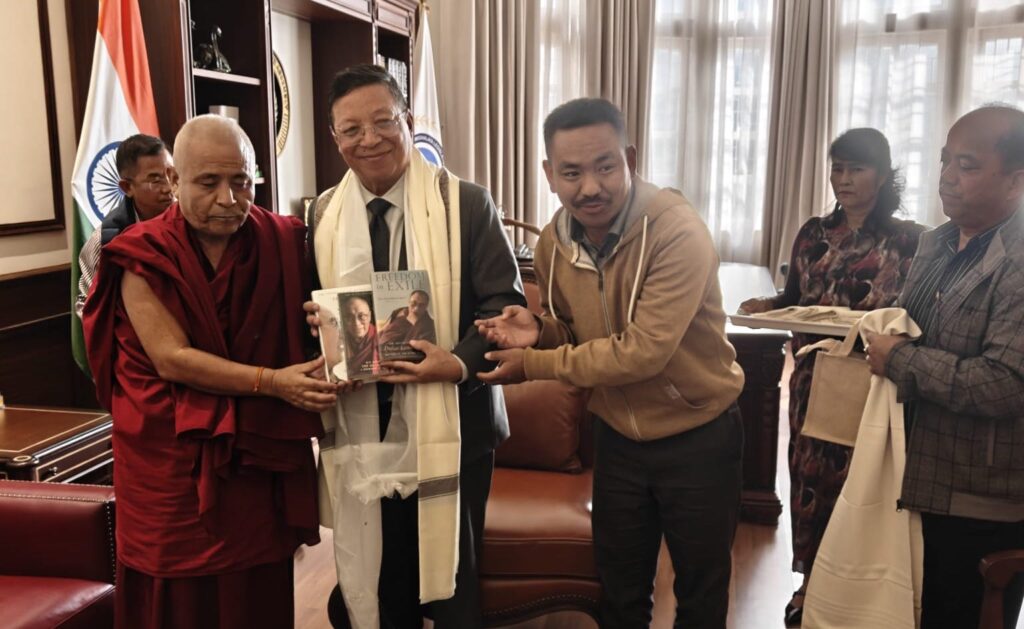
Former Tibetan Deputy Speaker Acharya Yeshi Phuntsok and officials from the Shillong Tibetan Settlement Office met Meghalaya Assembly Speaker Thomas Sangma. The…
A delegation representing the Central Tibetan Administration, led by former Tibetan Parliament-in-Exile Deputy Speaker Acharya Yeshi Phuntsok, held an official meeting with Meghalaya Legislative Assembly Speaker Thomas Sangma at his office in Shillong. The delegation was accompanied by former parliamentarian Yangchen Dolkar alongside the Secretary of the Shillong Tibetan Settlement Office. The engagement served as a formal outreach initiative to strengthen institutional rapport and apprise local lawmakers of key issues confronting the Tibetan community.
During the meeting, the Tibetan representatives formally greeted Speaker Sangma by presenting him with a traditional white ceremonial silk scarf, known as a khatag, symbolising purity, respect, and auspicious goodwill. The Shillong Tibetan Settlement Office also presented the Assembly Speaker with several seminal literary works authored and co-authored by His Holiness the 14th Dalai Lama. The volumes included My Land and My People, Freedom in Exile, and The Book of Joy, intended to provide deeper insight into Tibetan heritage, philosophy, and personal memoirs of exile.
In the bilateral exchange, Acharya Yeshi Phuntsok briefed Speaker Sangma on the broader dimensions of the ongoing Tibet issue, sharing perspectives on the sociopolitical conditions inside the region. The former deputy speaker drew specific attention to Beijing's recent administrative measures, including the contentious Law on Promoting Ethnic Unity and Progress. He outlined how such regulations are viewed by the Tibetan diaspora as deliberate mechanisms designed to assimilate Tibetan identity, suppress local religious freedoms, and erode unique linguistic traditions.
Acharya Yeshi Phuntsok expressed deep gratitude to Speaker Sangma and the state of Meghalaya for their enduring hospitality and unwavering backing of the Tibetan people over several decades. In response, Speaker Sangma affirmed his solidarity and assured the delegation of his continued support for the welfare of the Tibetan community residing in the region. The cordial discussion highlighted the longstanding bonds of cultural affinity and mutual respect shared between the indigenous peoples of the Northeast and Tibetans in exile.
The high-level meeting took place during a scheduled transit visit to Shillong, Meghalaya's capital, while the Tibetan dignitaries were travelling across the northeastern corridor. Acharya Yeshi Phuntsok and his associates were en route to the neighbouring state of Arunachal Pradesh to take part in the 15th Tawang Tirth Yatra. The annual pilgrimage holds immense cultural and religious significance for followers of Tibetan Buddhism and Indian devotees alike, commemorating historical connections across the Himalayan borderlands.
The Shillong Tibetan Settlement Office plays a critical operational role in coordinating local community affairs, liaising with state authorities, and ensuring civic welfare across Meghalaya. Established decades ago to support exiled families resettling in northeastern India, the settlement administration serves as an essential bridge between grassroots residents and the Central Tibetan Administration based in Dharamshala. By facilitating direct dialogue with parliamentary leaders, the office continually works to maintain open channels of administrative cooperation.
Engagement with political leaders in India's northeastern states carries strategic significance for the Tibetan leadership in exile, given the region's geographical proximity to Tibet and its shared Buddhist heritage. Over recent years, representatives from the Central Tibetan Administration have systematically broadened their outreach across various Indian state assemblies and civil society networks. These diplomatic dialogues aim to keep the question of Tibet active in public consciousness while countering intensifying assimilation policies documented within Tibetan autonomous areas.
Following the conclusion of their official engagements in Shillong, the delegation resumed their journey toward Arunachal Pradesh to participate in the scheduled commemorative pilgrimage events. Observers view such legislative interactions as instrumental in maintaining active political awareness and solidarity across Indian democratic institutions. As the Tibetan diaspora navigates complex geopolitical shifts in the region, continued engagement with state leadership across India remains central to their ongoing advocacy efforts.
Primary source: Google News Meghalaya. Newzly rewrites and structures source reporting for clarity; verify critical details at the original.