world·Kerala·Thiruvananthapuram District
From Venice to Kerala: Contemporary Art and Heritage Weaving Intersect
An analysis of global art platforms and Kerala craft highlights how contemporary artists and thousands of traditional Balaramapuram weavers are bridging the Venice Biennale with localized handloom heritage.
In this piece
A cultural exploration by The Voice of Fashion highlights the growing connection between global art stages like the Venice Biennale and Kerala's traditional…
A growing intersection between global contemporary art platforms and regional Indian craft traditions is redefining how heritage textiles are valued, as highlighted by The Voice of Fashion in an exploration tracing creative links from the Venice Biennale to grassroots weaving centers in Kerala. The analysis examines how contemporary conceptual artists and traditional craftspeople are bridging international exhibition spaces and indigenous production methods. This dialogue highlights a unified cultural thread connecting localized artisan clusters with prestigious worldwide arts institutions.
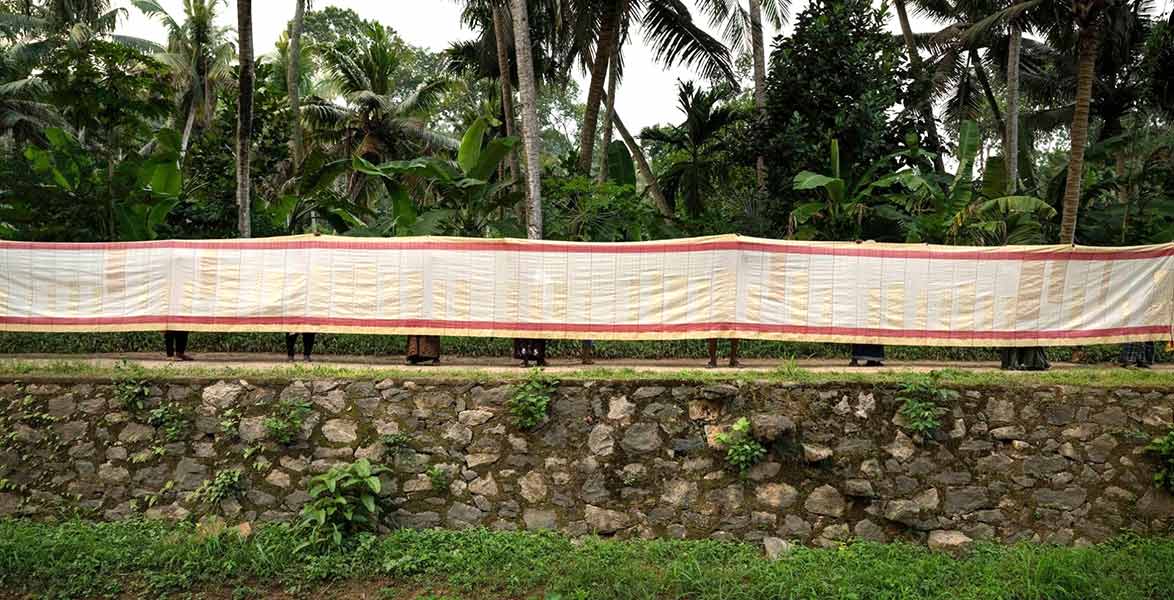
At the heart of this engagement is The Balaramapuram Kasavu Project, a massive community-driven textile installation spearheaded by contemporary artist Lakshmi Madhavan. The initiative mobilized approximately 2,500 traditional handloom artisans over two and a half years in Balaramapuram, a historic weaving town in Kerala. Together, the participants created an unbroken 6,000-foot handwoven kasavu textile that functions as a monumental living archive.
The production method relied on passing the loom sequentially across generations, bringing together weavers ranging in age from 18 to over 90. Each artisan contributed hands-on labor to the continuous expanse of off-white cotton and shimmering zari borders. This collective process transformed the resulting fabric into a physical ledger celebrating individual identities and shared regional heritage.
The conceptual bridge connecting local projects in Kerala to events like the Venice Biennale mirrors a broader reorientation across global curatorial circuits. International institutions and art biennales have increasingly elevated fiber arts, communal craft practices, and indigenous material cultures to the forefront of contemporary art discourse. This evolution challenges historical separations that previously relegated traditional textiles to craft categories while reserving conceptual prestige for Western fine art formats.
This rising global profile coincides with severe socioeconomic headwinds facing India's traditional handloom sector. Artisan communities in clusters such as Balaramapuram contend with aggressive competition from mechanized powerlooms, unpredictable raw material pricing, and shifting consumer trends. At the same time, younger generations often face financial pressure to migrate away from manual weaving toward other service industries.
By framing handloom textiles as high-concept contemporary artworks, cultural practitioners aim to generate renewed critical visibility and economic relevance for heritage artisans. Projects such as Madhavan's installations draw institutional focus toward the immense manual skill, time, and ancestral knowledge required to produce authentic kasavu. The work challenges viewers to view weavers not merely as anonymous laborers, but as skilled cultural custodians and essential co-creators.
The convergence observed in Kerala reflects a broader nationwide current linking regional craftsmanship to major artistic forums in cities like New Delhi, Jaipur, and Kochi. Across curated exhibitions, palace showcases, and independent biennales, Indian textile histories are being repositioned as dynamic vehicles for storytelling and cultural preservation. These initiatives underscore the importance of material culture in confronting modern questions around sustainability, identity, and industrialization.
Looking forward, cultural commentators and trade advocates note that the true test of this international exposure lies in creating tangible, sustained benefits for weaving communities on the ground. While gallery accolades and biennale showcases bring prestige, artisans require equitable compensation models and continuous market access to preserve their livelihoods. Observers emphasize that sustained collaborations between contemporary artists, cultural bodies, and traditional guilds will be vital to keeping Kerala's handloom legacy thriving.
Primary source: Google News Kerala. Newzly rewrites and structures source reporting for clarity; verify critical details at the original.