Fund Indonesian Films as Portfolios, Tom Lembong Tells JAFF Market
Former trade minister Tom Lembong told a JAFF Market panel that Indonesian films should be financed as portfolios rather than one project at a time if the industry wants to attract investment.
In this piece
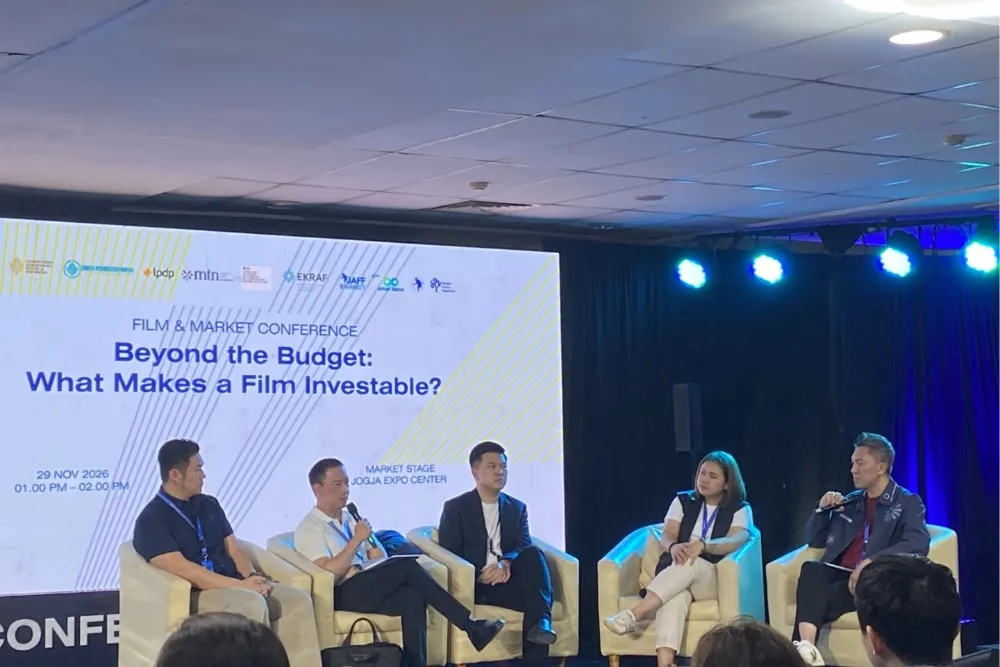
At a JAFF Market session on what makes a film investable, former Indonesian trade minister Tom Lembong argued for portfolio financing of local films. The panel,…
Indonesian films should be financed as portfolios rather than one project at a time, former trade minister Tom Lembong said at a JAFF Market panel on drawing investment into the country’s film industry.
The session was titled “Beyond the Budget: What Makes a Film Investable.” It was moderated by Dipa Andika, identified as a chief commercial officer. Variety’s account of the discussion, which is truncated in the available report, centers on Lembong’s call to treat a slate of films as a single investment case.
Portfolio financing, as Lembong framed it, groups several productions so that capital is committed across more than one title. In film and other project businesses, that structure is meant to spread commercial risk: a stronger release can offset a weaker one, and investors judge a program of work instead of a single screenplay, cast, and release date.
Project-by-project funding remains the familiar path for many independent and national cinemas. Each film must raise its own budget, satisfy its own completion requirements, and carry the full weight of its box-office and ancillary results. Lembong’s point at JAFF Market was that this pattern makes it harder to bring in investors who are used to evaluating a book of projects.
Lembong spoke as a former trade minister, a role that placed him in debates over how Indonesia presents itself to foreign and domestic capital. The available report does not quote further remarks, name other panelists, or set out a specific fund, incentive, or regulatory proposal. The claim on the record is the financing model itself: portfolios, assembled deliberately, as the route to investable Indonesian film.
For producers, the distinction is practical. A portfolio needs more than a stack of unrelated scripts. Investors typically look for a shared thesis—genre, audience, budget band, or distribution path—plus a way to see costs, timelines, and rights across the slate. The session title, “Beyond the Budget,” points to that wider test: a film can be fully costed and still fail an investor’s screen if the risk sits on one title alone.
Indonesia’s commercial cinema has drawn growing regional attention, and JAFF Market is one of the forums where producers, financiers, and distributors meet around Asian projects. The report does not give attendance figures, deal announcements, or a tally of Indonesian titles in the market. What it does record is a senior economic voice treating film as an investment question, not only a cultural one.
Andika’s role as moderator places a commercial executive at the center of that conversation. The published account does not identify the company attached to the chief commercial officer title, and it does not reproduce exchanges with the audience. Readers should treat the portfolio argument as Lembong’s stated position at the panel, rather than as a completed industry policy or a signed financing scheme.
What follows depends on whether producers and backers take the structure seriously. A portfolio approach would require slates that can be underwritten together, reporting that lets investors track more than one production, and partners willing to commit beyond a single greenlight. JAFF Market put that standard in front of the Indonesian film business; the report leaves open how quickly the market will adopt it.
Primary source: Variety. Newzly rewrites and structures source reporting for clarity; verify critical details at the original.