Indonesian Film Crews and Amar Bank Examine Payment Gaps at JAFF Market
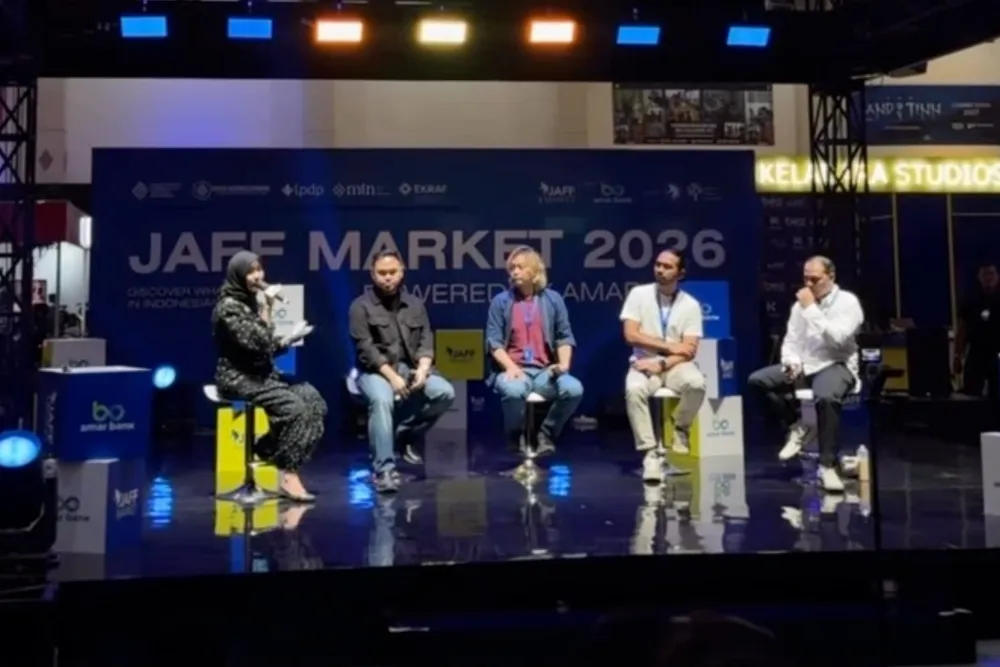
Editors, cinematographers and casting directors joined sponsor Amar Bank at the 2026 JAFF Market to discuss whether a digital accounting tool can make installment payments to freelance crews easier to track.
In this piece
Three Indonesian guilds met Amar Bank at the 2026 JAFF Market to look at cash-flow gaps in film production. The panel focused on Amar Bank Bisnis, a digital…
Three Indonesian guilds representing editors, cinematographers and casting directors joined Amar Bank at the 2026 JAFF Market for a panel on how installment payments reach freelance crews and production houses. Variety reported that Amar Bank, the market’s major sponsor, used the session to explore Amar Bank Bisnis, the bank’s digital accounting tool, as a way to bring more transparency to those payments.
The JAFF Market is the industry gathering linked to Indonesia’s Jogja-NETPAC Asian Film Festival, where producers, crews and service companies meet buyers and partners. Variety’s account places this year’s sponsor discussion on cash flow rather than on a completed product launch or a disclosed commercial deal. The report identifies the problem and the tool under discussion, and it stops short of results from any rollout.
Film crews are often paid in stages: an initial booking amount, later installments and a balance after delivery. When those stages are tracked across paper invoices, message threads and separate transfers, both the freelancer and the production house can lose a clear view of what has cleared and what remains outstanding. The panel, as described, asked whether a shared digital record could make that trail easier to follow.
Amar Bank Bisnis was identified only as the bank’s digital accounting tool. The Variety report available for this article does not include fee schedules, user counts or a statement that the software is already in regular use on Indonesian productions. The session is framed as an exploration of transparency, and any effect on late or disputed payments remains unmeasured in that account.
Joshua Paul, a senior vice president responsible for micro, small and medium business at the bank, was named in connection with the panel. The published excerpt introduces his title and then breaks off, and the material used here contains no direct quotation from him. His role points to the bank treating production companies and independent crew members as smaller enterprises that need clearer payment records.
The three guilds are not named in the summary of the report, so their formal titles and membership figures are not stated here. What the account does establish is the range of jobs in the room: picture editing, cinematography and casting, all work that is commonly hired per project. Those roles often invoice on different schedules while waiting on the same production’s cash cycle, which is why a common view of installments was the panel’s subject.
Independent and regional productions frequently assemble budgets from several partners, and vendors are paid only after funds arrive. A stalled installment can hold up equipment, locations or the next crew call. A ledger can show whether a transfer was sent, received and applied to the correct installment. It does not supply money a production has yet to raise, a distinction the reported discussion leaves intact by focusing on transparency.
For production houses, a bank-linked accounting view could also organize records they already keep for investors and tax filings. For freelancers, the practical question is whether the status of money in transit becomes visible without another round of follow-up. Variety does not describe any requirement that productions attending the market adopt the software, and it does not cite a change in Indonesian payment rules.
A festival-market sponsorship puts a financial firm in front of the people who absorb late payments. Crews and companies will judge the tool by whether it shortens disputes and waiting time. Until adoption figures or accounts from working productions are published, the panel stands as an industry conversation about a known cash-flow gap, as Variety reported it.
What follows depends on whether the guilds and Amar Bank move from a market panel to a working arrangement. The report does not describe a signed agreement, a pilot with named productions or a timeline. Any next step would be expected in announcements from the bank or the guilds, or in later coverage from the festival market.
Primary source: Variety. Newzly rewrites and structures source reporting for clarity; verify critical details at the original.