world·Gujarat·Panchmahal District
Godhra Train Fire Survivor Challenges Sonia Gandhi Memoir Over Disputed Cause Claim
A survivor of the 2002 Godhra train burning has challenged Sonia Gandhi's memoir for calling the fire disputed, recounting how coach S-6 was set ablaze from below.
In this piece
A survivor of the 2002 Godhra train carnage has criticized Sonia Gandhi's memoir for describing the cause of the Sabarmati Express fire as disputed. Recounting…
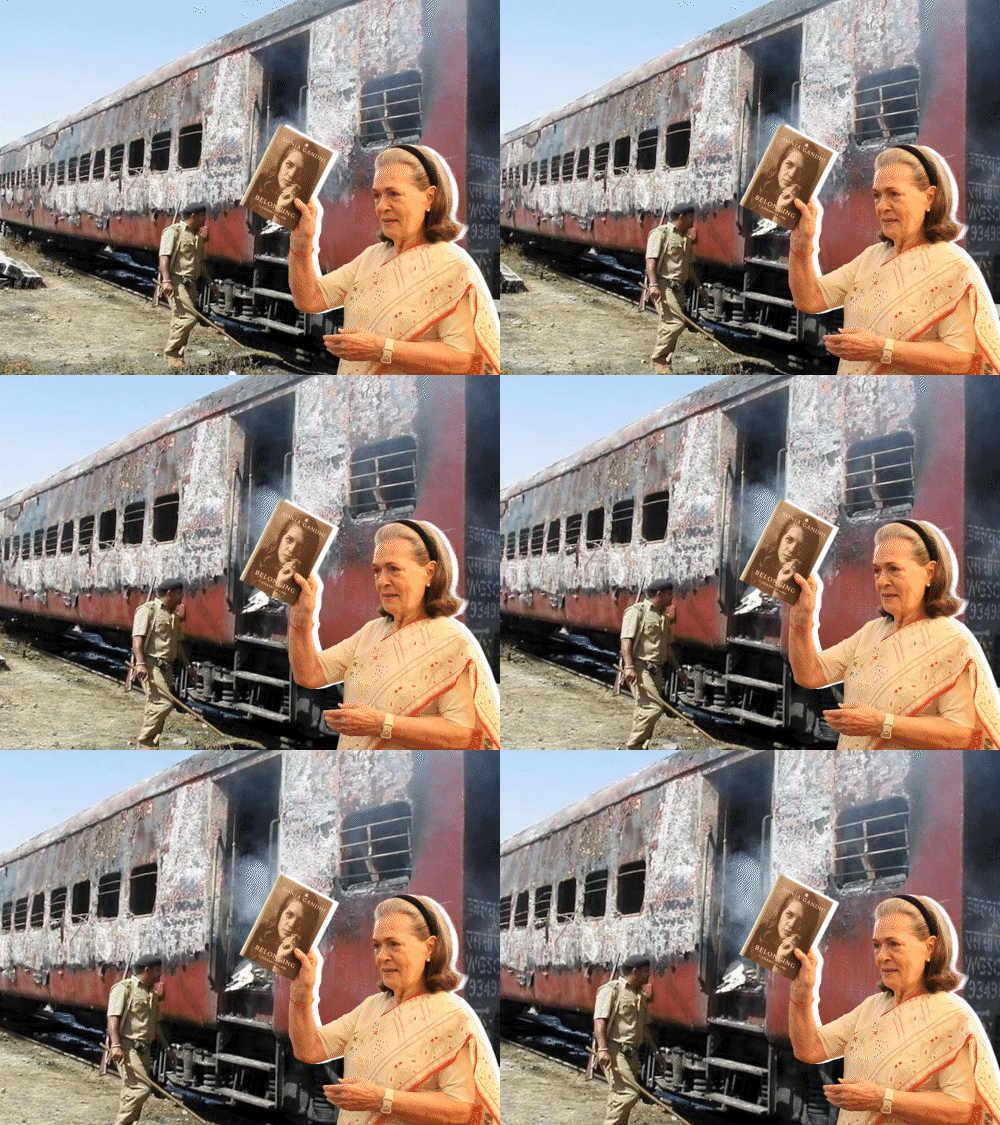
A survivor of the 2002 Godhra train carnage has strongly challenged claims surrounding the tragedy following remarks in Congress leader Sonia Gandhi's memoir, questioning why the account fails to address who set fire to the Sabarmati Express. Speaking to regional media, the eyewitness recalled seeing flames ignited in the grass directly beneath coach S-6 before the carriage was engulfed, pushing back firmly against assertions that characterize the tragedy as having an unsettled or disputed origin.
The eyewitness expressed sharp indignation over public narratives that cast ambiguity on the circumstances of the deadly blaze, insisting that those present on the platform saw how the fire was initiated. The survivor asked why Gandhi's memoir omitted any mention of the perpetrators who lit the fire beneath the carriage, arguing that downplaying the cause undermines the truth and insults the memory of the passengers who lost their lives.
The survivor's remarks follow renewed public scrutiny over Sonia Gandhi's newly released book, Belonging: A Journey of Love, in which she reflects on the February 2002 tragedy and the subsequent communal violence that swept Gujarat. In her writing, Gandhi stated that the precise cause of the train fire remains disputed, reigniting fierce political debate across India over the established historical and legal findings.
On February 27, 2002, fifty-nine people, predominantly Hindu pilgrims returning from Ayodhya, were killed when coach S-6 of the Sabarmati Express was torched near Godhra railway station. The catastrophic loss of life triggered widespread communal riots across the state, marking one of the most painful and consequential episodes in modern Indian history.
The eyewitness testimony aligns closely with statements from former investigators, including former Special Investigation Team chief Rakesh Asthana, who unequivocally rejected assertions that the cause of the fire was open to question. Official judicial inquiries and police investigations, supported by forensic reconstructions, previously concluded that the burning of the coach was an act of premeditated criminal conspiracy rather than an accidental blaze.
Special courts and subsequent judicial reviews examined the case over years of legal proceedings, ultimately convicting multiple individuals for their roles in procuring fuel, stopping the train, and setting coach S-6 on fire. Despite historical political contention and conflicting committee reports in the mid-2000s, India's higher judiciary upheld the conspiratorial nature of the assault, handing down life sentences and convictions to dozens of individuals.
The renewed controversy over the Godhra carnage highlights how deeply sensitive and politically fraught the events of 2002 remain in contemporary Indian discourse. Critics and political opponents have accused the Congress leadership of attempting to dilute court-verified history, while supporters maintain that personal memoirs reflect individual reflections on major national turning points.
For survivors and relatives of the victims, debates over the wording in high-profile memoirs are not merely academic or political disputes. Many who survived the attack emphasize that maintaining an accurate public record is essential to ensuring accountability and preventing the historical revision of a tragedy that reshaped the nation.
As excerpts from Gandhi's memoir continue to circulate widely, political analysts expect the issue to remain a focal point of sharp ideological exchange between competing political parties. While the legal verdicts regarding the Godhra attack stand affirmed by the Indian courts, firsthand testimonies ensure that the memory of the fateful morning continues to provoke intense national attention.
Primary source: Divya Bhaskar Original. Newzly rewrites and structures source reporting for clarity; verify critical details at the original.