Tamil Nadu Minister Viswanathan and Selvaperunthagai Spar Over State Law and Order
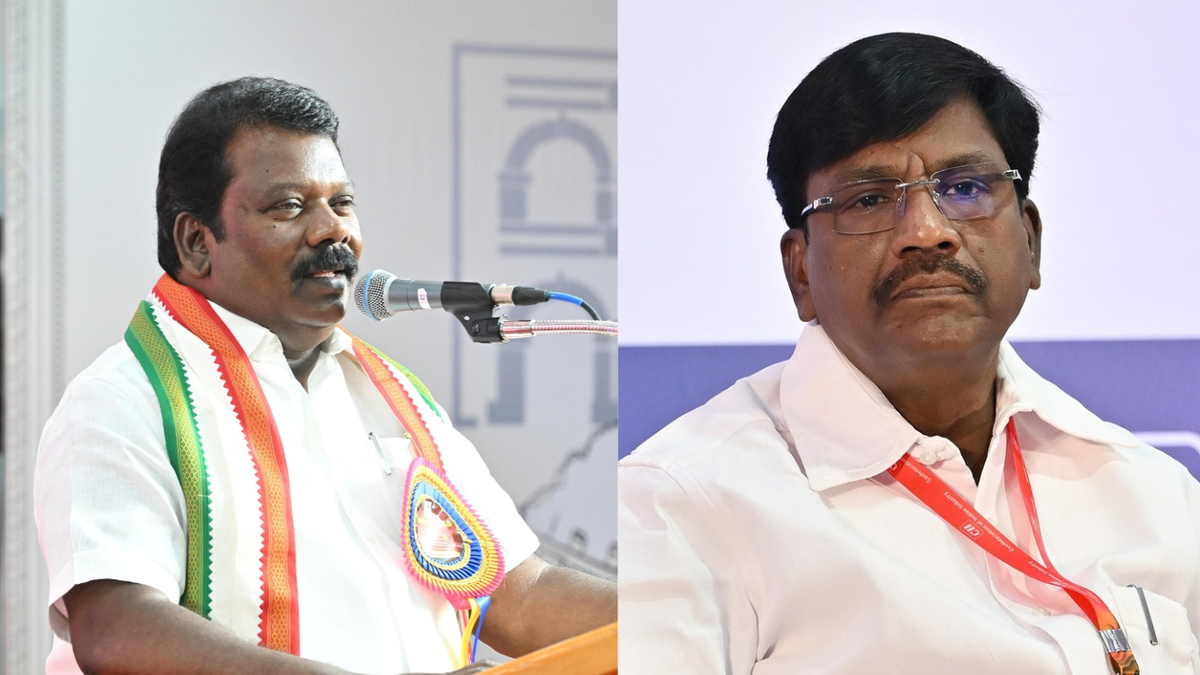
A public war of words has erupted between Tamil Nadu Minister P. Viswanathan and former TNCC chief K. Selvaperunthagai over state law and order, prompting pointed questions over political allegiance.
In this piece
Tamil Nadu Minister P. Viswanathan and former TNCC president K. Selvaperunthagai have engaged in a heated political exchange over the state's law and order…
A sharp political dispute has surfaced in Tamil Nadu as state Minister P. Viswanathan and former Tamil Nadu Congress Committee president K. Selvaperunthagai publicly sparred over the state's law and order situation. The friction erupted into the open after remarks addressing regional governance prompted caustic reactions across state political circles. The verbal confrontation quickly gained traction as both figures traded scrutiny over administrative performance and political loyalty.
At the center of the dispute was a direct challenge issued by Minister Viswanathan regarding Selvaperunthagai's future political direction. Speaking in response to the former Congress chief's critical observations on state administration, the minister questioned which political party Selvaperunthagai planned to join next. Viswanathan indicated that any substantive dialogue or clarification would depend on the former party leader first resolving lingering ambiguities regarding his political alignment.
The confrontation was ignited following public observations concerning the state's law and order climate and broader governance matters. Selvaperunthagai had voiced reservations regarding administrative responses and societal protections, raising questions over the ground reality facing residents. His commentary struck a sensitive nerve within official quarters, given ongoing scrutiny over law enforcement handling across the state.
Viswanathan mounted a firm defense of the administrative apparatus, dismissing the former party leader's characterizations as misplaced. The minister maintained that law enforcement mechanisms remain active and vigilant in safeguarding public safety across Tamil Nadu. By turning attention back toward Selvaperunthagai's political intentions, Viswanathan sought to portray the criticism as an exercise in political posturing rather than genuine institutional critique.
The exchange carries broader resonance due to the intricate political equations governing the ruling coalition and state Congress leadership. While party figures routinely navigate delicate balancing acts between administrative solidarity and constructive dissent, public discord often signals underlying friction. Observers note that debates touching on internal party coherence and future alignments tend to amplify when veteran leaders air public disagreements.
Law and order remains one of the most closely monitored policy areas in Tamil Nadu, where administrative efficacy is continually measured against public accountability. Critics and observers frequently evaluate how law enforcement agencies handle sensitive civic disputes and community safety concerns. When leaders affiliated with major political formations publicly diverge on these issues, it sharpens focus on how government institutions manage law enforcement oversight.
Beyond policing, the dispute touches directly on political credibility and individual standing within Tamil Nadu's competitive political landscape. Questioning an established leader's loyalty or future partisan path is a familiar tactic used to deflect policy critique and place rivals on the defensive. For Selvaperunthagai, addressing perceptions about party discipline and allegiance has become intertwined with his ongoing commentary on regional governance.
Official responses from wider party hierarchies have remained circumspect, with leaderships historically preferring to resolve personal and policy differences behind closed doors. Neither camp has publicly signaled a formal rupture, yet the pointed tone of the exchange underscores persistent rivalries among regional figures. Political analysts point out that public skirmishes of this nature frequently test organizational cohesion ahead of major electoral and organizational cycles.
Moving forward, attention remains focused on whether either leader will offer further clarifications or whether party intermediaries will seek to de-escalate tensions. Observers expect discussions over law enforcement standards and internal political cohesion to persist as state political schedules unfold. How both figures navigate the fallout in the coming days will likely indicate whether the row remains an isolated verbal duel or develops into wider debate.
Primary source: The Hindu. Newzly rewrites and structures source reporting for clarity; verify critical details at the original.