world·Gujarat·Jamnagar District
Groundnut Harvest Influx Triggers 4-Kilometer Queue of 400 Vehicles at Jamnagar Market Yard
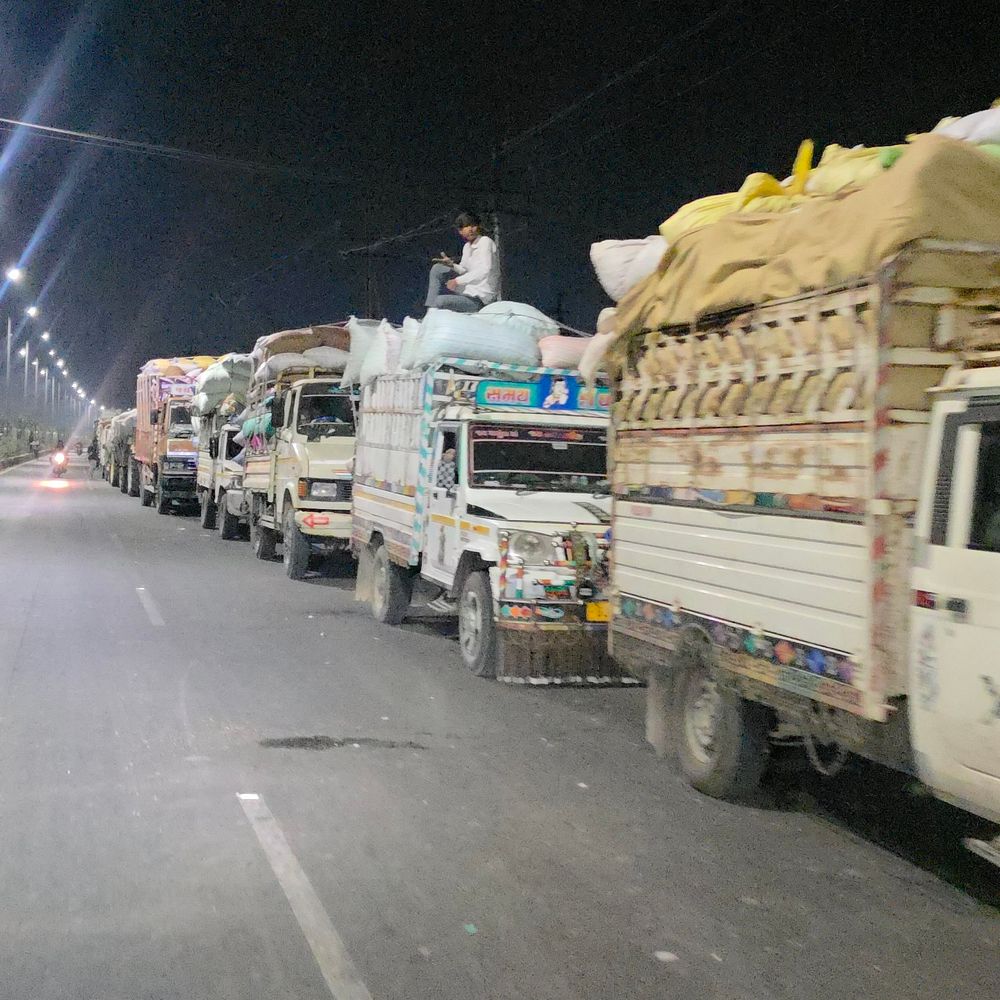
Hundreds of farmers converged on the Jamnagar marketing yard in Gujarat as fresh groundnut arrivals began, creating a four-kilometer queue of roughly 400 loaded vehicles stretching toward the bypass road.
In this piece
Fresh groundnut arrivals triggered a massive rush of farmers at the Jamnagar marketing yard in Gujarat. Approximately 400 crop-laden vehicles formed a…
A massive influx of agricultural produce brought vehicular movement to a crawl near the Jamnagar marketing yard in Gujarat as the arrival of the new groundnut harvest got underway. Local reports indicated that approximately 400 vehicles loaded with groundnuts lined up outside the Agricultural Produce Market Committee premises, creating a traffic queue stretching roughly four kilometers toward the bypass road.
The sudden convergence of tractors, light commercial trucks, and trailers began early as farmers from across the district sought to register their produce for the opening trading sessions. The queue extended well beyond the entrance gates, occupying roadside lanes as drivers waited for clearance to enter the yard. Market personnel and local authorities coordinated along the route to manage traffic flow and prevent gridlock on adjacent thoroughfares.
The Jamnagar marketing yard, situated near Hapa, serves as one of Saurashtra's principal agricultural trading hubs, handling substantial volumes of oilseeds and cash crops annually. With harvesting gaining momentum across regional farms, growers routinely move their yield to the regulated market to participate in open auctions. The sudden concentration of hundreds of laden vehicles highlights the intensive logistical demands placed on the facility during the early phases of the seasonal marketing calendar.
Groundnut represents one of Gujarat's most vital cash crops, with the Saurashtra peninsula accounting for a significant share of national cultivation and edible oil processing. For thousands of agrarian households, the post-harvest marketing window determines seasonal earnings and sets cash flow for the upcoming winter sowing cycle. Early season arrivals often reflect both harvest quality and growers' eagerness to capitalize on initial market liquidity.
In agricultural mandis across the region, initial arrival volumes are watched closely by traders, commission agents, and oil millers seeking to assess yield trends and kernel quality. Competitive bidding in open auction halls typically dictates whether farmers receive remunerative returns above government minimum support levels. Growers participating in the early rush generally anticipate firm demand from domestic processors and interstate buyers eager to secure early inventory.
The four-kilometer line of transport vehicles underscored recurring infrastructure challenges faced by major market yards during peak crop arrivals. When hundreds of vehicles arrive within hours, entry gate verification, weighbridge processing, and yard space management can become immediate bottlenecks. Local transit authorities often have to implement temporary diversions or staging protocols along connecting highways to minimize disruption for commuter traffic.
For the farmers waiting in line along the bypass corridor, timely entry into the yard remains critical to avoid extended waiting periods under outdoor conditions. Lingering in vehicle queues exposes perishable agricultural consignments to weather variations and increases transport expenses. Many growers travel overnight from rural hinterlands to secure an advantageous position before morning bidding commences.
The scale of arrivals at Jamnagar also reverberates through the broader regional rural economy, stimulating transport operators, loading laborers, and allied agro-processing sectors. A bustling yard signals an active start to commercial exchanges across Saurashtra following months of field labor and cultivation. Strong trading activity provides essential momentum to rural liquidity in western India.
Market authorities are expected to pace incoming consignments over the coming days to maintain orderly transactions and avoid severe road congestion outside the complex. Trading officials traditionally evaluate entry limits or batching schedules when daily arrivals exceed the yard's immediate processing and unloading capacity. Regional market participants will continue monitoring price patterns and daily arrival volumes as the harvest season unfolds across Gujarat.
Primary source: Divya Bhaskar Gujarat. Newzly rewrites and structures source reporting for clarity; verify critical details at the original.