IRRI and Mizoram Explore Collaboration for Climate-Resilient Agriculture
The International Rice Research Institute and the Government of Mizoram are examining a strategic partnership to implement regenerative farming models, seeking to boost smallholder livelihoods and protect fragile hill ecosystems.
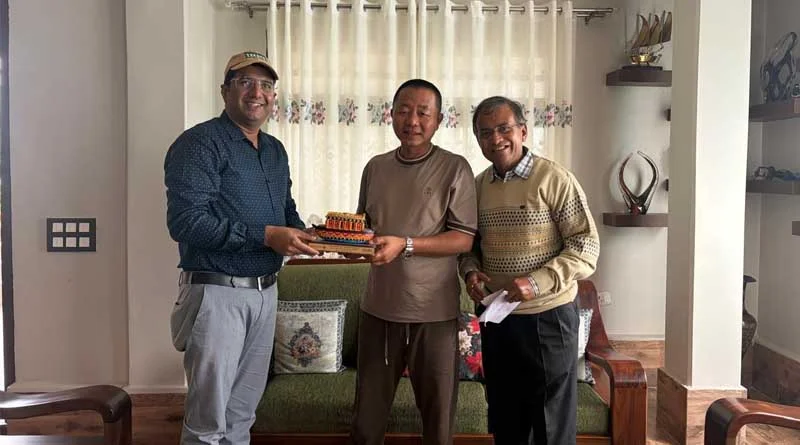
In this piece
The Government of Mizoram and the International Rice Research Institute are exploring a collaboration to introduce climate-resilient, regenerative agriculture…
The International Rice Research Institute and the Government of Mizoram are exploring a strategic collaboration to advance regenerative and climate-resilient agricultural systems across the northeastern state. The initiative seeks to introduce scalable, sustainable farming models designed to strengthen local food production while preserving ecological balance in the region's sensitive terrain.
Under the prospective framework, researchers and state officials intend to evaluate agronomic interventions that improve soil fertility, optimize water usage, and safeguard native biodiversity. The discussions center on blending scientific research with local agricultural knowledge to enhance productivity across diverse agro-climatic zones.
Agriculture forms the backbone of Mizoram's rural economy, where a significant share of farming households historically rely on shifting cultivation alongside valley-bottom rice production. While traditional practices have sustained communities for generations, increasing population pressures and changing weather patterns have intensified the need for modern, sustainable alternatives.
The state's predominantly steep terrain makes topsoil especially vulnerable to erosion during heavy monsoon downpours, leading to nutrient depletion and declining yields over repeated cycles. Developing regenerative practices tailored specifically to sloping hillsides is essential to stabilizing soils and maintaining long-term agricultural viability.
Climate variability has emerged as a major challenge across northeastern India, marked by erratic monsoon patterns, prolonged dry spells, and rising temperatures. By working with specialized crop scientists, state authorities aim to introduce climate-smart agronomy that can buffer farming communities against unpredictable environmental shocks.
A central objective of the proposed cooperation is improving the livelihood security and household earnings of smallholder farmers throughout Mizoram. Implementing regenerative methodologies could help growers lower input costs, enhance crop quality, and build more dependable supply chains connected to wider consumer markets.
As an international research institution, the International Rice Research Institute brings decades of experience in developing resilient crop varieties, ecological pest management, and conservation agriculture. Applying these scientific methodologies within regional hill ecosystems could provide valuable data for sustainable highland farming across neighboring states.
Initial discussions point toward testing customized regenerative models through localized pilot projects before expanding successful practices more broadly. These targeted demonstrations would allow field agronomists to monitor soil recovery, assess resource efficiency, and refine techniques in close coordination with local cultivators.
Agricultural observers note that the collaboration aligns closely with broader national priorities emphasizing natural farming, soil health preservation, and food sovereignty. Successful deployment of regenerative systems in Mizoram could serve as a valuable reference for hill agriculture facing comparable ecological stresses across the wider region.
Moving forward, state administrative departments and institutional representatives are expected to formalize specific programmatic guidelines, funding mechanisms, and research milestones. Establishing clear implementation timelines and farmer training modules will be decisive in translating exploratory discussions into lasting field-level transformations.
Primary source: Google News Mizoram. Newzly rewrites and structures source reporting for clarity; verify critical details at the original.