GTA 6 Borrows Zelda: Breath of the Wild's Playbook for Its Opening Hours
Rockstar Games appears to have taken design cues from Nintendo's open-world masterclass, grounding its sprawling crime epic with a focused introductory area. The approach echoes how The Legend of Zelda structured its opening to teach core mechanics.
In this piece
Grand Theft Auto 6 borrows one of modern gaming's most celebrated design choices by crafting a disciplined introduction reminiscent of The Legend of Zelda:…
Grand Theft Auto 6 has earned praise for executing one of the most critical elements of modern open-world game design: a carefully measured introduction. In a recent design analysis, gaming publication Polygon observed that Rockstar Games embraced the introductory philosophy popularized in 2017 by Nintendo's The Legend of Zelda: Breath of the Wild. Rather than immediately overwhelming players with an expansive map, the title relies on a contained opening space to establish its core systems.
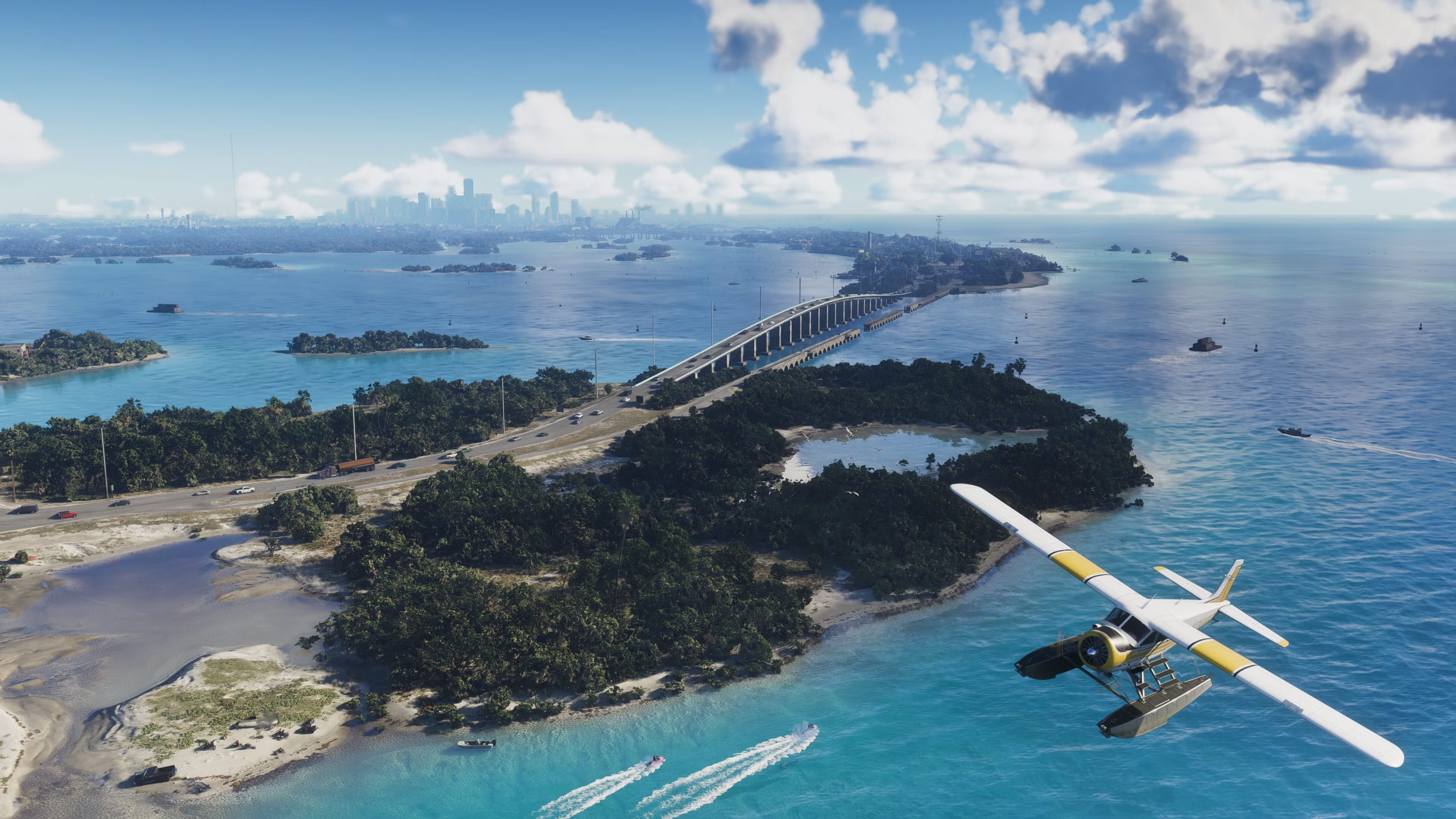
According to the report, GTA 6 utilizes its southernmost territory, known as the Leonida Keys, as an initial proving ground. This island-based zone restricts immediate travel outward, presenting players with a distinct and manageable playground. Within this boundary, players can experiment with movement, vehicular control, and narrative pacing without the distraction of an immense open frontier.
The comparison directly references the Great Plateau, the plateau-bound starting zone that introduced players to Breath of the Wild nearly a decade ago. In that game, director Hidemaro Fujibayashi and the Nintendo team trapped the protagonist on a high cliff until key navigational tools were acquired. This forced confinement transformed what could have been a disorienting survival sandbox into an intuitive, self-guided tutorial.
Open-world design has historically struggled with the tension between immediate freedom and necessary player instruction. Many major titles either throw players into vast landscapes without sufficient direction or encumber the early hours with intrusive, highly scripted tutorial sequences. By contrast, a self-contained sandbox allows organic learning through environmental boundaries rather than artificial prompts.
For Rockstar Games, this structured opening marks an intriguing evolution in world-building philosophy. While earlier entries in the Grand Theft Auto series frequently restricted map access using locked bridges or police blockades, those barriers often felt like arbitrary mechanical gates. Structuring the prologue around naturally isolated geography provides a more narrative and environmental justification for early limitations.
The success of an introductory zone is increasingly vital in modern high-budget video games. As digital worlds expand in technical fidelity and physical scale, initial player fatigue has become a significant obstacle for developers. Giving players an early sense of mastery within a compact area builds confidence and investment before the full scope of the world unfolds.
The setting of Leonida represents one of the largest and most complex digital environments ever attempted by Rockstar. Navigating dense urban centers, marshlands, and highway networks requires a firm grasp of interacting systems, from civilian artificial intelligence to pursuit mechanics. Establishing those fundamental expectations early on ensures that the broader simulation remains engaging rather than chaotic.
The parallel drawn between Rockstar and Nintendo highlights an ongoing cross-pollination among the industry's most influential creative teams. Even as high-end graphics and narrative budgets surge, fundamental structural insights from acclaimed titles continue to inform rival studios. Nintendo's minimalist approach to player discovery continues to shape blockbuster productions across different genres.
As players and critics continue to evaluate the full breadth of Grand Theft Auto 6, its opening sequence will likely remain a benchmark for how blockbuster games handle early pacing. Industry watchers anticipate that future open-world projects will place even greater emphasis on compact introductory regions. By proving that constraint can enhance player freedom, Rockstar reinforces a design standard that first redefined the medium nearly a decade ago.
Primary source: Polygon. Newzly rewrites and structures source reporting for clarity; verify critical details at the original.