Gujarat Bans Caste and Religious Stickers on All Vehicles Under Amended Rules
The Gujarat government has prohibited the display of caste names, religious symbols, and community markers on all private vehicles. The newly notified amendment empowers transport authorities and traffic police to fine offenders statewide.
In this piece
Gujarat authorities have issued a formal notification barring vehicle owners from displaying caste and religious markings, figures, or names on their vehicles.…
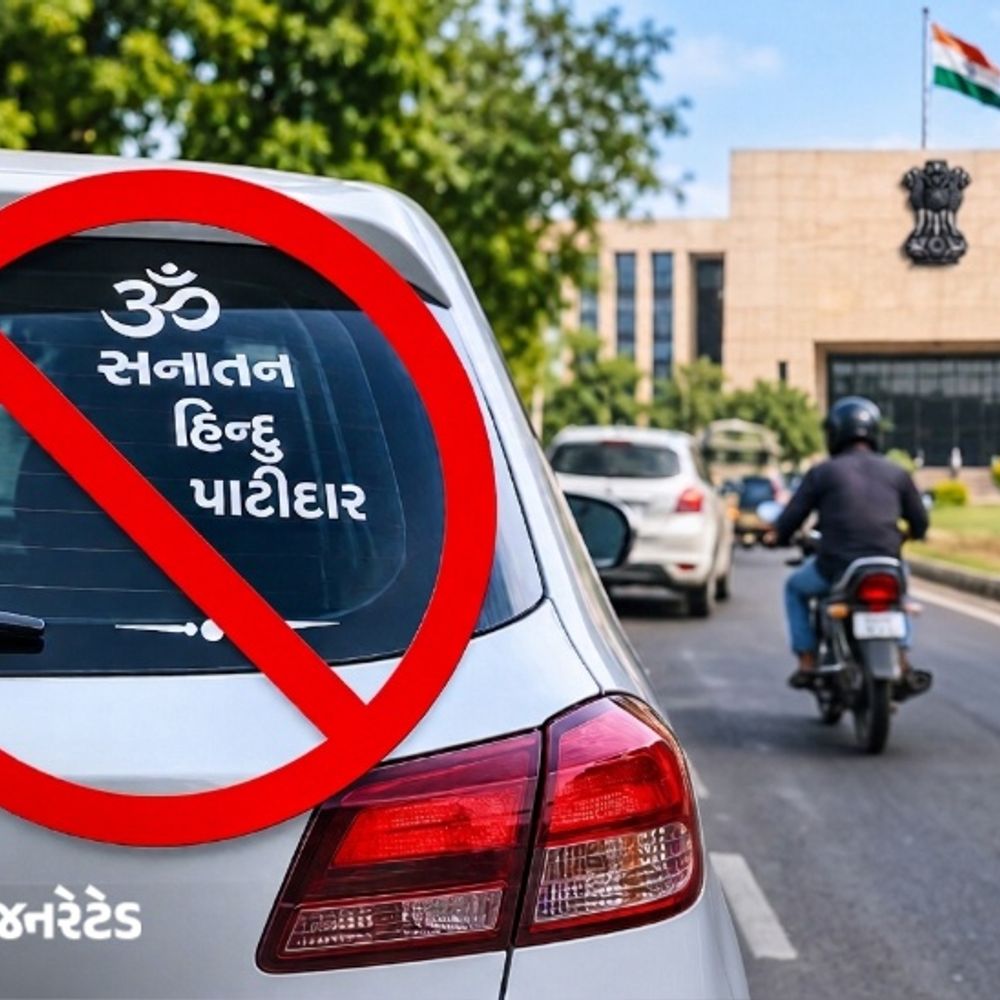
The Gujarat government has officially prohibited the display of caste-identifying words, religious symbols, and community designations on all motor vehicles across the state. Under the newly notified regulations, owners of private and commercial vehicles can no longer display terms such as Patidar, Rajput, Sanatan, or Hindu on their body panels, windshields, bumpers, or registration plates.
The sweeping directive applies across every vehicle category, spanning two-wheelers, three-wheelers, private cars, passenger buses, and heavy transport trucks. Transport authorities confirmed that the measure is intended to curb public displays of sectarian and caste identities on state roadways and bring uniform discipline to vehicle identification.
The prohibition was formalized through an official notification issued by the state's Ports and Transport Department under the Gujarat Motor Vehicles Rules. The administration amended Rule 125 to explicitly classify caste-based signage alongside unauthorized advertising devices, while also inserting a dedicated clause under Rule 138 that bars any private vehicle from carrying caste or religious inscriptions without explicit government clearance.
The final notification follows an administrative process initiated earlier this year, during which draft amendments were published to solicit public feedback and objections. State officials moved forward with enacting the final rules without substantial alteration after receiving no formal objections from the public during the designated review window.
For years, the widespread practice of displaying caste identities, family lineages, and religious slogans operated within an ambiguous regulatory grey zone on Gujarat roads. While national motor vehicle regulations have long mandated standard number plate designs, motorists frequently affixed prominent stickers to rear windows and license plate frames with limited regulatory clarity for enforcement personnel.
With the amended rules now formally on the books, regional transport offices and local traffic police units have direct legal backing to stop vehicles and penalize non-compliant motorists. Enforcement officers are empowered to issue financial penalties, demand the immediate removal of offending decals, and cite repeated violators under statutory motor vehicle provisions.
The move reflects broader administrative efforts across several Indian states to discourage public displays of caste assertion that can heighten social divisions or project informal influence during traffic interactions. Policy observers note that prominent identity markers on vehicles have occasionally been used to intimidate other road users or assert perceived privilege in public spaces.
Beyond addressing community and social concerns, transport officials emphasize that uncluttered vehicles improve road safety and aid law enforcement surveillance. Obscured windshields, altered bumpers, and non-standard lettering near license plates often impede automated number plate recognition systems and complicate rapid vehicle identification by traffic monitoring cameras.
Traffic authorities across Gujarat's major urban centers and highway corridors are expected to launch coordinated inspection drives to enforce the new directives. Motorists who currently have caste or religious stickers affixed to their vehicles have been urged to remove them promptly to avoid citations as enforcement operations intensify statewide.
Primary source: Divya Bhaskar Gujarat. Newzly rewrites and structures source reporting for clarity; verify critical details at the original.