world·Gujarat·Ahmedabad District
Gujarat Trader Turns Tables on Fraudsters in ₹40-Lakh Fake Cash Scam
After being duped of ₹40 lakh in dummy banknotes bearing "Children Bank of India" markings, an Unjha spice merchant teamed with Ahmedabad police to lure the interstate syndicate into a sting operation.
In this piece
A Gujarat trader who lost ₹40 lakh in fake play-currency delivered via an angadia courier network helped authorities catch the perpetrators. Working alongside…
Police in Ahmedabad have apprehended two interstate couriers linked to a counterfeit currency racket after a local agricultural trader orchestrated an undercover trap to catch the fraudsters. The suspects were intercepted in the city with bundles of bogus banknotes following an elaborate scheme that previously cheated an Unjha merchant out of ₹40 lakh. Authorities identified the detained individuals as Rahul Singh Thakur from Delhi and Malchand Sharma from Bikaner, Rajasthan.
The dispute originated when Rohitkumar Patel, proprietor of the cumin and fennel trading enterprise B.B. Traders in Unjha, was expecting a ₹40 lakh commercial settlement sent from Nagpur. The transaction had been routed through an informal online angadia network, a traditional courier system extensively relied upon across western India for swift merchant cash transfers. Believing the delivery was legitimate after the counterparty in Nagpur confirmed clearance, Patel's representatives accepted the consignments without immediate verification of every bill.
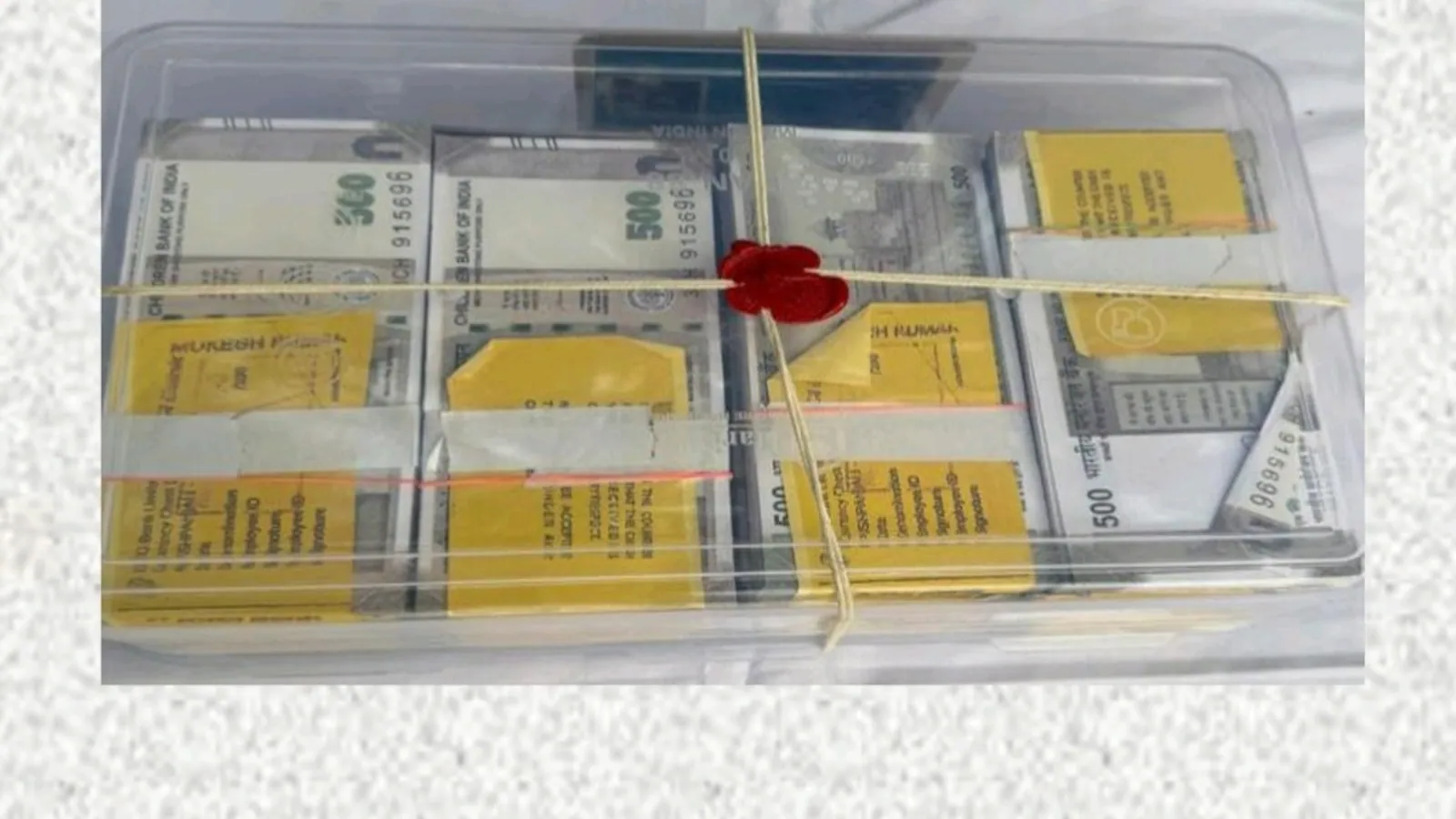
Suspicion arose shortly after the handover when the bundles were unwrapped from their formal packaging. Although the parcels were banded with realistic paper seals that closely mimicked official banking wraps, the currency itself was counterfeit toy money. Prominent inscriptions on the imitation ₹500 bills read "Children Bank of India" and "Bharatiya Manoranjan Bank" instead of standard Reserve Bank of India markings.
Rather than absorbing the financial blow in silence, the merchant and his family devised a strategy to outmaneuver the criminal syndicate. Feigning complete ignorance of the counterfeit nature of the first delivery, they re-established contact with the handlers to organize another high-value cash transaction. The suspects took the bait, dispatching agents to Ahmedabad under the impression that they were executing another lucrative transfer.
The trader promptly alerted local law enforcement, bringing personnel from the Ghatlodia police station into the covert operation. Detectives established a perimeter around a designated petrol pump in Ahmedabad where the meeting was scheduled to take place. When Thakur and Sharma arrived to conclude the handoff, waiting officers moved in and took both men into custody, seizing additional stacks of dummy notes.
Preliminary interrogations revealed that the two detainees functioned primarily as field couriers hired to transport and deliver the deceptive bundles across state lines. Investigators indicated that the broader logistics and financial planning were directed by handlers operating out of New Delhi. The syndicate leveraged the speed and customary discretion of parallel financial couriers to execute deliveries before victims could examine the contents of bulky cash bags.
The case highlights persistent vulnerabilities in informal money transfer networks that operate alongside formal banking institutions. Angadia operators handle vast volumes of daily mercantile liquidity, often relying heavily on personal relationships and fast-paced handoffs rather than strict institutional compliance checks. Fraudulent syndicates have increasingly attempted to exploit these trust-based operational loops by substituting commercial payments with toy bills designed to mimic genuine cash during brief visual checks.
Ahmedabad police have expanded the scope of their investigation to identify the masterminds behind the operation and trace the printing origins of the fake notes. Officers are reviewing communication records, financial logs, and transport details to establish how the syndicate coordinated transfers spanning Gujarat, Maharashtra, and Delhi. Detectives are also examining whether the same network has targeted other commodity merchants across regional trading hubs.
Legal proceedings against Thakur and Sharma are now advancing under provisions governing fraud, criminal conspiracy, and counterfeit currency. Both suspects remain in custody while investigators pursue warrants for additional syndicate operatives believed to be stationed outside Gujarat. Regional commerce associations have urged members to maintain stringent scrutiny and verify packaging integrity during all high-value physical transactions.
Primary source: Google News Gujarat. Newzly rewrites and structures source reporting for clarity; verify critical details at the original.