Half of NASA's Active Mars Fleet Sidelined by Technical Glitches
Separate technical malfunctions on the Perseverance rover and the Odyssey orbiter have sidelined half of NASA's active Mars fleet, forcing engineers to troubleshoot communications and fuel-saving systems millions of miles away.
In this piece
Two of NASA's four active Mars missions, the Perseverance rover and the Odyssey orbiter, have paused science operations following mechanical and radio glitches.…
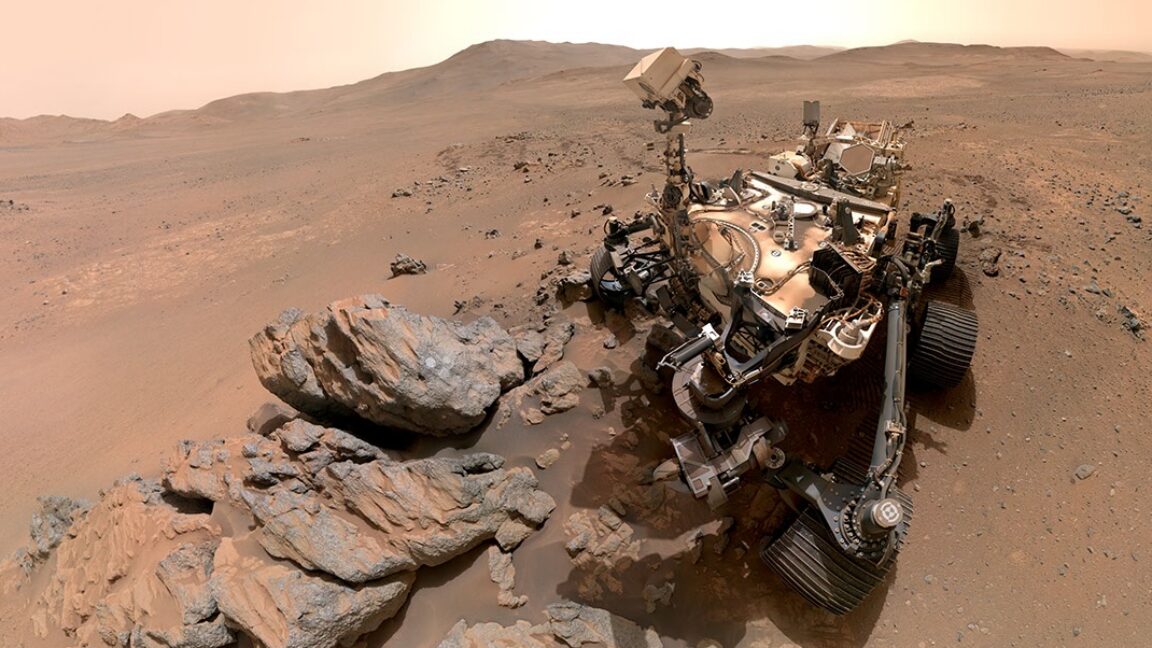
Two of NASA's active Mars missions, the Perseverance rover on the Martian surface and the veteran Mars Odyssey orbiter, have temporarily suspended scientific observations due to unrelated technical anomalies. The setbacks have knocked offline a substantial portion of the agency's operational fleet at the Red Planet, prompting engineers to troubleshoot critical hardware deep in space.
Problems aboard the Perseverance rover began when its primary ultra-high-frequency transmitter stopped responding to commands, causing the vehicle to automatically enter a protective safe mode. When ground controllers activated the backup transmitter, tests revealed that the auxiliary unit was operating at only about half its anticipated broadcast power.
The reduced transmission capability forced mission controllers to halt high-rate data relays that typically route heavy scientific imagery and sensor measurements through overhead orbiters. Instead, the rover team has relied on a slower, direct-to-Earth X-band antenna link to conduct engineering assessments and diagnostic checks while attempting to restore full communication performance.
Thousands of miles above the surface, the Mars Odyssey spacecraft encountered its own critical malfunction when another of its reaction wheels stopped spinning in early November. The mechanical device, which helps maintain the spacecraft's pointing orientation without consuming propellant, had already suffered a counterpart failure in 2013.
With an insufficient number of functioning reaction wheels to stabilize itself, Odyssey must rely more heavily on its onboard hydrazine thrusters to stay oriented toward Earth and the Martian terrain. Because the orbiter has been operating continuously for more than two decades, using attitude control thrusters risks burning through its remaining fuel reserves far more quickly than planned.
The concurrent disruptions underscore the growing vulnerability of NASA's long-running Mars exploration infrastructure, which relies heavily on aging hardware operating far beyond initial mission timelines. Odyssey entered orbit around Mars in late 2001, establishing itself as the longest-lived robotic mission in Martian history, while even newer surface explorers rely on legacy orbital assets for relay support.
Beyond their own scientific observations, orbiters like Odyssey provide essential communications infrastructure that relays data and navigation commands between Earth and robotic vehicles exploring the Martian terrain. Sidelining an orbiter narrows the relay network available to surface rovers, complicating data delivery schedules across the entire exploration program.
NASA continues to operate other orbital and surface assets at Mars, including the Mars Reconnaissance Orbiter, the MAVEN atmospheric probe, and the Curiosity rover. However, those missions also contend with wear and tear from years of exposure to the harsh interplanetary and surface radiation environments.
Engineers at NASA and the Jet Propulsion Laboratory are continuing diagnostics on both Perseverance and Odyssey to determine whether safe workarounds can restore primary functions. Ground teams aim to stabilize Odyssey's propellant usage while finding ways to safely operate Perseverance's communications gear without compromising long-term vehicle health.
Primary source: Ars Technica. Newzly rewrites and structures source reporting for clarity; verify critical details at the original.