Harvard-led team develops tiny UV light device with 120-fold output gain
A microscopic device converts red light into ultraviolet light with substantially higher output than comparable approaches, potentially helping researchers make quantum computers, atomic clocks and environmental sensors more compact.
In this piece
Harvard-led researchers have developed a microscopic device that produces 120 times more ultraviolet light than previous comparable approaches, according to…
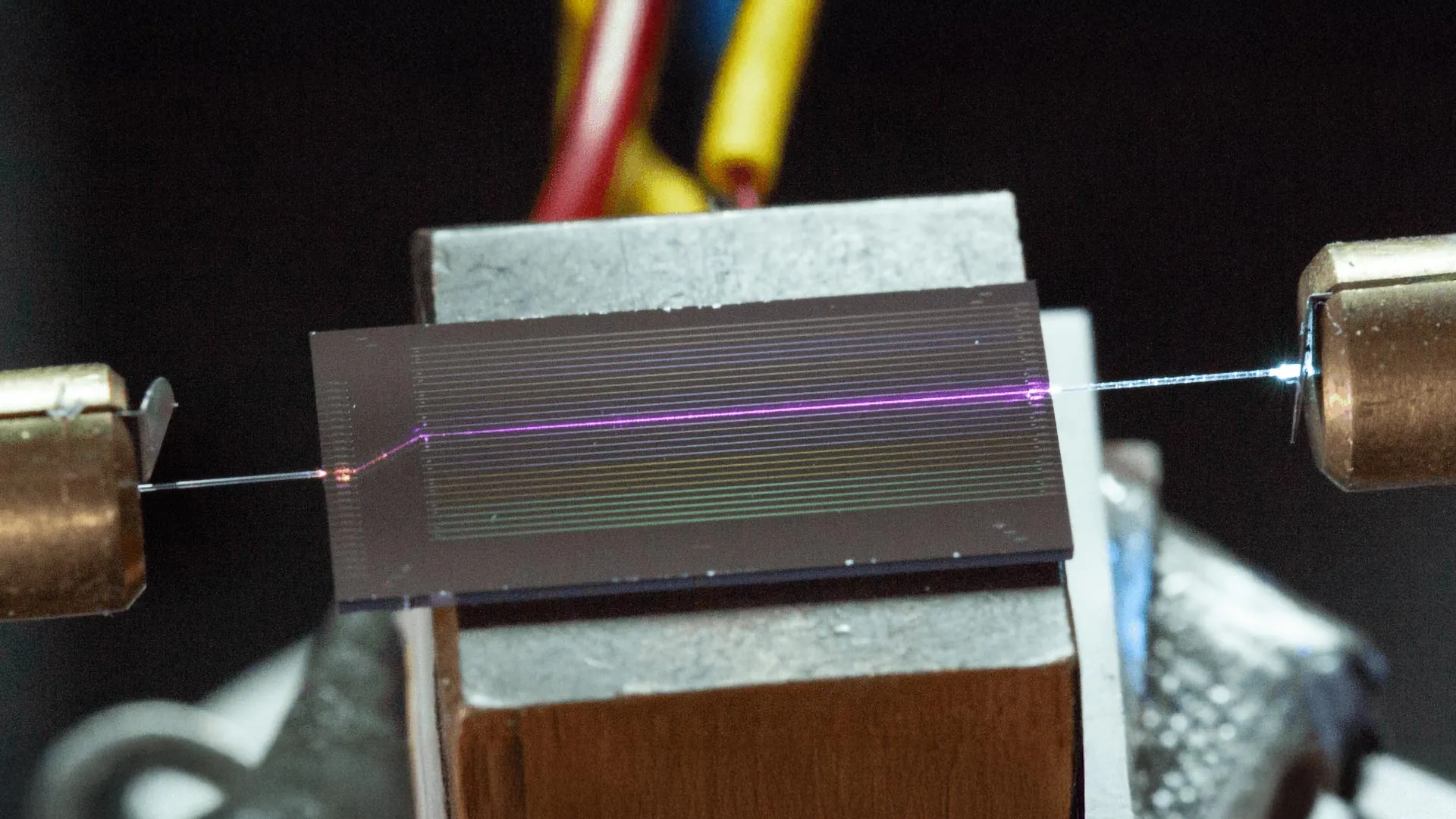
Harvard-led researchers have developed a microscopic device that converts red light into ultraviolet light, generating 120 times more UV output than previous comparable approaches, according to a ScienceDaily report. The advance could help reduce the size of equipment used in quantum computing, precision timekeeping and environmental sensing.
The reported achievement centers on producing ultraviolet light in a very small device rather than simply making an existing UV source smaller. By efficiently converting red light into UV, the researchers are pursuing a route to compact light generation that could become useful within larger scientific instruments and technologies.
The 120-fold figure describes ultraviolet output relative to previous comparable approaches. It should not be read as a claim that quantum computers would become 120 times faster, or that clocks and sensors would improve by the same factor. The supplied account does not specify the comparison conditions or provide an absolute output measurement.
For quantum computing, the potential significance is miniaturization. The report identifies smaller quantum computers as a possible application, but it does not describe a complete computer built around the device. A microscopic light source represents a component-level advance; turning that advance into a smaller working system would require demonstrating its suitability within the broader equipment.
Ultra-precise atomic clocks are another prospective use identified in the report. Here, too, the distinction between a promising light source and a finished instrument matters: the supplied material does not report a clock demonstration or a measured improvement in timekeeping. Its claim is that the device could help enable more compact technology, not that those benefits have already been delivered.
Environmental sensing offers a third possible direction. A compact UV-generating device could support efforts to reduce the size of sensing equipment, as the report suggests, but the supplied account does not identify a particular substance being measured or a field test. No detection limits, operating conditions or sensor-performance results are included in the material provided.
Those gaps limit how precisely the result can be assessed from the brief account. It does not give the device’s exact dimensions, materials, ultraviolet wavelength or power requirements, nor does it identify the researchers individually. The reported output improvement is therefore the central concrete finding, while the proposed applications remain possibilities rather than demonstrated products.
The next question is whether the stronger UV output can translate into practical advantages in the systems the researchers hope to shrink. ScienceDaily frames the work as a potential enabling advance for quantum computers, atomic clocks and environmental sensors. The supplied report provides no timetable for integration or commercial availability, leaving those outcomes open.
Primary source: ScienceDaily. Newzly rewrites and structures source reporting for clarity; verify critical details at the original.