Heatbit's New $899 Bitwater Device Turns Your Water Heater Into a Bitcoin Miner
Startup Heatbit is retrofitting ordinary electric water heaters with 20 bitcoin-mining chips, promising homeowners daily crypto earnings of up to $1.25 while still delivering hot showers.
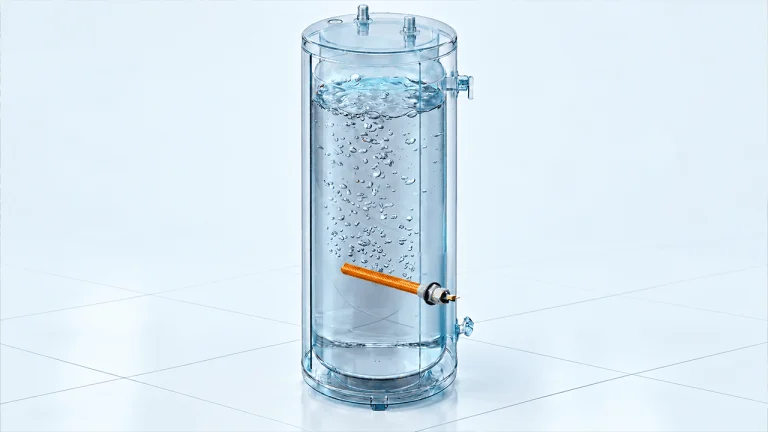
Heatbit, the startup behind mining-powered space heaters and air purifiers, has unveiled its most ambitious product yet: a retrofit unit that turns a conventional electric water heater into a working bitcoin miner. The device, called Bitwater, is priced at $899 for early preorders that opened on October 22, 2026, and is scheduled to ship in the first quarter of 2027.
Instead of replacing the entire tank, Bitwater swaps out the lower heating element for a cartridge packed with 20 Bitmain BM1370 ASIC chips. The assembly draws 600 watts and delivers up to 34 terahash per second of mining power — all while continuing to heat water for household use.
Because the chips are submerged in the tank itself, the unit requires no fans or separate cooling system. Heatbit says the water-cooling arrangement keeps operation completely silent, a selling point it has emphasised since its earlier heating products faced criticism for fan noise.
Compatibility is limited to 30- to 80-gallon electric storage tanks fitted with standard screw-in element ports. Gas water heaters, tankless systems, and heat-pump units are all excluded, narrowing the addressable market to homes already running conventional resistive-element tanks.
At current bitcoin prices and network difficulty, Heatbit projects daily mining revenue of roughly $1 to $1.25 under favourable conditions, translating to an estimated $365 to $455 per year. On those figures, the company calculates a theoretical payback period of two to two-and-a-half years — a window that does not account for installation labour or potential changes in bitcoin's price or mining difficulty.
Heatbit was founded in 2020 by Alex Busarov, who built the company around the idea that the heat generated by mining chips need not go to waste. Earlier products channelled that thermal output into room heating and air purification; Bitwater extends the concept to domestic hot water, one of the largest single consumers of household electricity.
The economics of small-scale home mining have long been contested. Network difficulty has risen sharply as industrial-scale operations have expanded, and retail electricity rates in many markets erode margins that larger miners enjoy through wholesale power contracts. Heatbit's pitch is that households are already paying for the electricity to heat water, so any bitcoin earned is effectively incremental income rather than a pure mining bet.
That framing sidesteps some of the traditional objections to home mining but does not eliminate them. The 600-watt draw is comparable to a standard heating element, meaning running costs depend heavily on local tariffs. In regions with high electricity prices the financial case weakens considerably, and the payback window could extend well beyond the company's projections.
The genesis-batch price of $899 rises to as much as $1,299 in later production runs, giving early buyers a meaningful cost advantage if they are confident in the product's durability. As of the launch date, no independent customer reviews or long-term performance data are available, since the hardware has not yet reached consumers.
Heatbit says Bitwater is designed to install without replacing the existing tank, though it has not specified whether a licensed plumber or electrician is required to fit the element cartridge. That detail matters for the total cost calculation, as professional installation fees could add meaningfully to the break-even timeline. The company is expected to provide full installation guidance when units begin shipping early next year.
Primary source: Bitcoin.com News. Newzly rewrites and structures source reporting for clarity; verify critical details at the original.