Chamath Palihapitiya Reverses Bitcoin Outlook With AI Hack Warning
The investor who once predicted a $1 million bitcoin now argues an eventual AI-enabled attack could destroy its value. His warning describes a hypothetical outcome, not a disclosed security breach.
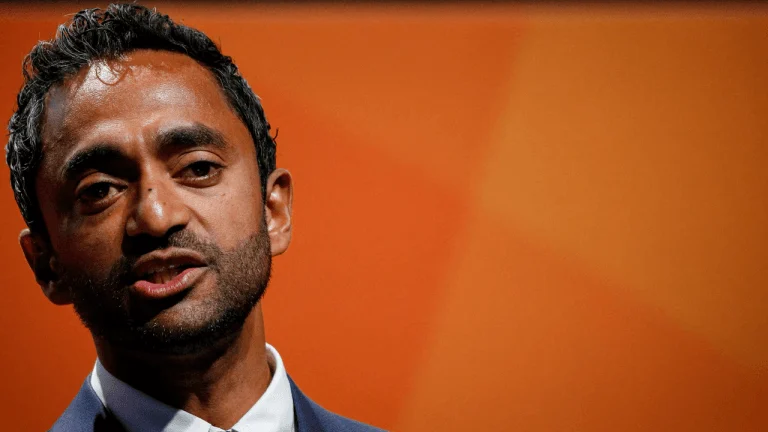
Investor Chamath Palihapitiya has reversed his longstanding bullish stance on bitcoin, predicting that an eventual artificial intelligence-enabled hack could send its value to zero. Bitcoin.com News reported the warning, a sharp departure from his earlier prediction that the cryptocurrency could reach $1 million.
The remarks came during episode 304 of Peter Diamandis’ Moonshots podcast. Palihapitiya argued that bitcoin faces both a ceiling on potential demand and a longer-term threat from increasingly capable AI systems, linking his price outlook to those separate concerns.
His demand argument centers on privacy and fungibility, or the interchangeability of individual units. According to the report, he believes Bitcoin’s transparent transaction ledger makes it unsuitable for central banks seeking financial confidentiality, limiting the pool of potential buyers and constraining its eventual valuation.
The more extreme scenario involves an attacker compromising Bitcoin’s cryptographic protections or accessing dormant holdings associated with its pseudonymous creator, Satoshi Nakamoto. As Benzinga also reported, Palihapitiya suggested an attacker could steal coins while taking a short position, then disclose the breach to benefit from falling prices.
That sequence is a forecast, not a description of an identified exploit. The Bitcoin.com report explicitly distinguishes the hypothetical attack from a demonstrated vulnerability, an important qualification when assessing a prediction that rests on technological capabilities not established in the reported remarks.
The technical distinctions also matter. Bitcoin’s developer documentation describes digital signatures as the mechanism used to authorize spending, while hashing serves separate functions within transaction processing. A claim about defeating a hash function does not, by itself, demonstrate that an attacker could produce the signatures needed to spend someone else’s coins.
Palihapitiya also questioned whether Bitcoin participants could coordinate a transition to quantum-resistant cryptography, citing disagreements within the community. That is a judgment about governance and future adaptation, rather than proof that an upgrade cannot happen. AI-enabled attacks and quantum-computing threats should likewise not be treated as interchangeable technical claims.
His comments also reflect a change in how he approaches cryptocurrency exposure. Benzinga reported that Palihapitiya said he no longer owns bitcoin directly and moved his exposure into Digital Currency Group equity years ago to avoid storage and security risks. Equity exposure is distinct from personally holding and securing coins.
Elsewhere in the discussion, he favored power infrastructure and businesses generating cash flow, according to Benzinga. That broader positioning provides context for his bitcoin skepticism: his investment outlook increasingly emphasizes tangible capacity and cash generation as AI introduces uncertainty across markets.
For bitcoin holders, the unresolved questions concern evidence, timing and the network’s ability to adapt—not simply the size of a price prediction. The reported discussion provides no timetable for the proposed attack. Palihapitiya’s zero-value forecast therefore remains contingent on a future security failure and the market response he believes would follow.
Primary source: Bitcoin.com News. Newzly rewrites and structures source reporting for clarity; verify critical details at the original.