world·Himachal Pradesh·Solan District
Himachal Villages Allege Years of Complaints Over Adani-Ambuja Blasts Ignored
Residents of 17 villages in Himachal Pradesh’s Solan district say two years of complaints over damaging blasts at Adani-owned Ambuja limestone quarries have been ignored, leaving their cracked homes at risk.
In this piece
Residents across 17 villages in Himachal Pradesh allege that industrial blasting at Adani-owned Ambuja Cements limestone mines has cracked their homes and…
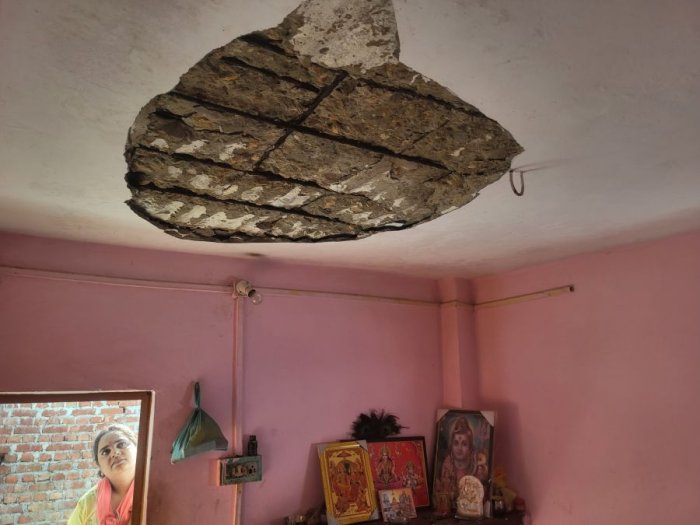
Residents across 17 villages in Himachal Pradesh's Solan district allege that heavy blasting at two limestone mines operated by Ambuja Cements has severely damaged their homes and left families living in persistent danger. Community members report that deep cracks in stone walls, damaged concrete pillars, and fractured roofs have multiplied over the past two years without meaningful official intervention. The affected families say the recurrent industrial tremors make their daily living conditions increasingly hazardous.
The impacted settlements span five gram panchayats in the Arki subdivision, including Kashlog, Mangu, Giyana, and Sewadha Chandi. In addition to ground tremors, villagers describe flying boulders and loose debris raining down from quarry slopes toward residential compounds and agricultural terraces. These recurring incidents have disrupted livestock farming and prompted fears of sudden structural collapse among longtime inhabitants.
The limestone quarries supply nearby industrial cement plants that came under the management of the Adani Group after its acquisition of Ambuja Cements in September 2022. Local residents allege that excavation activity and the frequency of high-yield detonations increased notably after the ownership change. They contend that commercial pressure to maximize output has sidelined basic safety standards and community protections in the surrounding hills.
Over the past two years, village delegations have lodged repeated formal complaints with local law enforcement, district administrators, and the Himachal Pradesh Chief Minister’s grievance redressal portal. Despite multiple submissions documenting property damage, residents assert that authorities have failed to hold mine operators accountable or order an independent investigation. Most complaint files have either been closed without resolution or routed into endless bureaucratic reviews.
An official inspection carried out by the district mining office in Solan did confirm visible fractures and structural degradation across several rural homes. However, the resulting government report stopped short of holding the cement firm directly liable, attributing the damage to an assortment of factors such as building age, foundation sinking, and natural material shrinkage.
Affected villagers have rejected those official findings as an evasion of regulatory responsibility. They point out that structures that weathered decades of harsh mountain weather began developing severe faults only after heavy mechanization and blasting intensified at the nearby quarries. Homeowners maintain that testing mechanisms remain superficial and biased toward protecting major corporate investors over rural citizens.
The controversy underscores broader environmental and infrastructural risks across the geologically sensitive Himalayan region. Geologists and environmental scientists have repeatedly warned that unrestrained slope cutting, mining, and explosive blasting destabilize fragile hill topography, rendering mountain communities especially prone to land subsidence and fatal landslides during monsoon seasons.
For rural households in the Arki belt, the physical deterioration of their homes has created immense financial hardship. Many residents depend on small-scale subsistence agriculture and lack the capital needed to undertake costly structural repairs or relocate to stable land. Without compensation or corporate assistance, families are forced to remain inside visibly cracked buildings despite escalating structural risks.
Community leaders and local advocacy groups are demanding mandatory vibration audits, reduced blasting intensity, and fair monetary compensation for damaged properties. With administrative patience wearing thin across the 17 villages, residents have signaled plans to escalate their agitation through coordinated public demonstrations and potential legal petitions before environmental courts.
Primary source: Google News Himachal Pradesh. Newzly rewrites and structures source reporting for clarity; verify critical details at the original.