Hoax bomb threats target European airlines and airports for second time in a week
At least 21 flights across Europe have been affected by what the UK government describes as a malicious hoax threat, the second such wave reported in a week.
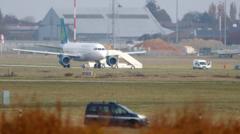
At least 21 flights across Europe have been affected by bomb threats that the UK government describes as a malicious hoax, according to reporting by BBC World. The episode is the second such wave reported in a week targeting European airlines and airports.
The public account remains limited. BBC World reports that the threats have touched flights across Europe and that the UK government has characterized them as a hoax rather than a confirmed explosive risk. No further official tally, list of carriers, or named airports appears in the material available for this report.
Aviation security agencies treat bomb threats as operational incidents until they can be assessed, even when authorities later judge them to be false. That standard response is why a claim that turns out to be a hoax can still divert aircraft, delay departures, and pull security teams away from routine screening.
The scale given so far is at least 21 flights. That figure is a floor, not a complete count, and it is not yet clear from the available reporting whether every affected flight received its own threat or whether a smaller set of messages disrupted a wider schedule.
This is described as the second time in a week that European airlines and airports have been targeted in this way. Repetition matters because it suggests a pattern rather than a single isolated message, though the reporting does not identify who sent the threats or whether the two waves are linked.
The UK government’s phrasing — a “malicious hoax threat” — frames the incident as intentional disruption rather than a credible bomb plot that has been verified. That label does not, by itself, establish motive, method, or the jurisdictions handling the investigation. Those details have not been set out in the source account.
For passengers, the immediate consequence of such threats is uncertainty: delayed journeys, possible diversions, and extra checks, even when no device is found. For airports and airlines, the cost is measured in time, staffing, and schedule recovery, details that have not been quantified in the reporting so far.
European aviation operates across many national authorities, so a threat that spans several countries can involve more than one police force and more than one transport regulator. How those bodies are dividing the work in this case has not been publicly specified.
Hoax threats are still treated as criminal matters in many jurisdictions because they force emergency responses and can endanger people through the disruption itself. Whether charges will follow, and in which country, cannot be determined from the information released so far.
What happens next depends on updates from governments and airport operators. BBC World’s account establishes the minimum number of flights affected, the European scope, the UK government’s description of a malicious hoax, and the fact that this is the second reported wave in a week. Further names, locations, and investigative findings have not been provided.
Primary source: BBC World. Newzly rewrites and structures source reporting for clarity; verify critical details at the original.