No hard evidence ties European airline bomb hoaxes to Russia or Iran
BBC World says there is no hard evidence so far linking hoax bomb threats against European air travel to Russia, Iran, or any proxy groups, leaving responsibility unresolved.
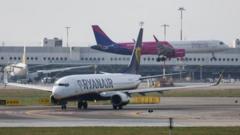
BBC World reports that there is no hard evidence so far linking airline bomb threats affecting European air travel to Russia, Iran, or any proxy groups. The account leaves open the question of who is behind the hoaxes and does not assign responsibility to any named actor.
The finding is limited to what the evidence does not show. It does not identify a sender, describe how the warnings were delivered, or say that every foreign role has been excluded. It states only that a firm connection to those governments, or to groups acting as their proxies, has not been established so far.
Hoax bomb threats against airlines are treated as security incidents even when they later prove false. Carriers and airport authorities generally have to decide quickly whether to search an aircraft, delay a departure, or divert a flight, because the cost of ignoring a genuine warning would be severe.
That duty of care is what makes a hoax disruptive. A message that appears to target a flight can force operational changes long before anyone can judge who wrote it or why. Passengers, crews, and airport staff absorb the delay while police and aviation security teams check the claim.
Public discussion often turns toward states already in tense relations with European governments. Motive, rivalry, or a record of hostile activity elsewhere can make Russia or Iran look like plausible suspects to some observers. Plausibility is not the same as proof, and the BBC account says that proof of a link is missing.
Proxy groups add another layer of uncertainty. A threat could be blamed on an intermediary without a clear chain back to a government, or it could be the work of people with no state role at all. Anonymous messages, copycats, and false claims of responsibility can look similar at the outset.
The gap matters for how the public reads the story. Treating the hoaxes as a foreign operation without hard evidence can point attention away from criminal hoaxers or opportunistic copycats. Missing a real state role, if one exists, would leave the security response too narrow. The reported caution sits between those risks.
European air routes are tightly connected, so a warning against one flight can affect crews, connections, and airport checks beyond a single gate. Repeated false alarms can also strain screening teams and complicate how airlines explain delays without giving a hoax more reach than it deserves.
The source material does not say which airlines or airports were targeted, how many threats were received, or whether any warning was later judged to be genuine. It does not quote officials, cite forensic findings, or describe the channels used to send the messages. Those details are not available here and should not be assumed.
Any later attribution would depend on evidence beyond suspicion: communications traces, police inquiries, and coordination among aviation security units and intelligence services. Until that work produces a firmer result, the position reported by BBC World remains the clearest public statement on the question.
What happens next is an open investigation rather than a settled explanation. Authorities can be expected to keep assessing each warning on its own facts while testing whether the pattern points to a state, a proxy, or someone else. For now, the BBC framing is that no hard link to Russia, Iran, or proxy groups has been shown.
Primary source: BBC World. Newzly rewrites and structures source reporting for clarity; verify critical details at the original.