How Indian Philosophy Shaped Western Thought from Thoreau to Steve Jobs
Across two centuries, Indian philosophical traditions have left an indelible imprint on Western culture, inspiring nineteenth-century Transcendentalists like Henry David Thoreau and shaping the design ethos of modern innovators like Steve Jobs.
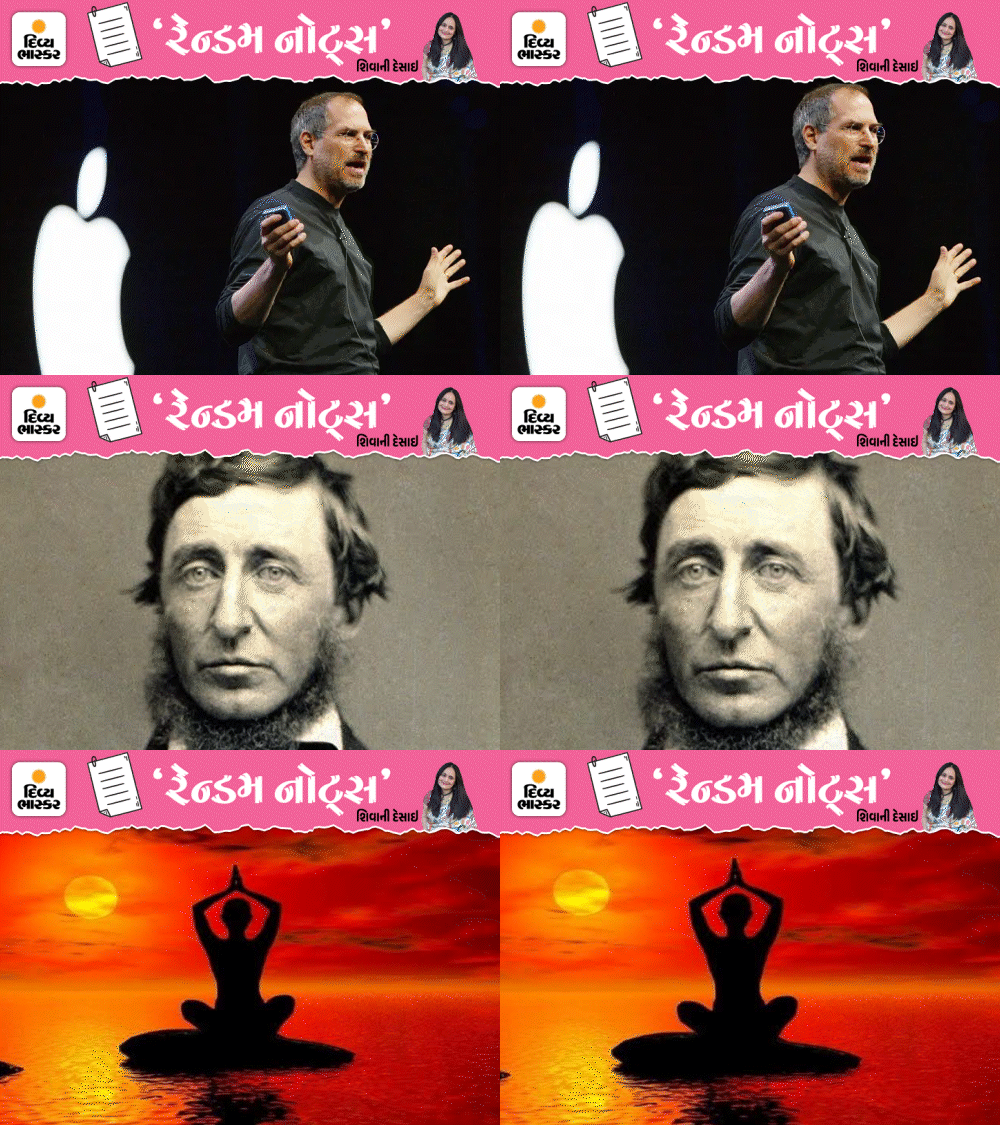
In this piece
From nineteenth-century Transcendentalist writers to modern Silicon Valley visionaries, Indian philosophy has long offered Western thinkers an alternative to…
The enduring influence of Indian philosophical thought across Western literature, philosophy, and technology highlights a profound intellectual exchange that has spanned more than two centuries. While often perceived as disparate cultural realms, Western intellectual movements have repeatedly looked to classical Indian philosophical treatises for answers to questions surrounding consciousness, ethics, and human purpose.
This cross-cultural transmission gained significant momentum in the nineteenth century through the American Transcendentalist movement. Prominent essayists and thinkers, notably Henry David Thoreau and Ralph Waldo Emerson, became enthusiastic readers of foundational Indian texts such as the Bhagavad Gita and the Upanishads as translations first became accessible in North America.
Thoreau explicitly acknowledged this intellectual debt in his seminal work, Walden, reflecting on the cosmic depth and clarity found in ancient Indian scripture. The philosopher described bathing his intellect each morning in the stupendous and cosmogonal philosophy of the Bhagavad Gita, contrasting its timeless wisdom with contemporary industrial life.
That engagement extended well beyond metaphysical appreciation into political theory and personal ethics. Thoreau's embrace of voluntary simplicity and his foundational essay on civil disobedience drew inspiration from Eastern conceptions of moral duty and self-restraint, developing ideas that would later circle back to influence Mahatma Gandhi's nonviolent resistance.
More than a century later, a parallel fascination with Indian philosophy took hold among leaders of the nascent digital revolution in California. Apple co-founder Steve Jobs emerged as one of the most prominent modern figures whose world view was fundamentally altered by Eastern spiritual traditions.
In the early 1970s, as a young seeker before founding Apple, Jobs traveled across India in search of spiritual clarity and truth. His journey included a pilgrimage to the ashram of the mystic Neem Karoli Baba in northern India, an experience that deepened his fascination with Zen Buddhism and meditative practice.
During this transformative period, Jobs encountered Paramahansa Yogananda's spiritual classic, Autobiography of a Yogi, a text he would re-read annually throughout his adult life. The profound impact of the work was made visible even at his memorial service in 2011, where attendees received a brown box containing a copy of Yogananda's book as his final parting gift.
Jobs frequently observed that traditional Indian culture cultivated intuitive understanding rather than relying solely on linear intellect and analytical reasoning. This realization became a guiding principle in his career, directly shaping Apple's minimalist aesthetic, intuitive interface design, and focus on user experience over complex engineering.
The historical trajectory from nineteenth-century American Transcendentalism to twentieth-century Silicon Valley illustrates how Indian philosophical thought provided a counterweight to Western materialism. Whenever Western societies have grappled with rapid technological change or existential unease, thinkers have returned to concepts of mindfulness, detachment, and self-realization to recalibrate their values.
Today, the dialogue between Eastern philosophy and Western innovation continues to expand across contemporary leadership, design, and wellness sectors. As global challenges demand both creative intuition and ethical grounding, the intellectual bridge connecting ancient Indian contemplation with modern Western enterprise remains as relevant as ever.
Primary source: Divya Bhaskar NRG. Newzly rewrites and structures source reporting for clarity; verify critical details at the original.