How Kimpa Vita Became Remembered as the 'Kongolese Joan of Arc' 320 Years After Her Execution
Executed 320 years ago for leading an Indigenous Christian movement, Dona Beatriz Kimpa Vita is celebrated today as the 'Kongolese Joan of Arc' who challenged colonial-era authorities with spiritual courage.
In this piece
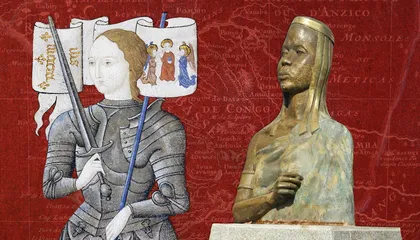
More than three centuries after being burned at the stake, Dona Beatriz Kimpa Vita is remembered as a pioneering spiritual figure and the 'Kongolese Joan of…
More than three centuries after she was condemned and executed, Dona Beatriz Kimpa Vita is receiving renewed global recognition as one of Africa's most influential spiritual leaders. Celebrated today as the "Kongolese Joan of Arc," her life and tragic death continue to inspire discussions about faith, identity, and resistance to colonial authority. A recent historical review published by Smithsonian History highlights how her revolutionary early-eighteenth-century movement fundamentally reshaped the religious landscape of the region.
In the early 1700s, Kimpa Vita rose to prominence after asserting that she was possessed by the spirit of St. Anthony. Armed with this profound spiritual conviction, she gathered an extensive following and established a movement that challenged the conventional religious order of the time. Rather than submitting to foreign interpretations of faith, she championed an Indigenous African expression of Christianity that resonated deeply with local populations.
Her teachings went far beyond personal devotion by actively integrating African cultural realities into Christian doctrine. By reshaping religious teachings to reflect Kongolese perspectives, she provided her people with a powerful sense of spiritual autonomy. Her movement argued that spiritual connection and divine favor were not the exclusive domain of external religious authorities, but could belong authentically to African communities.
As Kimpa Vita's followers grew in number across the Kongolese territory, her grassroots campaign began to unsettle established authorities. Her ability to mobilize large segments of the population around an independent religious vision raised alarm among entrenched religious and political leaders. The movement was quickly perceived as an existential threat to traditional hierarchies, which viewed her bold claims and theological independence with growing suspicion.
The mounting hostility from institutional power structures culminated in severe persecution. Approximately 320 years ago, Kimpa Vita was seized, condemned, and ultimately burned at the stake for her spiritual defiance. While authorities intended the gruesome public execution to extinguish her movement, her martyrdom instead immortalized her memory among those who had embraced her message.
Her enduring moniker as the "Kongolese Joan of Arc" reflects compelling historical parallels between the two iconic women. Both figures stepped forward in their youth, claimed profound divine inspiration, and mobilized their communities amid social instability. Both were ultimately condemned and executed by fire by religious and political establishments that feared their charismatic power and unyielding courage.
Scholars emphasize that Kimpa Vita's legacy remains vital to understanding the history of Indigenous religious movements across the African continent. Long before later anticolonial movements took root, her actions proved that local communities actively negotiated, transformed, and reclaimed outside religious concepts on their own terms. Her courage demonstrated an early, decisive refusal to accept cultural erasure or spiritual subservience.
Today, 320 years after her execution, Dona Beatriz Kimpa Vita is commemorated not merely as a martyr, but as a towering symbol of African resilience and self-determination. Her story continues to be studied and celebrated as an essential chapter in world history and religious history. As retrospectives bring her story to new audiences, her legacy stands as a testament to the enduring power of grassroots conviction against institutional oppression.
Primary source: Smithsonian History. Newzly rewrites and structures source reporting for clarity; verify critical details at the original.