Hubble Learns Galactic History From Stars
NASA's Hubble Space Telescope captures ancient stellar population in globular cluster M30.
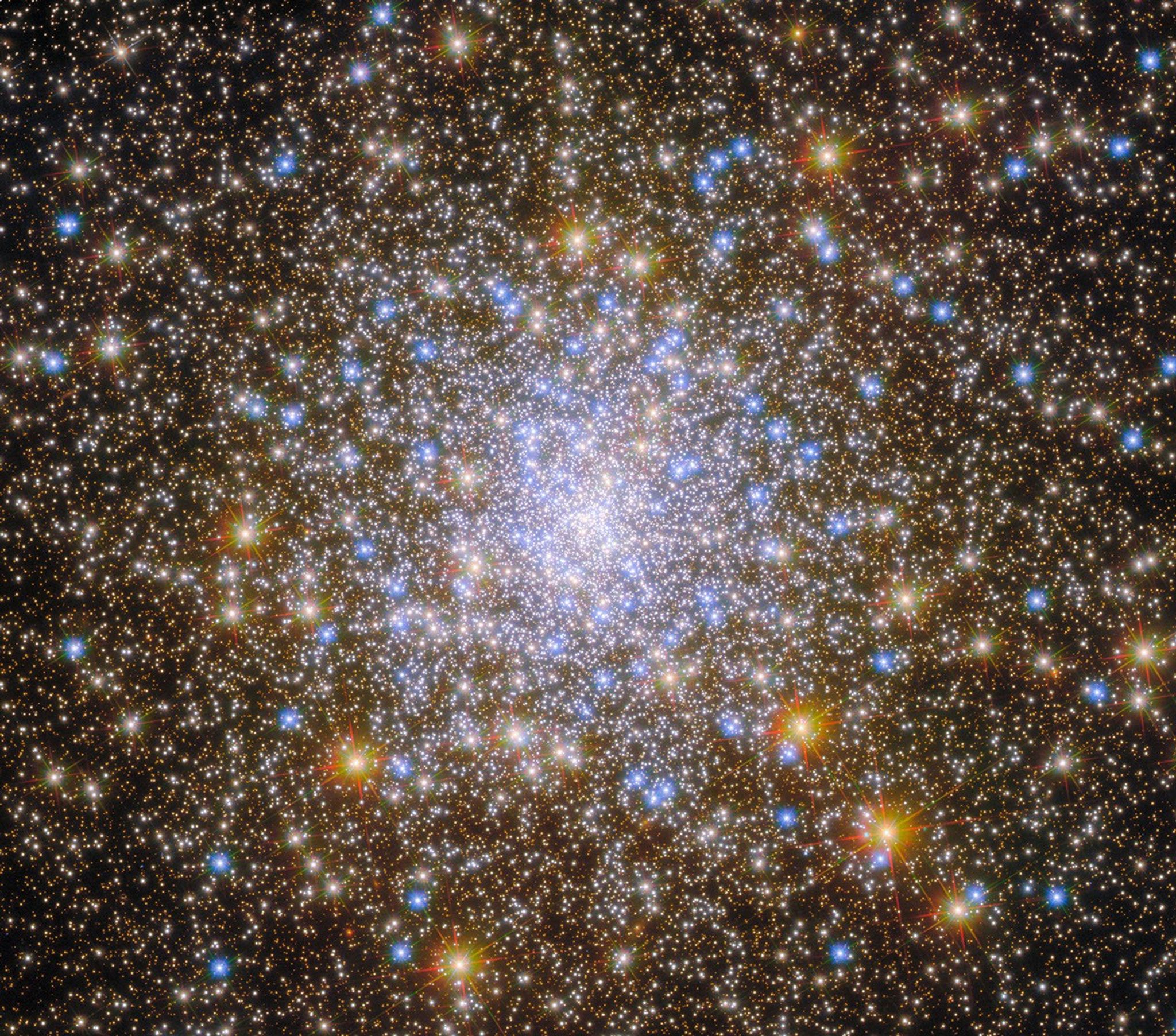
NASA's Hubble Space Telescope has captured a stunning new image of Messier 30, also known as NGC 7099, revealing ancient stellar populations that hold clues to galactic history. This globular cluster contains hundreds of thousands of stars that formed roughly 12 billion years ago.
The Hubble image showcases the dense core of M30, where stars are packed closely together in a spherical arrangement typical of globular clusters. These ancient stellar systems are among the oldest known objects in our universe, making them crucial for understanding early galaxy formation.
Scientists studying the cluster's stellar population have identified different generations of stars with varying chemical compositions. This diversity suggests that M30 experienced multiple episodes of star formation over cosmic time.
The globular cluster's age and composition provide valuable data for models of galactic evolution. By examining how stars form and evolve within these ancient systems, researchers can better understand the processes that shaped our Milky Way galaxy.
M30 orbits the center of our galaxy at a distance of about 27,000 light-years. Its location in the galactic halo makes it particularly valuable for studying the early universe's conditions and stellar formation mechanisms.
The cluster contains stars with different metallicities, indicating varying levels of heavy element abundance. These variations help astronomers trace the chemical evolution of galaxies over billions of years.
Hubble's observations of M30 contribute to broader studies of globular cluster populations throughout the Milky Way. Such research helps refine theories about galaxy formation and stellar evolution in the early universe.
Future Hubble observations will continue mapping stellar populations across multiple globular clusters, providing comprehensive data for understanding cosmic history and galactic development.
The findings demonstrate how modern telescopes like Hubble can peer back in time through ancient stellar systems. These studies offer unprecedented insights into the fundamental processes that govern galaxy formation and evolution.
This research represents a significant step forward in understanding how galaxies like our own evolved from primordial conditions to their current state. The data collected from M30 will inform future space missions and theoretical models of cosmic development.
Primary source: NASA Breaking News. Newzly rewrites and structures source reporting for clarity; verify critical details at the original.