Stunning Image Reveals Satellite-Covered Night Skies
A new image shows how space debris has darkened our night skies, raising concerns about astronomical observation.
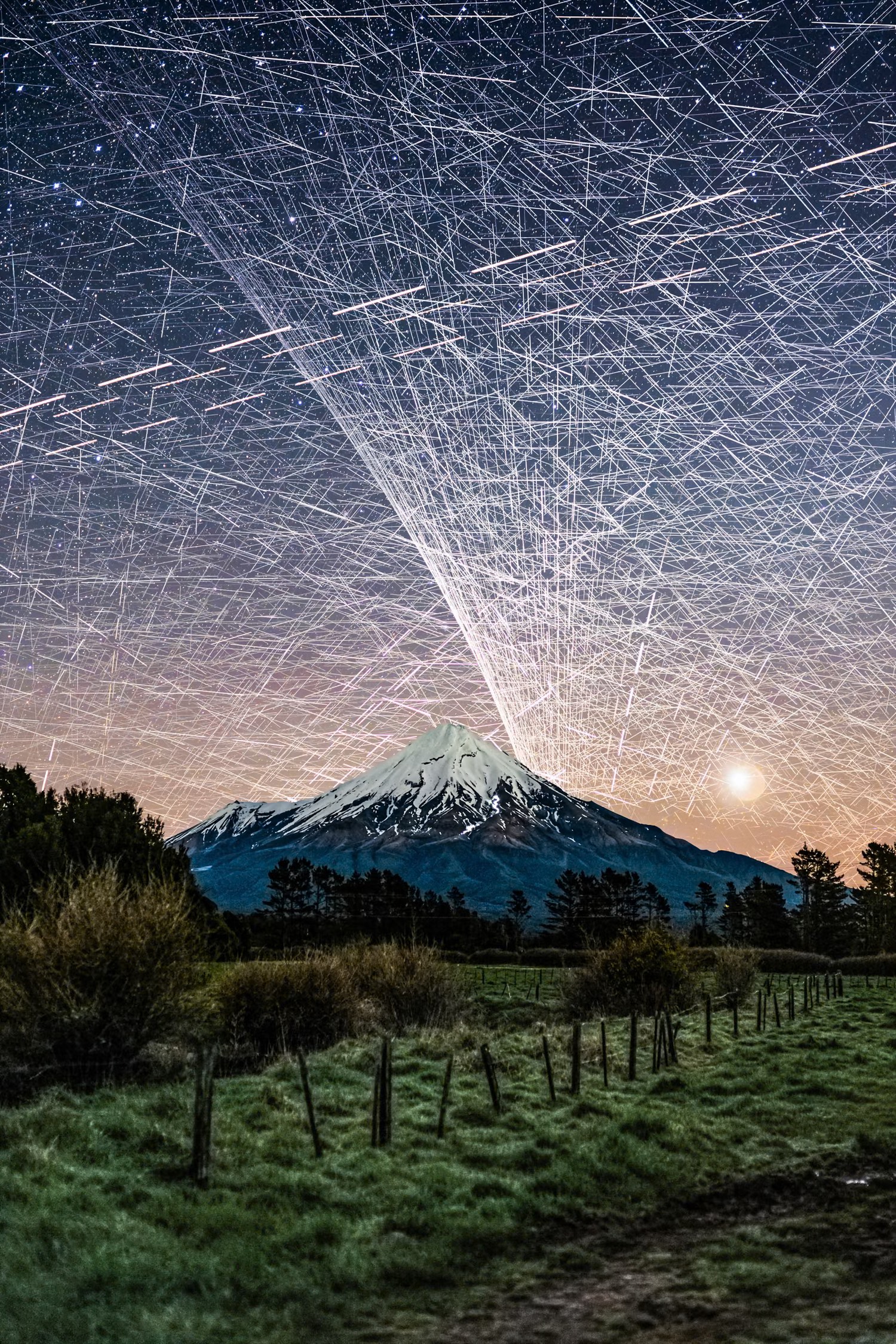
A stunning new image from the European Space Agency (ESA) has drawn attention to the mounting issue of satellite congestion in Earth's orbit. The image shows a night sky densely populated with artificial satellites, dramatically altering what was once a clear view of stars and celestial bodies.
The visualization, created using data collected by ESA's space surveillance network, illustrates how thousands of satellites now clutter low Earth orbit. These include commercial satellites, government spacecraft, and debris from previous missions. The image serves as a stark reminder of how human activity in space is changing the natural environment we observe from Earth.
This satellite proliferation poses significant challenges for astronomers and stargazers alike. The increased light pollution from these artificial objects interferes with ground-based telescopic observations, making it harder to study distant galaxies and cosmic phenomena. Additionally, the growing number of satellites increases the risk of collisions, which could generate more space debris and further complicate orbital navigation.
The problem has intensified in recent years due to the rapid expansion of satellite constellations. Companies like SpaceX have launched hundreds of satellites as part of plans to provide global internet coverage. While these networks offer valuable services, they also contribute to the visual and scientific degradation of our night skies.
Scientists are calling for better regulation and management of orbital space. There is growing concern that if current trends continue, we may lose the ability to observe natural astronomical events without interference. The ESA's image serves as a wake-up call for policymakers and industry leaders to consider the long-term consequences of our space activities.
The agency has emphasized the need for international cooperation to address orbital debris and satellite management. As more nations and private companies seek to exploit space resources, the pressure on Earth's orbital environment will only increase. The challenge lies in balancing technological advancement with environmental preservation.
Astronomers are also exploring new technologies to mitigate the impact of satellite light pollution. Some propose using specialized filters for telescopes or shifting observation schedules to avoid peak satellite visibility periods. However, these solutions may not fully address the root problem of orbital overcrowding.
The ESA's image has sparked a broader conversation about responsible space exploration and the preservation of natural night skies. As we continue to expand our presence in orbit, it is crucial to consider how our actions affect both scientific research and public access to the cosmos.
With increasing satellite launches expected in the coming years, the need for sustainable orbital practices becomes more urgent. The visual evidence provided by this image underscores that space is not just a frontier for technology but also a shared natural resource requiring careful stewardship.
The international community now faces the critical task of developing frameworks to manage orbital traffic and protect the night sky from further degradation. Without decisive action, the stars may soon be lost to view in our increasingly satellite-dominant skies.
Primary source: Hacker News. Newzly rewrites and structures source reporting for clarity; verify critical details at the original.