Hubble Study Finds Missing Oxygen in Nearby Dwarf Galaxies
Researchers using NASA’s Hubble Space Telescope examined 37 nearby dwarf galaxies and found less oxygen than expected, raising questions about how these small systems account for the material they contain.
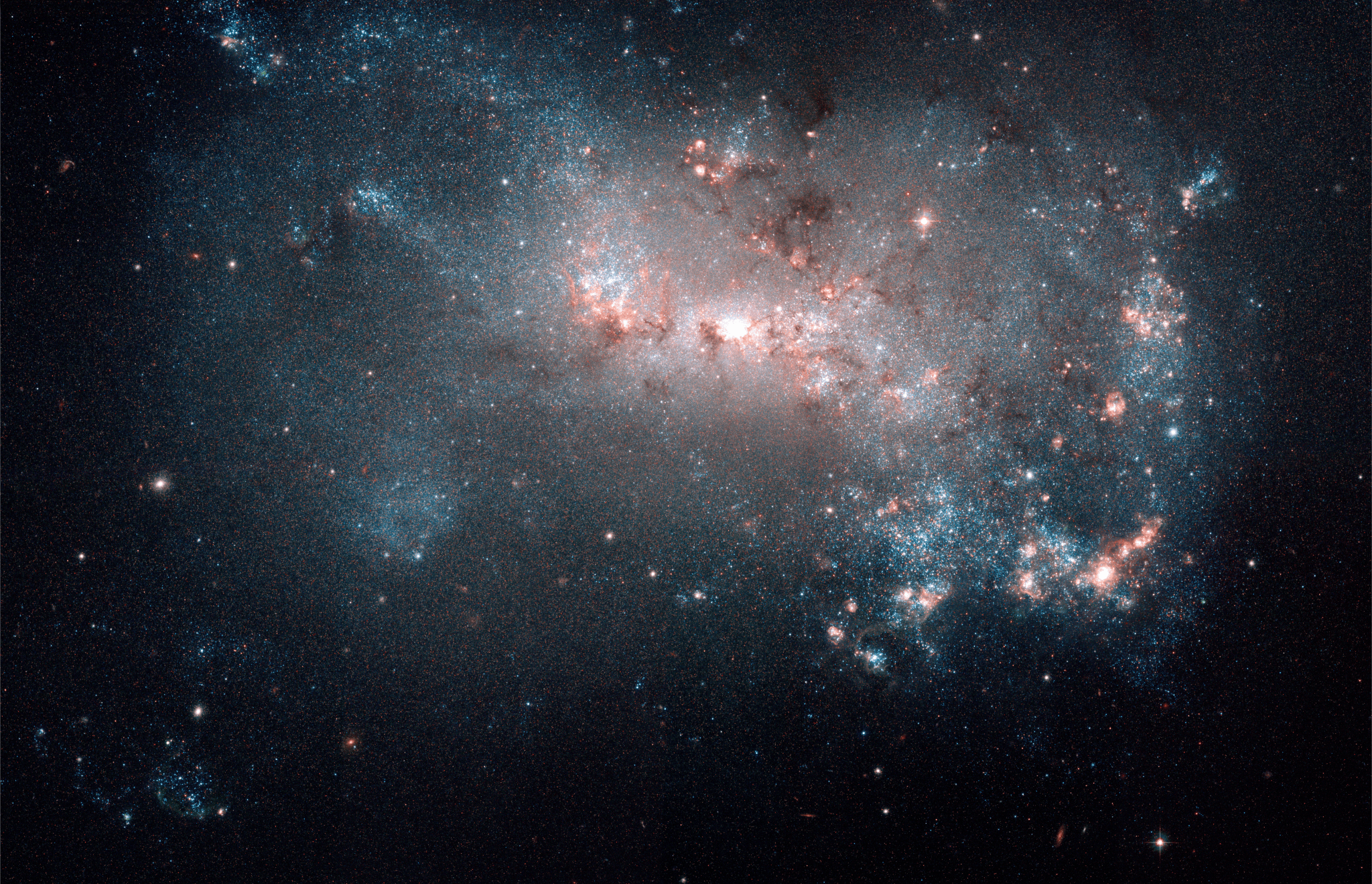
Researchers using NASA’s Hubble Space Telescope have found that much of the oxygen they expected to detect in a sample of nearby dwarf galaxies is missing, according to a NASA account. The study examined 37 galaxies, including NGC 4449, a dwarf irregular galaxy featured in an accompanying image.
NASA describes the photograph as released on Nov. 2, 2026. Its brief account presents NGC 4449 as one member of the broader research sample, rather than as the sole basis for the finding. The central result concerns the difference between the oxygen researchers expected and what their observations could account for.
Dwarf galaxies are small systems containing anywhere from a few thousand to hundreds of millions of stars, according to the description. The designation covers a substantial range of stellar populations, making the sample broader than a collection of identical objects. NASA identifies all 37 galaxies as nearby but does not provide their individual distances in the supplied account.
The reported oxygen shortfall poses a question about the material present in these galaxies and how well it matches researchers’ expectations. In this context, “missing” describes an observational accounting problem: the expected oxygen was not fully found. The brief description does not establish that the material has been destroyed, nor does it identify where it might be.
The distinction matters because an unexpected measurement and an explanation for it are separate scientific results. NASA’s account reports the discrepancy but does not give the measurements, the size of the shortfall or the calculations used to establish the expected amounts. Without those details, the finding cannot be reduced to a specific percentage of oxygen missing across the sample.
The inclusion of 37 galaxies gives the investigation a scope beyond the single object shown in the photograph. However, the supplied description does not say whether every galaxy displayed the same pattern or whether the shortfall varied among them. It also does not identify which properties, if any, were associated with larger differences between expected and observed oxygen.
NGC 4449 provides a visual introduction to that wider investigation, but the image alone does not explain the research result. NASA attributes the finding to researchers using Hubble to study the galaxy sample. The accompanying text does not describe the observing methods or provide enough information to assess how the oxygen inventory was assembled.
The unresolved issue is what accounts for the gap between the expected oxygen and the amount researchers found. Establishing an explanation would require details beyond those included in NASA’s brief image account. For now, the source presents the shortfall as a mystery emerging from observations of nearby dwarf galaxies, rather than a settled account of where their oxygen has gone.
Primary source: NASA Breaking News. Newzly rewrites and structures source reporting for clarity; verify critical details at the original.