Humans Are Speaking 338 Fewer Words Each Day Every Year, Study Finds
Human beings spoke an average of 338 fewer words per day each year between 2005 and 2019, according to psychological research tracing a steep digital-era decline in spoken communication.
In this piece
A multi-year study led by U.S. researchers found that people spoke roughly 28 percent fewer words per day in 2019 compared to 2005. The annual decline of 338…
A new study examining verbal communication patterns reveals that human beings are speaking significantly less in person than they did two decades ago. According to research led by psychologists at the University of Arizona and the University of Missouri–Kansas City, individuals spoke an average of 338 fewer words per day each year between 2005 and 2019. Over the course of the 15-year observation period, that annual drop accumulated into an estimated 28 percent decline in total daily spoken words.
The findings, published in the journal Perspectives on Psychological Science, emerged unexpectedly while researchers were attempting to replicate an earlier 2007 baseline study on daily talkativeness. Using audio-recording technology to sample real-world conversations, the investigative team noticed an unmistakable downward trajectory across successive cohorts. Daily spoken output plunged from roughly 15,900 words per day in the mid-2000s to approximately 12,700 words by 2019.
On an individualized level, a deficit of 338 words each day compounds into roughly 120,000 fewer spoken words per person each year. Researchers noted that while verbal engagement shrank across almost all demographics, the decline was especially pronounced among participants under the age of 25. Younger cohorts recorded the sharpest reductions in face-to-face vocal interaction over the same timeframe.
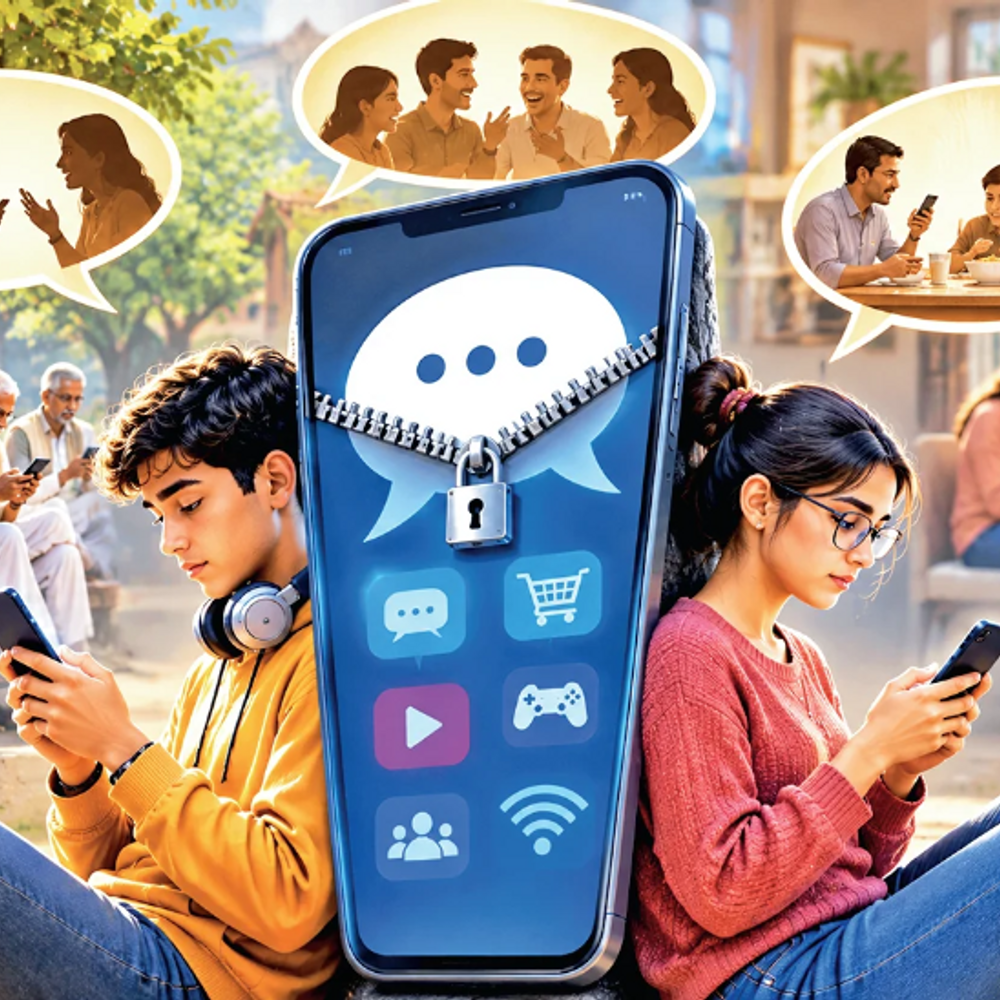
The researchers link this behavioral shift to the rapid proliferation of consumer technologies that substitute vocal dialogue with silent digital interfaces. Smartphones, messaging platforms, and social media feeds have steadily displaced casual in-person banter and phone conversations. Even everyday transactional exchanges, such as grocery runs and transit payments, have migrated toward automated self-checkout kiosks and mobile touchscreens.
Sociologists and psychologists point out that spoken language serves distinct evolutionary and emotional functions that text-based communication cannot entirely replicate. Auditory vocal cues, including inflection, tone, and pacing, convey empathy, build trust, and foster deeper interpersonal bonds. When individuals replace verbal discourse with written fragments and emojis, the nuances of spontaneous social connection risk being diluted.
The phenomenon also mirrors broad transformations in public spaces and work environments. Open-plan offices and remote arrangements have increasingly prioritized asynchronous collaboration tools like email, chat rooms, and project management dashboards over conversational check-ins. In public, ambient silence has expanded as commuters and shoppers don headphones, further reducing spontaneous micro-interactions with strangers.
Mental health specialists have expressed growing concern regarding whether diminishing conversational habits could worsen broader trends in loneliness and social isolation. Frequent verbal exchanges stimulate cognitive function and provide critical emotional outlets during periods of personal stress. Although digital networks allow continuous connectivity, researchers question whether textual interactions offer equivalent neurological and psychological nourishment.
Because the dataset concludes just prior to the coronavirus pandemic in 2020, researchers stress that the long-term trajectory warrants urgent follow-up investigation. Extended lockdowns and the entrenched normalization of hybrid work likely accelerated digital reliance, potentially depressing conversational volumes even further. Moving forward, behavioral scientists plan to measure post-pandemic datasets to determine whether human vocal communication has stabilized or continues to slide quietly into further digital retreat.
Primary source: Divya Bhaskar Magazine. Newzly rewrites and structures source reporting for clarity; verify critical details at the original.